Faking peace: how Putin deceives America while Europe rediscovers itself as a protagonist

In the long diplomatic game between Washington, Moscow and Kyiv, the war does not stop. The Russian objective is increasingly evident: to buy time, to freeze the front, to weaken Ukraine’s allies. The Trump-led United States seems more willing to deal with the Kremlin than to support the European order. In this scenario, it isEurope that must assume the historic responsibility of saving Ukraine from surrender. Moscow’s bluff, the American double game and the fragility of the moment are intertwined in a diplomatic mosaic with increasingly dangerous contours. Zelensky does not need words: he needs guarantees. And those, at the moment, seem to come only from this side of the Atlantic.
Moscow does not want peace, it wants time
Appearances are deceiving. The negotiations between Putin and Trump’s envoys – lasting hours, armoured to the press, empty of content – do not represent a diplomatic opening, but a sophisticated delaying tactic. The goal is not peace, not even a ceasefire: it is faking dialogue to prolong the war.
Moscow does not want an end to the conflict. It wants it to believe it is possible, in order to confuse the Ukrainians, slow down European military aid, and open up room for manoeuvre to American businessmen interested in a ‘business’ deal, as the Wall Street Journal investigation revealed: $2 trillion in economic exchanges in exchange for a sham peace built on Kyiv’s back.
But the table is rigged. The post-meeting statements between Putin and the US delegates speak for themselves: ‘there was no breakthrough’, said Yuri Ushakov after five hours with Kushner and Witkoff. Translated: Moscow got the stage without conceding anything. On the contrary, while negotiating, it issued direct threats to Europe.
“We have no intention of waging war on Europe… but if it starts, we will have no one left to negotiate with.” It is a surgical sentence. Putin does not announce a clash, but constructs a narrative: if Moscow attacks, it will only be in self-defence. It is the same pattern seen in 2021-2022: first the alarm about the ‘NATO threat’, then the invasion of Ukraine. Phase Zero has begun this time too, and it is no longer just about Kyiv.
The message is twofold: to Europe to sow strategic panic, to the Russians to legitimise possible future escalation. It is hybrid disinformation in the service of a medium-term war strategy. The aim: to create internal consensus, to divide the external adversary.
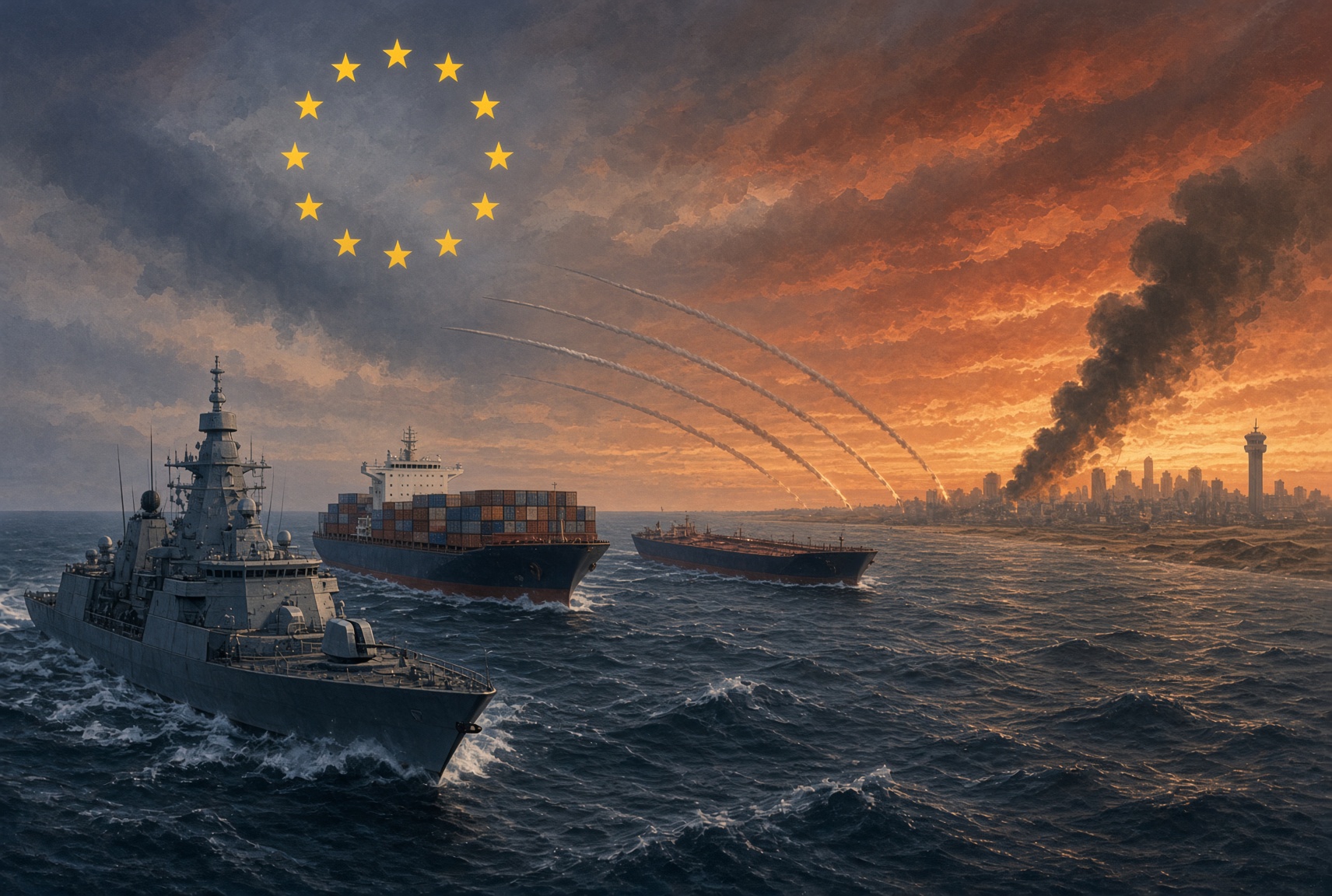
And that is not the only psychological leverage. On the eve of talks with Kushner, Putin said that Ukraine practices ‘piracy in the Black Sea’, threatening reprisals on third country ports and ships. The implicit message is clear: curb Kyiv, or you will pay the price. The timing is not coincidental: it comes as the SBU hits the shadow fleet that fuels the Russian economy by evading sanctions. It is a nervous reaction masquerading as a rational message.
Putin knows that hitting oil tankers frightens regional partners: Erdogan has already criticised Kyiv, evoking an ‘unacceptable escalation’. Moscow, in short, aims to use Ukrainian allies to restrain Ukraine itself.
And again: the false capture of Pokrovsk, claimed just as the American delegation was waiting for news from Putin. It was a symbolic move, with no feedback on the ground, but functional to emotionally influence the negotiators: to show that Russia is advancing, even if it is not true. Manipulating perceptions, not facts.
The pattern is tried and tested: negotiate to slow down, lie to get, threaten to divide.
This is also confirmed by Ukrainian sources: ‘Every time we have coordinated a position with the US, Witkoff goes to Moscow, and on his return Trump publishes a statement that takes us back to square one’. It is a regressive spiral, where each conversation feigns progress while Moscow only gains time – to produce weapons, recruit reservists, build a narrative.
And meanwhile, it wears out Kyiv, disorients Washington and holds Europe hostage.
The White House speaks with two voices. Europe is the last bastion
While Vladimir Putin plays the negotiator’s script, the real negotiations take place elsewhere: within the American administration. Or rather, between two Americas.
On the one hand, the Witkoff-Kushner parallel diplomacy, which brought to Moscow a privatist approach, unconnected to federal institutions. An armoured summit, lasting five hours, which produced no breakthrough. Only a promise: no talking. No results, no transparency, just a strategic silence – useful above all to Moscow, which in the meantime wears out the Ukraine and flatters the businessmen with 2 trillion proposals.
On the other hand, the institutional voice embodied by Marco Rubio, Secretary of State and face of the Republican ‘Atlanticist’ current. In a statement that passed almost under the radar, Rubio dismantled the premise of the entire Witkoff strategy: ‘Only Putin can end the war’. This is an elegant way of saying that dealing with Dmitriev is illusory, that the Kremlin’s real goal is not an agreement but a fictitious truce useful for reorganisation. And it is, implicitly, a harsh criticism of those who have managed these talks without involving the State Department, the CIA, or any structure delegated to national security.
In this messy picture, Europe stood by and watched. But no longer in silence.
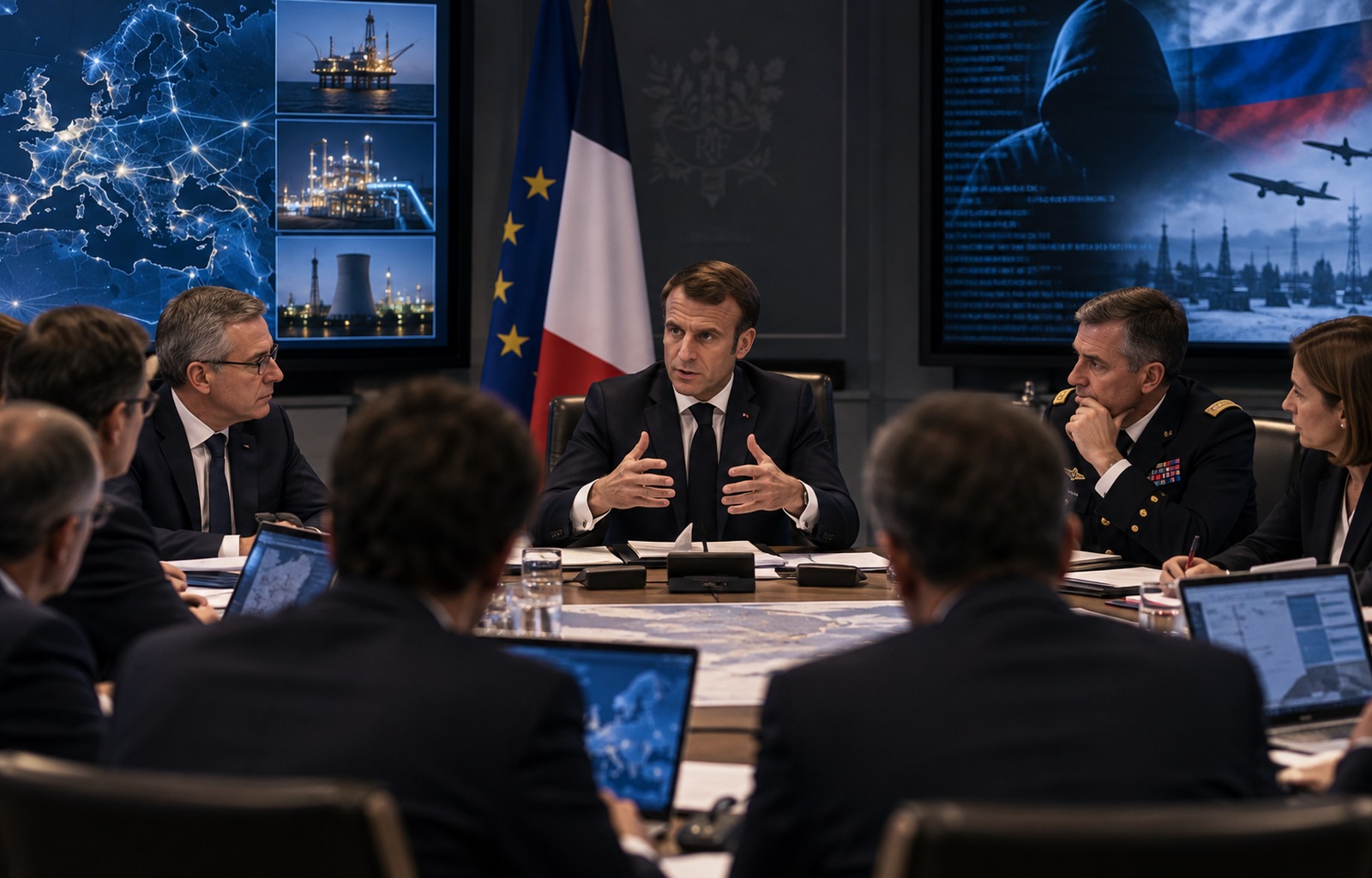
The video conference between the European leaders and Zelensky – later leaked – is a very clear political signal. Macron, Merz, Stubb, Rutte: all, in different accents, expressed fear and distrust. “We must not leave Zelensky alone with these guys,” says Stubb. “There is a huge danger,” raises Macron. Even Rutte, historically close to Trump, speaks of the need to ‘protect Volodymyr’.
Behind those words is not only disappointment with Washington, but the realisation that the real Russian plan is to delegitimise Brussels, using the American business line as geopolitical leverage. Putin has openly told Trump: Europe must be put on the sidelines. And that is what is really at stake today.
The EU – albeit amidst limitations, sluggishness and pro-Russian urges – has begun to behave as a strategic player. The security guarantees put forward by the ‘coalition of the willing’, the statements filtered through from the call, and the growing role of France, Germany and the Nordic countries indicate a change of pace.
The defence of Ukraine is no longer an idealistic mission, but an existential condition. The EU has realised that it cannot condone the war and hope to survive intact. Kyiv today is the red line. And precisely because it has neither nuclear arsenals nor the dollar as a global currency, Europe can only defend it by remaining vigilant, cohesive and credible.
The biggest risk? That Trump listens to the wrong voice. And that Putin continues to use peace as bait while sharpening his weapons.
The last line of resistance not to condone war
Russia is not seeking peace. It is seeking to condone war. Its objective is not to negotiate, but to construct an illusory framework of negotiation, useful to slow down Western support, weaken transatlantic cohesion and normalise its economic isolation. The meetings in Moscow, emptied of concrete content, are proof of this. The Wall Street Journal investigation revealed what Putin is offering: not a political solution, but a truce conditional on a gigantic trade pact.
Within this framework, the US speaks with two voices. On the one hand, there is the parallel and transactional diplomacy embodied by Kushner and Witkoff, which seems willing to trade Ukrainian sovereignty for access to Russian resources. On the other, the institutional one, represented by figures like Marco Rubio, who warns: ‘Only Putin can stop the war, not his advisors’. It is the clash between two conceptions of security: one mercantile, the other strategic.
Europe, aware of being marginalised, has stopped deluding itself. This is demonstrated by the words leaked from the video-call with Zelensky: Macron, Merz, Stubb, Rutte grasp the systemic risk of a negotiation conducted without Europe and over Ukraine’s head. And this is also confirmed by the rumours from Palazzo Chigi, which see Meloni annoyed by the moves of the leghists. But between concern and capacity for action there is still a gap.
For Kyiv, today, Europe remains the last shore, but it is a vulnerable shore, criss-crossed by pro-Russian thrusts, lacking a truly autonomous strategic posture. If it does not want to become a bystander of its own geopolitical decline, the Union must decide whether to remain bound to Washington’s timetable or become a strategic player in its own right.
Because the illusion of a negotiated peace on Moscow’s terms not only freezes the war in Ukraine, but risks legitimising a new global disorder. And if Europe does not prevent it, it will end up suffering it.