‘If I, who live in Europe, don’t speak out, who will?’ Interview with Russian dissident Anna Koshkina
Anna Koshkina, a Russian opera singer and activist living in Rome, talks about the protests by Russian citizens living abroad during the Duma elections, the fear of speaking out, and the difficulties faced by those opposed to the war in Ukraine.
We had the pleasure of interviewing Anna Koshkina following the elections to the Duma, the lower house of the Russian Parliament, which took place on 20 September 2026. Anna has been living in Rome for about ten years. She is an opera singer, studied at the Santa Cecilia Conservatoire and is a member of Ygrò, an Italian association of queer artists.
During the voting period, she encouraged other Russian citizens to meet up and go to the polls together. Their action was intended to demonstrate their opposition to the war and to Vladimir Putin’s government. We spoke to her about that initiative, her activism and the future of Russia.
Music and activism
Luca Cadonici — Let’s start with you. How did you end up in Italy, and what do you do?
Anna Koshkina — I moved to Rome about ten years ago. I studied singing at the Santa Cecilia Conservatoire, where I completed my three-year and two-year courses, graduating in 2023. I am an opera singer and an LGBTQ+ activist. I am a member of Ygrò, an Italian association that supports queer artists in Rome.
At the start of the war in Ukraine, I sang alongside Ukrainian colleagues in concerts for peace, including at the Pantheon and the Italian Parliament. I also took part in performances and tours of *Jesus Christ Superstar* at the Teatro Sistina, sharing the role of Mary Magdalene with a Ukrainian colleague.
Luca Cadonici — You used to go back to Russia to see your family. Has anything changed since you started speaking out publicly?
Anna Koshkina — My parents still live there and I used to go back from time to time. I don’t do that anymore. In January 2026, I started speaking out on Instagram about the problems I see in Russia. Some of the videos have racked up millions of views and, given that level of exposure, I consider it too dangerous to go back.
Luca Cadonici — What is the situation for those who speak out in support of LGBTQ+ rights in Russia?
Anna Koshkina — Being an LGBTQ+ activist is very dangerous. The restrictions and the climate of repression make it risky to speak out openly. People are also targeted for what they post or share. For me, as someone who addresses these issues publicly, the risk of being sent back has become a real one.
The protest and the symbol of the green apple
Luca Cadonici — You wanted to organise a protest during the elections. What did you have in mind?
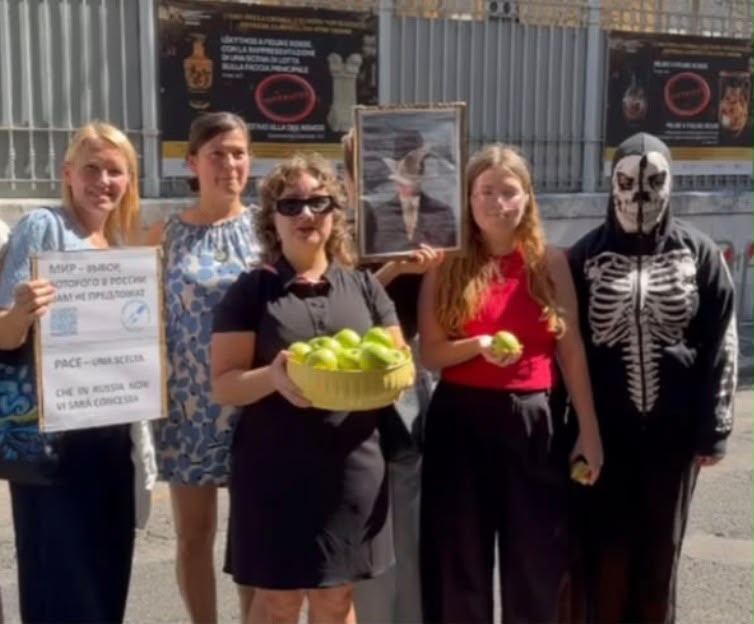
Anna Kochkina — I would have liked a demonstration with flags, placards and music. It wasn’t just a campaign in support of Yabloko: we wanted to protest against Putin’s regime and against the war. Yabloko had become a point of reference because it declared itself to be pacifist and defended human rights.
Luca Cadonici — And why did you bring some green apples?
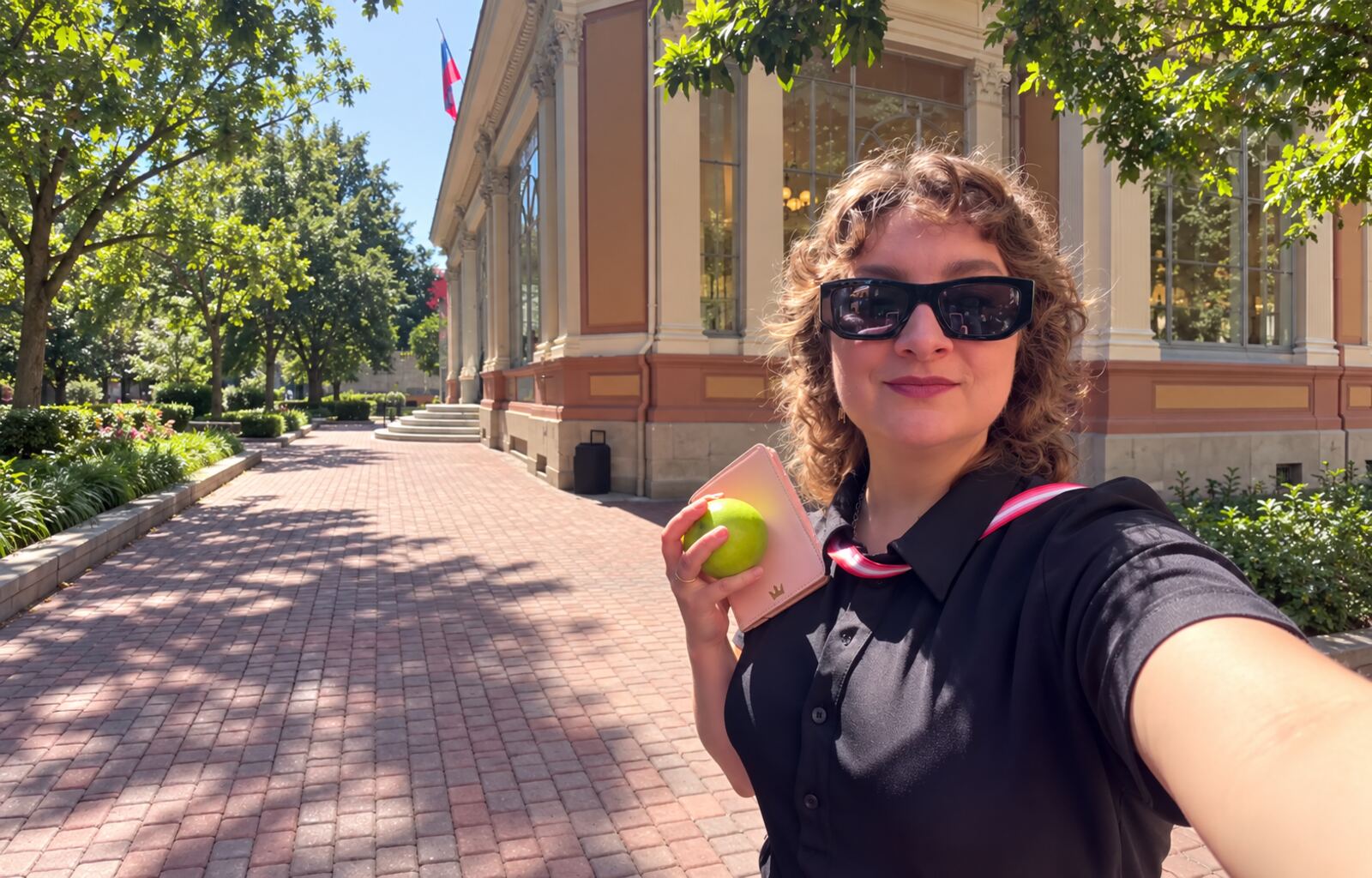
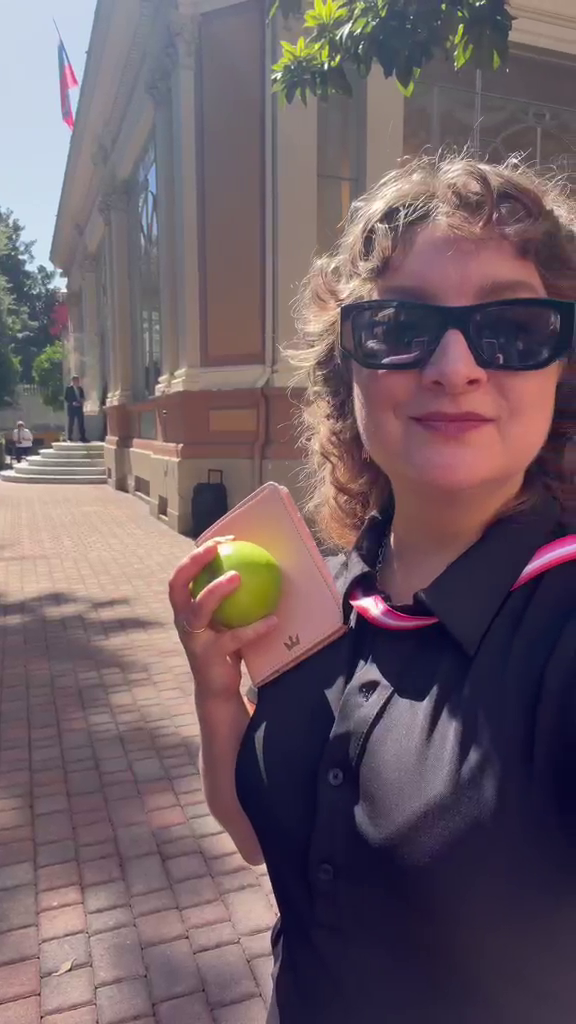
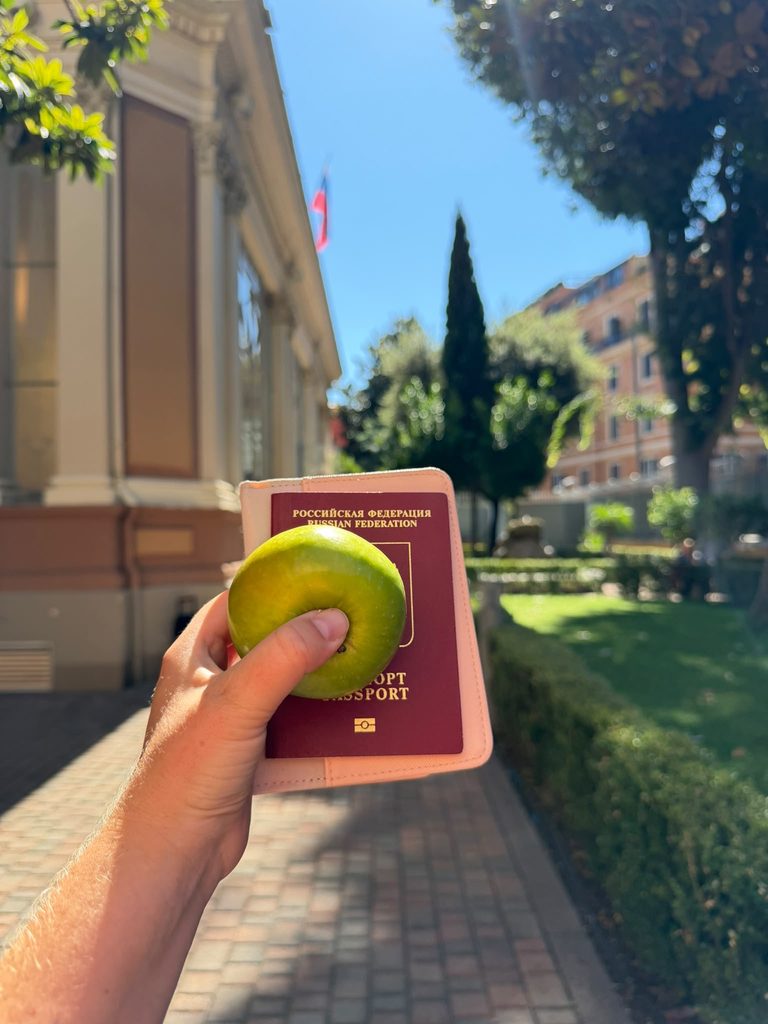
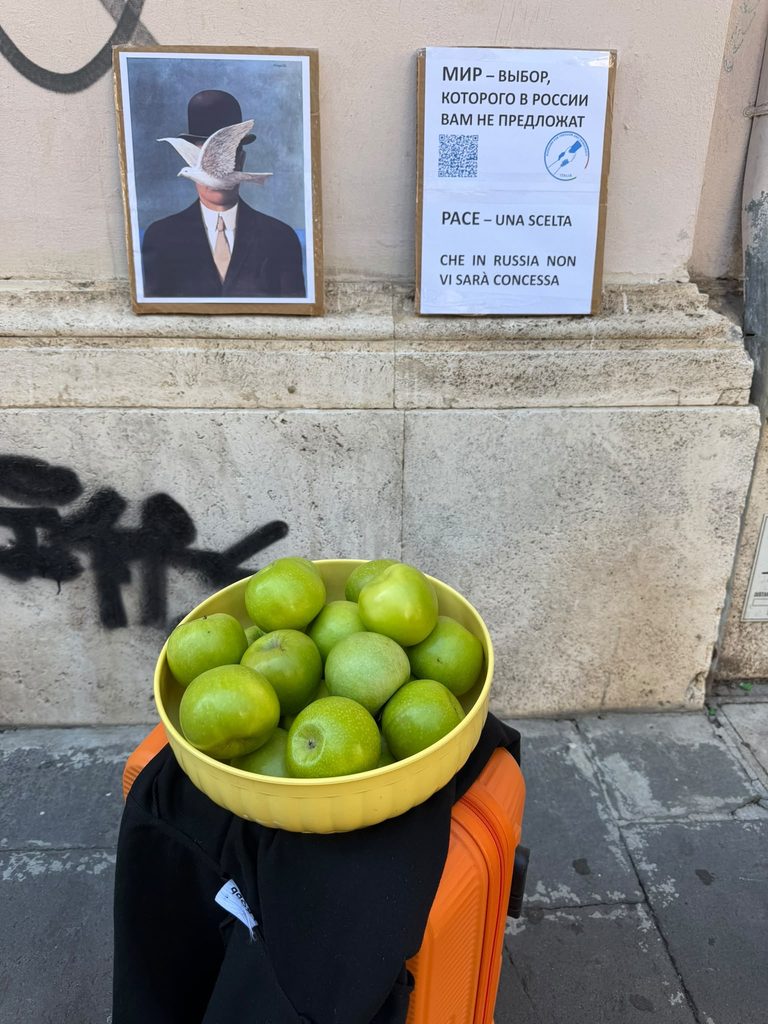
Anna Kochkina — ‘Yabloko’ means ‘apple’ in Russian. The green apple has become the symbol of our protest: a way of saying that we are against Putin and against the war. One of us – Natalia, who is a member of the organisation Russians for Freedom and Democracy – brought the apples and some placards, including one featuring an image by Magritte and a dove.
Luca Cadonici — Why did you ultimately decide to meet up and go and vote together?
Anna Koshkina — You have to understand that many people are afraid, even amongst Russians living abroad. Some have parents in Russia; others fear the consequences of speaking out, including for what they post on social media. There are those who are afraid of being labelled a ‘foreign agent’ and of having restrictions imposed on their assets or documents. That is why fewer and fewer people are willing to speak out.
I posted on Instagram suggesting we meet up at a café, followed by voting at the embassy. I made it clear that anyone who didn’t want to appear in photos or videos could stay out of the frame or be filmed from behind. About ten or fifteen people turned up – all women – and we went to vote together.
The vote and the opposition’s difficulties
Luca Cadonici — What was the polling station like when you arrived?
Anna Koshkina — It was almost empty. In 2024, for the presidential elections, I remember there being a long queue: I’d waited for hours. This time, turnout seemed much lower to me.
Luca Cadonici — What does Yabloko represent today for those who oppose the government?
Anna Koshkina — For us, her importance goes beyond the party. She was a figurehead for those opposed to the war, but many of her candidates could no longer stand as candidates through the party. Some stood as independent candidates in certain regions. Voters abroad, however, could not choose those candidates: they had to cast a party list vote for the Duma.
I can’t say how the other women in the group voted. The idea that united us was our opposition to United Russia. For many of us, however, the choice on the ballot paper was one without a real alternative.
Luca Cadonici — Is it still possible to build a common platform for the Russian opposition?
Anna Koshkina — It’s difficult. In Russia, speaking out carries risks; many opponents have been arrested, whilst others live abroad, scattered across different countries. This is another reason why it is difficult to organise and find a common voice.
Luca Cadonici — What, in practical terms, can Russians living abroad do?
Anna Koshkina — Speaking out. I live in Italy and here I feel safer than those living in Russia. I understand why many people in my country remain silent: they are afraid of the consequences. That is precisely why I feel a duty to speak out and say that I am against the war and against Putin. If I, living in Europe, do not do so, who will?
The war in Ukraine and the future of Russia
Luca Cadonici — From here in Europe, it’s hard to understand what Russians think about the war in Ukraine. What’s your impression?
Anna Koshkina — There is no single answer. There are people who oppose the war but have fled or are afraid to speak out. There are also people who see it as an economic opportunity: in the poorest areas, the money promised to those who enlist can seem enormous compared to what people normally earn.
Then there is the propaganda. Messages are constantly repeated claiming that Europe and NATO want to destroy Russia. LGBTQ+ people are targeted to stoke fear. These are absurd stories, but they are constantly being spread, and some people end up believing them.
Luca Cadonici — Can you imagine a pluralist and democratic Russia?
Anna Koshkina — I’d like to imagine it, but I don’t think simply replacing Putin will be enough. The problem also lies with the people around him, the corruption and the system they have built. Over the last ten years, I’ve seen the situation get much worse. A democratic transition, in my view, will take time – perhaps generations. I don’t know if I’ll live to see it.
Luca Cadonici — What would you like to ask people living in Europe?
Anna Koshkina — To listen to us and talk about it. I would like people to know that not all Russians support the war. And I would also like them to be aware of the country’s other problems: repression, homophobia and violence against women. Giving a voice to those who oppose it is already a way to start.