The Mediterranean is reshaping Europe’s economic landscape
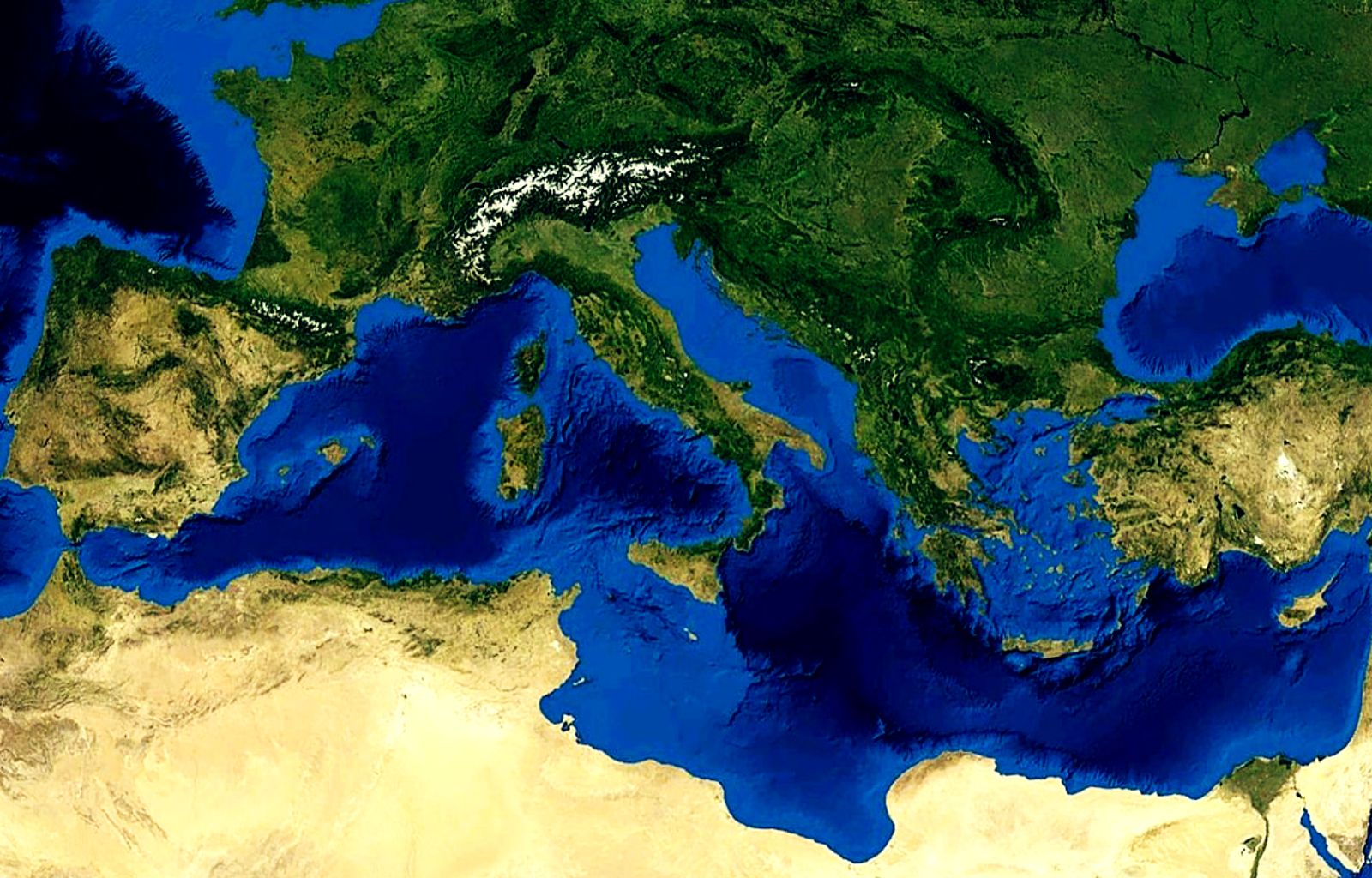
For decades, the economic heart of Europe has been identified primarily with its central-western axis. That centre of gravity remains fundamental, but trade, infrastructure, energy and new relationships with the southern shore are making the picture more complex. The Mediterranean is no longer merely the southern edge of the single market, but a space linking Europe to the markets, resources and routes that connect it to the rest of the world.
From the ‘Blue Banana’ to a Europe with multiple centres of gravity
The single market has reduced many of the internal economic barriers within the European Union, but it has not eliminated the influence of geography. Indeed, the population, businesses, infrastructure and major markets continue to be distributed unevenly. Proximity to the main centres of production and consumption can therefore influence opportunities for trade, investment and regional development, helping to explain why some areas are more integrated than others into the major continental networks.
For decades, this concentration has been represented by the so-called ‘Blue Banana’, the economic backbone that runs through part of central-western Europe from northern Italy towards the Rhine region, the Benelux countries and, historically, the United Kingdom. But that centre of gravity, on its own, is no longer sufficient to describe the entire economic geography of Europe.
A recent study on European regional competitiveness shows that, whilst certain areas of the Blue Banana retain a leading position, developments in Central and Eastern Europe and the Mediterranean are challenging the notion of a single dominant economic centre. In particular, some of the less affluent regions in these areas show greater potential for development than several regions in the west and north.
Viewed from the continent’s traditional economic centre, the Mediterranean may appear to be a periphery, but when one broadens one’s perspective to include North Africa, the Middle East and Asia, that same geographical position takes on a different significance. From this perspective, the Mediterranean becomes one of the areas through which the Union is expanding its economic connections beyond the borders of the single market.
A market between the two banks
This opening up is already evident in the economic relations between the two sides. In 2025, trade in goods between the European Union and the ten countries of the Southern Neighbourhood reached €248.2 billion. The EU also accounted for 34.7 per cent of these countries’ global trade in goods, confirming its position as by far their main trading partner.
The relationship, therefore, already exists. The question is how much deeper and more strategic it can become. The Mediterranean Pact, presented by the European Commission in 2025 and subsequently endorsed by the Council of the European Union, is also moving in this direction. The aim is to create a common Mediterranean area and to strengthen cooperation between the EU and its partners on the southern shore.
From an economic perspective, the Pact aims to promote greater trade and investment integration, diversify economies and value chains, develop the blue economy, strengthen energy cooperation and improve connectivity between the two sides.
The Mediterranean can thus take on a broader role than that of the southern periphery of the single market, offering new opportunities to diversify suppliers, markets and external outlets. This greater openness, however, also exposes the European economy to the vulnerabilities of the routes passing through the region. The crises in the Red Sea and the Suez Canal have highlighted just how vulnerable these links can be to geopolitical shocks.
Suez: when routes get longer
The tensions in the Red Sea have clearly demonstrated just how vulnerable this network can be. In recent years, numerous shipping companies have avoided the Suez Canal, choosing instead to sail round Africa via the Cape of Good Hope.
The effect was not merely an increase in journey times.According to UNCTAD, in 2024 global maritime trade grew by 2.2 per cent in volume, whilst tonne-miles – which also take into account the distance travelled by goods – rose by 5.9 per cent. This difference mainly reflects the lengthening of routes caused by detours in the Red Sea.
2026 showed some signs of recovery. In the first eight months of the year, the net tonnage of container ships passing through the Suez Canal reached approximately 72.1 million tonnes, compared with 46.7 million in the same period of 2025, representing an increase of 54.2 per cent. The Suez Canal Authority also reported that services operated by major shipping companies, including Maersk, MSC and COSCO, had resumed on the route.
These figures do not necessarily indicate a definitive return to normality. They do, however, show just how strategically important the Suez Canal continues to be for trade between Europe and Asia. It is precisely this central role that represents both an advantage and a vulnerability: the more the Mediterranean’s importance grows in Europe’s external relations, the more the security of its maritime routes becomes crucial for the continent’s economy.
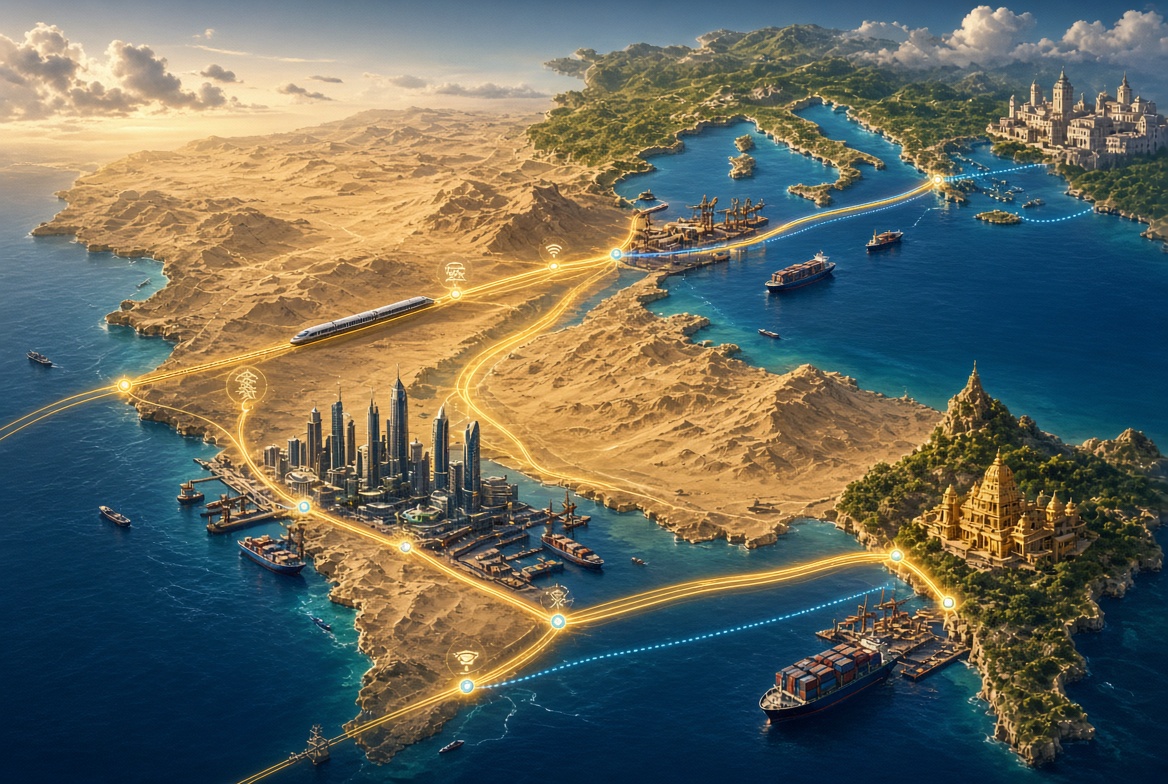
Centrality is built: ports, corridors and energy
This is where infrastructure comes into play. The location of Mediterranean ports is only an advantage if they are efficiently connected to continental markets, rail networks and energy systems.
One example is the Mediterranean Corridor of the Trans-European Transport Network (TEN-T). The corridor stretches for around 3,000 kilometres and links the main ports of Mediterranean Spain with France, northern Italy, Slovenia, Croatia, Hungary and Ukraine, integrating railways, roads, ports and multimodal terminals. However, the European Commission still identifies a key challenge: improving connections between the corridor’s ports and their hinterland, particularly via rail transport.
The Mediterranean is also becoming increasingly important for Europe in terms of energy. In 2025, North Africa accounted for 13 per cent of the EU’s gas imports, whilst the Commission identifies the Mediterranean region as a key channel for diversifying suppliers and supply routes. Alongside gas, new electricity interconnection projects are also taking shape. The GREGY project, for example, involves an underwater cable of approximately 954 kilometres between Egypt and Greece, with a capacity of up to 3,000 MW and the aim of transmitting renewable electricity to Greece and the rest of Europe.
The Mediterranean is not destined to replace the traditional economic heartland of Central and Western Europe. It can, however, become one of the hubs through which Europe trades, diversifies its supplies and builds new relationships with neighbouring economies. Geography has restored its strategic position. It is now up to Europe to turn this into an economic advantage.