Saudi Arabia and Luxembourg: story of an unusual but effective partnership
Saudi Arabia is 800 times larger than Luxembourg and has 50 times the population. Yet, according to the Riyadh-based statistics institute, by the end of 2024, the stock of Luxembourg’s direct investment in the Kingdom stood at 101 billion riyals (approximately 27 billion dollars), a tenth of the total: more than France’s, which stands at 69, and second only to that of the United Arab Emirates, at 161.
No one believes that these investments are all attributable to savers living in Esch-sur-Alzette or Dudelange, two of the towns in this small European state. Rather, the figures reflect the Grand Duchy’s role: acting as a conduit for global capital, which passes through Luxembourg-based holding companies and funds before settling elsewhere.
European-style sukuk
The foundations for relations between these two countries were laid early on. The double taxation treaty was signed in Riyadh in May 2013 by Luc Frieden, then Minister of Finance and now Prime Minister, and has been in force since 2014. Since then, the Grand Duchy’s holding companies have been a regular vehicle for infrastructure and private equity funds directed towards the Kingdom. The flows have been volatile: 49 billion riyals in 2022, just 2.3 the following year; in 2024, the net balance fell below zero. Just a few large transactions are enough to skew the statistics.
The flow also goes the other way. In 2002, the Luxembourg Stock Exchange was the first in Europe to list a sukuk, and since then Saudi issuers have also listed there. In 2014, Luxembourg became the first country in the eurozone to issue a sovereign sukuk. The Grand Duchy is the world’s third-largest centre for Islamic funds, after Saudi Arabia and Malaysia, and the first in a non-Muslim country. For Gulf-based fund managers, Luxembourg is, in short, the most convenient route to European savers.
Steel and shipyards
In trade between the two countries, the real economy plays a smaller role, but it is present nonetheless. The most prominent example is ArcelorMittal, the Luxembourg-based steel giant, which operates a 600,000-metric-tonne-per-year seamless pipe plant in Jubail in partnership with the Saudi sovereign wealth fund (PIF) , a facility that has been in operation since 2014. In 2021, the joint venture took over its local competitor JESCO, and the PIF became its majority shareholder. This is the model favoured by Riyadh: Saudi capital and market, European technology and brand, jobs at home.
For small businesses in the Grand Duchy, the path is more winding. Luxembourg has no embassy in Riyadh – where it is represented by the Netherlands – nor does it have an air services agreement. Trade missions are carried out in tandem with the Belgians: in 2023, a delegation of 75 companies from the two countries visited Riyadh in search of contracts in healthcare, energy, entertainment and construction – sectors boosted by Vision 2030.
Innovation: small numbers, big impact
The innovation sector is the shortest chapter in the report, but it could prove decisive. The Grand Duchy, home to the satellite giant SES, has made space a speciality, with a law on space resources and a research centre in partnership with the ESA. These are the skills Riyadh needs, as it drafts its own regulations in this field and aims to become a fintech hub.
The model already exists across the border: Luxembourg has had a space agreement with the UAE since 2017 and a stock exchange agreement in place since 2023. Replicating this in Riyadh would cost little and yield great returns. Where rules and expertise matter more than sheer size, a small country can carry as much weight as a large one.
A partner for Vision 2030
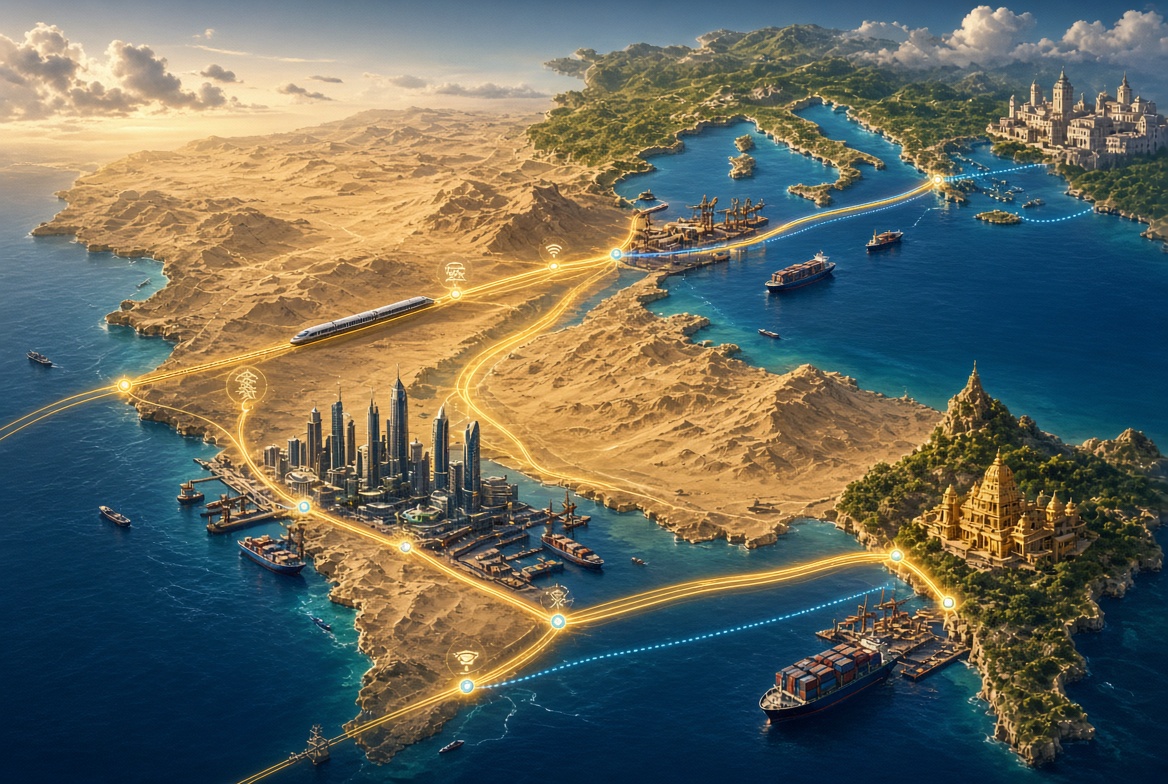
Luxembourg’s role in Saudi Arabia’s development is set to grow. Riyadh is targeting $100 billion a year in foreign investment by 2030; in 2025, it attracted $32.6 billion. To bridge the gap, patient capital, sound legal vehicles and products familiar to European investors are needed: the Grand Duchy’s speciality. Its funds can finance ports, networks and renewables; its stock exchange can list green bonds and sukuk; its companies can supply steel, satellites and fintech.
For an economy seeking to break free from its dependence on oil, a small, versatile yet well-equipped partner is an asset.