7 October is not over

Three years later, Israel is still asked not only to explain how it defends itself, but why it should be allowed to exist in the first place. Europe, meanwhile, has learned that antisemitism never really went away. It just got better at changing clothes.
Start With What Happened
Three years have passed since October 7, 2023, which is long enough for almost anything to start feeling distant. News becomes history very quickly now. Images that seemed impossible to forget get buried under newer images, newer wars, newer outrages, until eventually people talk about them as if they happened in another age.
October 7 still does not feel like that to me.
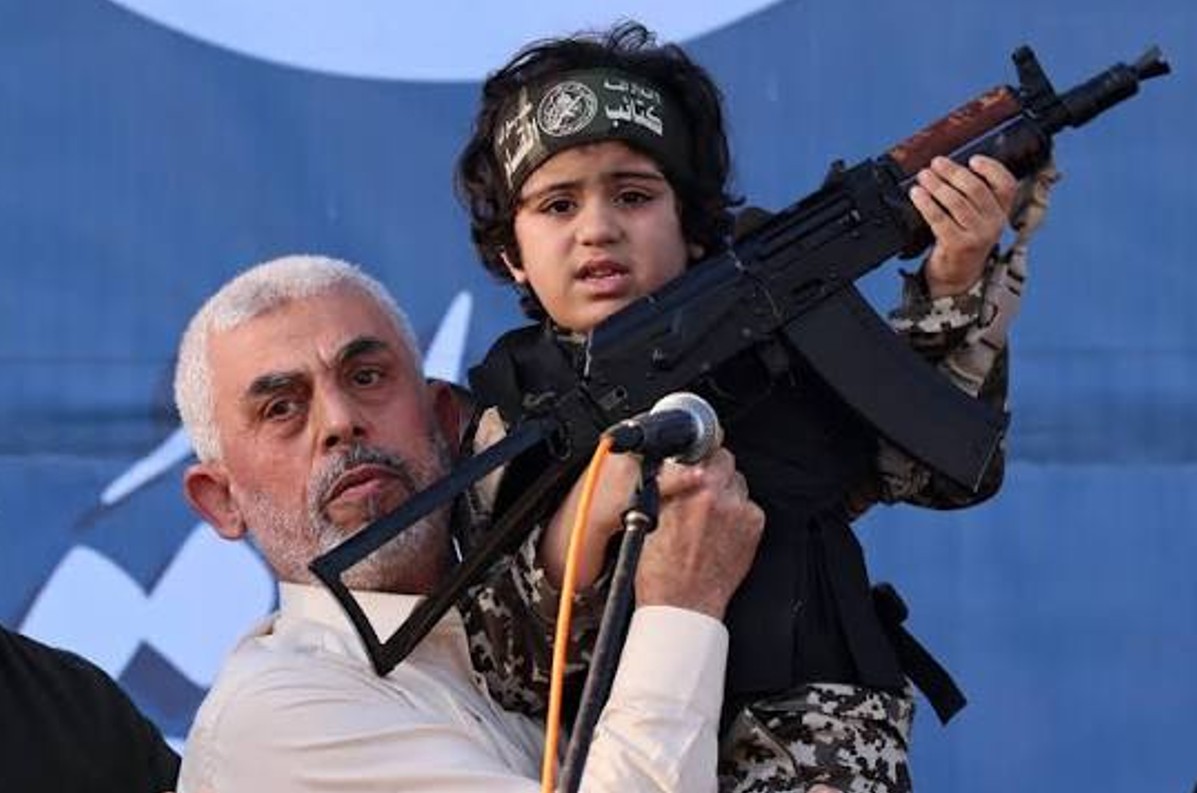
I remember the kibbutzim, the Nova Festival, the people running through the desert, the families dragged out of their homes. More than 1,200 people were killed and 251 were taken hostage. Civilians, elderly people, young people, children. In many cases they were not caught in the middle of anything. They were the point.
This matters because for three years the argument has had a strange tendency to begin five minutes too late.
Netanyahu. Gaza. Settlements. 1948. 1967. The Palestinians. American policy. All of these things matter and some of them matter a great deal, but they came after a morning when armed men crossed a border, entered civilian communities, killed people in their homes, kidnapped families and hunted young people who had gone to a music festival.
You can call that many things. Resistance is not one of them.
I know “barbarism” is not a fashionable word. It sounds too blunt, too moralistic, maybe too old-fashioned for people who prefer every crime to come with a seminar attached to it. But sometimes a thing is barbaric and there is no intellectual virtue in pretending otherwise.
The Word “Zionist”
October 7 also made me much less patient with the strange embarrassment now attached to the word Zionist.
I am one.
Not because I think Israel is always right, and not because I have some particular affection for every Israeli government, every minister or every military decision. I do not. Israel is a country and countries make bad decisions, elect bad governments, fight wars badly, change course, argue with themselves and occasionally make a mess of things. Israelis themselves spend an extraordinary amount of time arguing about Israel.
What I mean is much simpler than all of that: Jews are entitled to have a country of their own, and they are entitled to defend it.
That is apparently controversial now.
Modern Zionism did not appear out of nowhere in 1948 because a group of diplomats drew some lines on a map. It came out of a very old and very ugly European reality. Pogroms, expulsions, persecution, ghettos, racial laws and then the Holocaust. Europe spent centuries teaching Jews a fairly brutal lesson about what happens when your safety depends entirely on other people’s tolerance.
Which is why I find it more than a little strange when Europeans now explain, often with great confidence, why Jews should have remained dependent on exactly that.
Criticize Israel. Criticize Netanyahu. Criticize the settlements, the war, the conduct of the army, whatever you think deserves criticism. Countries are not sacred objects.
But there is a difference between saying a country is wrong and saying the country itself is wrong for existing.
That difference has become very blurry lately.
Hamas Has Somehow Left the Room
There is Palestinian suffering in Gaza. Of course there is. There are civilians who had nothing to do with October 7, families who have lost homes and relatives, people trapped in a war they did not choose.
That should not be difficult to say.
What is difficult for me is the way Hamas somehow keeps disappearing from the story.
You watch certain discussions of Gaza and there are only two things left in the frame: Israel and dead Palestinians. Hamas has vanished. The tunnels vanish. Fighters operating from dense urban areas vanish. Weapons and military infrastructure in or around civilian buildings vanish. The whole reality of an armed group fighting from inside civilian territory simply fades away, and suddenly the war is presented almost as if Israel woke up one morning and decided, for no particular reason, to start bombing Gaza.
That is not serious.
Hamas bears a huge responsibility for Palestinian civilian deaths because it chose to fight this war the way it does, from inside and underneath civilian areas, making the distinction between battlefield and neighborhood deliberately harder. That does not magically make every Israeli strike correct. It does not mean the IDF cannot make mistakes or that every target is justified because someone says the word Hamas.
But there is also something dishonest about looking at the ruins after an airstrike and acting as though the history of that airstrike started with the Israeli aircraft.
It did not.
October 7 happened. Hamas was not a weather event. It was not an unfortunate background condition. It carried out the attack, kept hostages, and then fought from an environment in which civilians were all around it.
And yes, Israel had a right to fight back.
More than that, it had a duty to make sure the people who crossed that border on October 7 could not simply prepare to do it again.
There is an argument I hear often that basically says: because Hamas fights among civilians, Israel cannot strike Hamas without killing civilians, therefore Israel should not strike Hamas.
Taken to its conclusion, this means the more effectively a terrorist group embeds itself among its own population, the safer it becomes.
That is insane.
It turns civilians into armor and then rewards the people using them that way.
Antisemitism Did Not Need Much Encouragement
Another thing became clear after October 7, and faster than I expected.
Antisemitism was still there.
Not every criticism of Israel is antisemitic. Obviously. Not every pro-Palestinian protester is an antisemite. Obviously. I almost resent having to spend time writing these sentences because they should be self-evident, but apparently they are not.
The problem begins somewhere else.
It begins when a Jewish student in London or Milan is expected to explain the Israeli government as if he were its spokesman. When a synagogue becomes a reasonable place to protest a military operation in Gaza. When Jews are treated as collectively responsible for what a government thousands of miles away does.
And yes, it also begins when “Zionist” becomes a convenient word that lets people say things they would understand perfectly well were antisemitic if they replaced it with “Jew.”
There is another part of this that bothers me even more. Israel is often discussed not as a country that can be right or wrong, but as a country whose right to exist is constantly being reopened for debate.
Russia can commit atrocities and nobody seriously asks whether Russians should have a country.
Iran can be ruled by a brutal regime and nobody concludes that Iran itself should disappear.
European countries can have histories full of colonial crimes, massacres and repression, and nobody thinks France or Britain should therefore lose their legitimacy as states.
Israel is different.
With Israel the discussion has this strange habit of sliding from “what should Israel do?” to “should Israel exist?” very quickly.
And I do not think it takes a PhD in European history to understand why Jews may find that unsettling.
What Zionism Means to Me
Three years after October 7, this is more or less where I have ended up.
I do not think Israel is perfect. I do not think every Israeli bomb is justified or every Israeli politician deserves defending. I do not think an Israeli child is worth more than a Palestinian child.
He is not.
But he is not worth less either.
An Israeli should not have to accept rockets, massacres, kidnappings or terrorists entering his home in order to satisfy some bizarre moral test invented from the safety of Europe.
For centuries Jews had to hope that a king would protect them, or a government would protect them, or their neighbors would protect them, and history is full of examples of how that went.
Zionism changed one thing more than anything else.
It did not guarantee that Jews would never again be attacked. October 7 destroyed any illusion of that.
It meant that when they are attacked, they have somewhere that is theirs, an army that is theirs and a state that does not need to wait for somebody else to decide whether saving them is politically convenient.
On October 7, people were murdered in their homes while much of the world watched in horror.
The strange part came later, when some of that horror very quickly turned into qualifications, context, caveats, historical lectures and, eventually, arguments about whether Israel had perhaps brought too much of this on itself.
Three years later, I am less interested in making the answer complicated.
Israel exists. Jews have the right to a state. That state has the right to defend its citizens.
None of this should require an apology.