Good pupils of bad teachers. The Young Democrats, Ukraine and the abandonment of freedom
In the 1970s, Václav Havel argued that Czechoslovakia and the Eastern European countries trapped within the Soviet bloc were the beating heart of European freedom.
His mentor and spokesperson for the Charta ’77 Movement, Jan Patocka, explained that the philosophical idea of Europe, dating back to the origins of Socratic and Platonic thought, has linked the emergence of politics not to a particular form of government – that is, the exercise of public power – but to the establishment of a public sphere of freedom, that is, to a distinctive experience of communal life.
In this context, the commitment to truth – to being truly responsible – cannot be reduced to any principle of necessity, and the duty of responsibility cannot be reduced to an obligation of obedience. Thus, the totalitarian power of communism, claiming not only absolute power over those subject to its rule, but also its own ‘real-rational’ necessity, according to the Hegelian-Marxist canon, posed a fatal threat not so much to historical reality as tothe philosophical idea of European freedom, even where that freedom appeared, on the surface, to remain free from fatal risks or pitfalls.
The very few observers with an interest in Eastern European affairs became acquainted with the works of Patocka (Plato and Europe, Heretical Essays on the Philosophy of History) and Havel (The Power of the Powerless, Letters to Olga) between the late 1970s and early 1980s, when they were published in the West, following years of clandestine circulation in Czechoslovakia, preceded by years of work carried out, quite literally, in the catacombs, in secret seminars and meetings.
The reflections of these madmen – who did not wish to overthrow the established order, but rather to restore a framework of truth and, consequently, freedom of political discourse within a world of oppression and lies – they did not wish, in short, to occupy the halls of power, but to overturn its moral and intellectual foundations – were for the most part neglected and misunderstood by the democrats of Europe on this side of the Wall, who, in some cases, lamented the captivity to which the Iron Curtain subjected them, yet remained utterly oblivious to the extent to which that very danger loomed over their own destinies.
After all, as we were to discover later, the free security guarantee provided by our American ally not only allowed the countries of Western Europe to settle into a state of comfortable political minority, but also held back their development towards political maturity. Free riding, whether economic or strategic, always gives rise to moral hazard, and we are now seeing the consequences of this on a massive scale.
In May 1989, Havel was released from prison and, just over seven months later, spurred on by the so-called Velvet Revolution, he became President of Czechoslovakia and swiftly led the country’s rapprochement with the EU and its integration into NATO. But he immediately resumed warning Westerners, like an unheeded Cassandra, of the dangers that continued to emanate from the East, and first and foremost from Russia and China. He was aware that the end of communism would by no means be followed by the end of threats to Europe and its freedom, and that the failure to democratise the centres of the former communist empires would see these threats re-emerge in other forms – less conspicuous, but not too dissimilar to those of the past.
The Europe now grappling with the war in Ukraine is one forced to quickly learn the lessons it failed to learn and to come to terms with a prophecy which, when it was first uttered, was perceived as the symptom of post-traumatic stress disorder in an elderly dissident. Indeed, until 2022, the Putin regime was regarded in Europe, almost unanimously, the best possible regime for Russia from a Western perspective – just as, until 1989, it was believed even amongst many Atlanticists that the enslavement of 260 million Eastern Europeans (including Russians) was the fair price to pay for the freedom of 350 million Western Europeans.
This is why even those who flaunt their humanitarian sensibilities, progressive commitment and moral rigour – such as the secretary of the Young Democrats, Virginia Libero – fail to understand, or even to feel, that the Ukrainian resistance to Russian aggression is the new beating heart of European freedom.
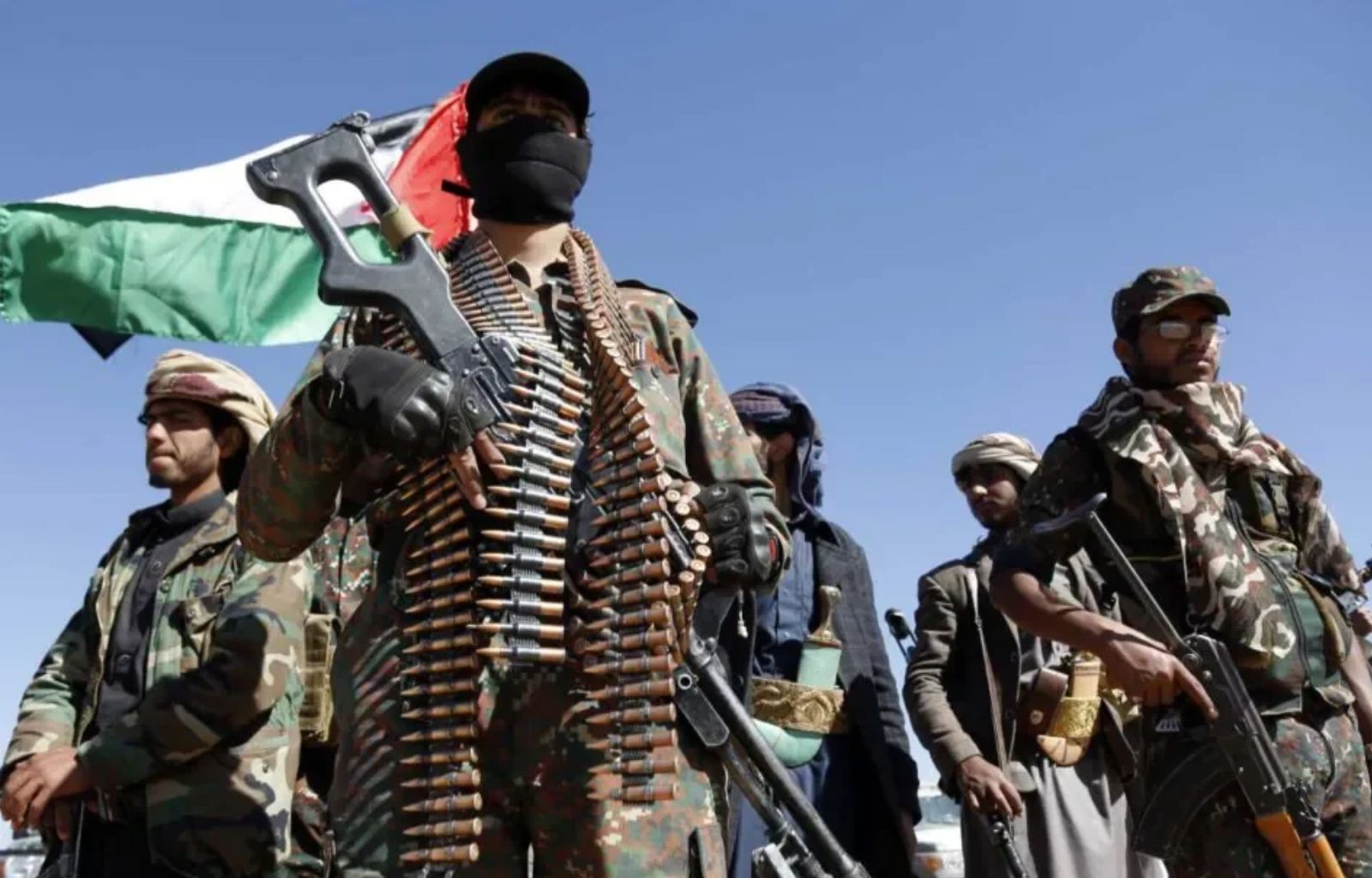
It is from this false, narcissistic and propagandistic conception of the duties of democratic service that the ‘peace and love’ calls for universal desertion ‘against your wars’ have emerged, in the face of a left-wing (and not only left-wing) populace increasingly convinced that support for the Ukrainian resistance – the equivalent of a cup of coffee a week in total aid, less than one per month in military aid – is not a contribution to a common cause, and that the ‘Putinisation’ of Ukraine and the ‘Pétainisation’ of Europe – with every ‘sovereign’ state having its own Vichy government – is neither the worst of dangers nor the worst of evils.
Just as the pacifists of the 1930s did: not wanting to die for Danzig, they became collaborators with the Nazis when they found them at their doorstep. Not desertion from war, but from freedom.
After all, could one really have hoped that the head of an organisation – which, just a few weeks ago, celebrated the 100th anniversary of the birth of the patron saint of all 20th-century ‘anti-imperialist’ revolutions, Fidel Castro – would have learnt anything from the lessons of Havel and the democratic dissidents of Charter 77? Could one have hoped that these good pupils of bad teachers would invite Artem Chapeye to sing ‘Bella ciao’ with them ?