Generation Europe: a generation for a federal Europe. Interview with Kliton Aleksander
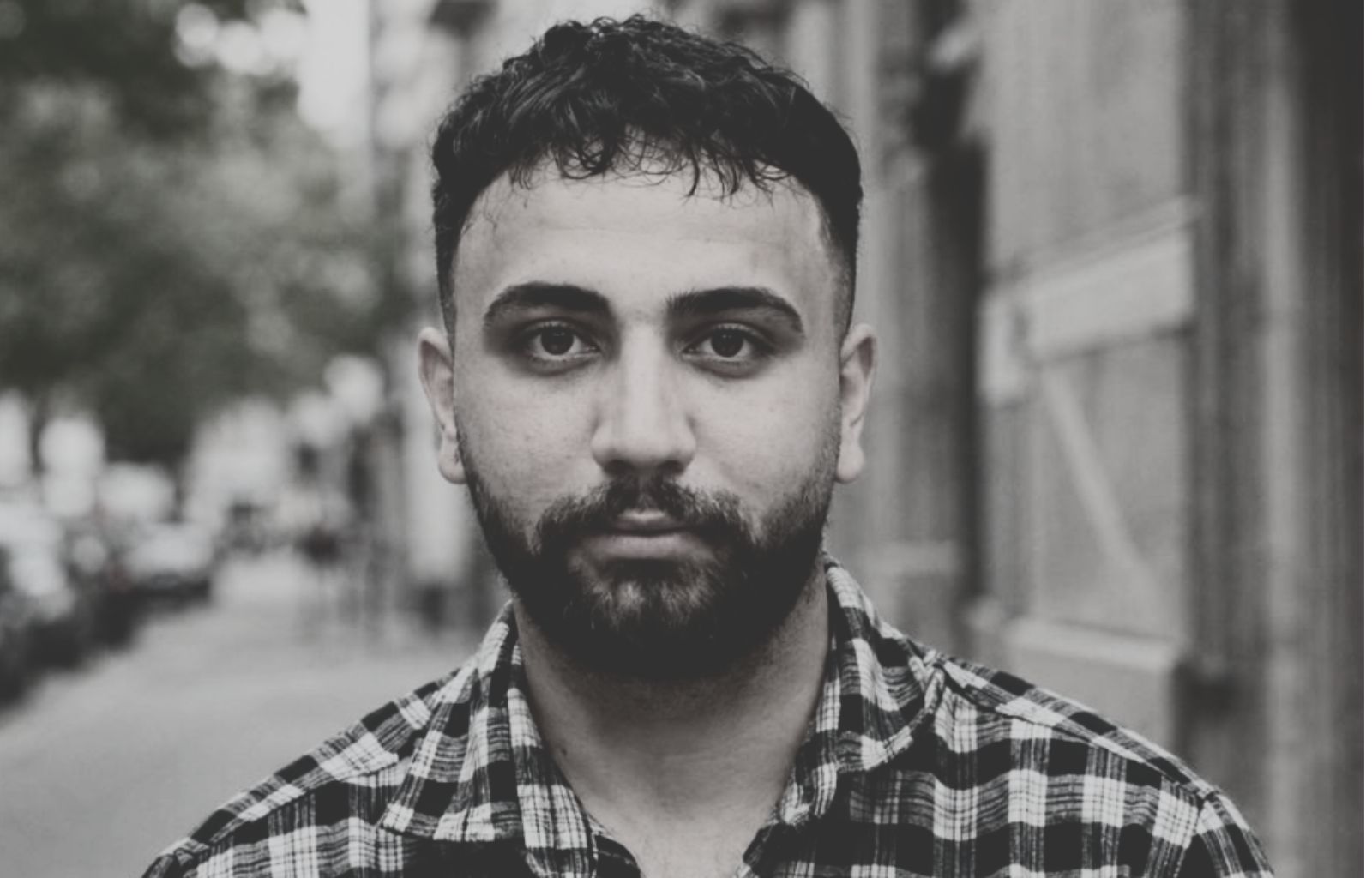
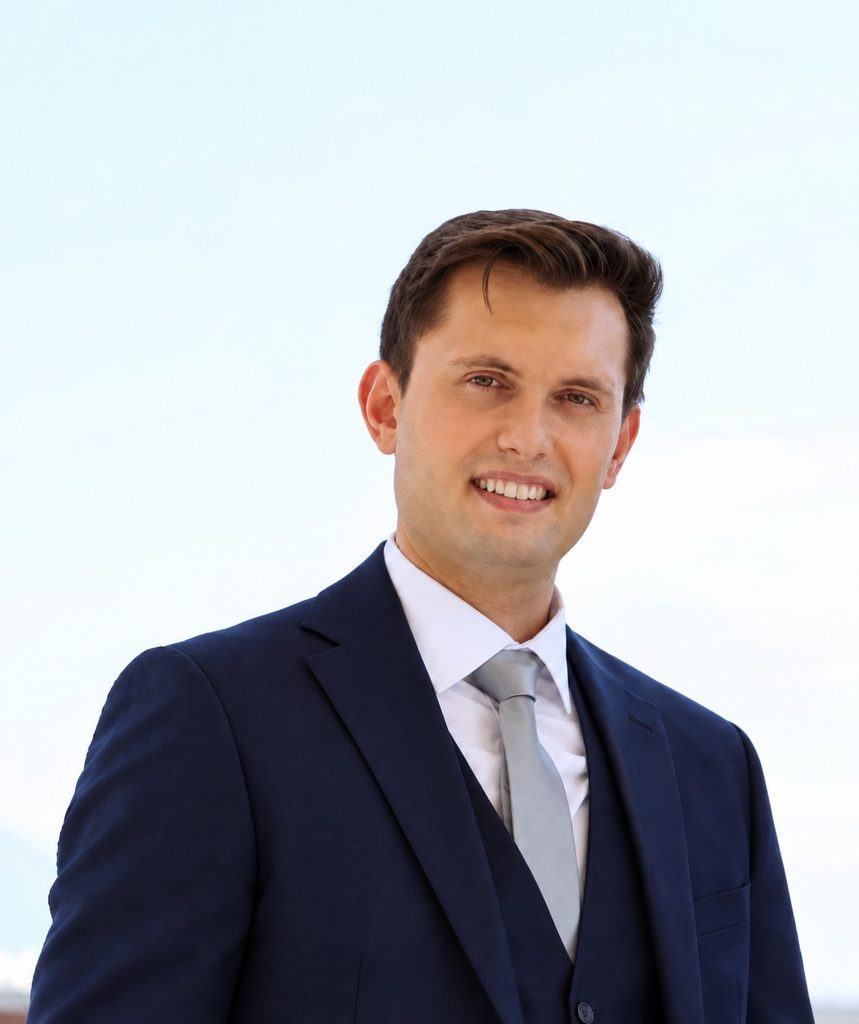
Kliton Aleksander is a young entrepreneur, Vice-President of the Higher Tertiary Sector Section of the Savona Industrialists’ Union (Confindustria Savona) and founder of Generation Europe, a movement of young Europeans that promotes the creation of a federal and sovereign Europe.
A vision that brings together the future of the younger generations and that of the business world, drawing on both the opportunities and the limitations of a Europe that remains divided into many national systems. We interviewed him to discuss the Generation Europe project, the geopolitical challenges facing the continent and his vision for Europe.
Kliton, let’s start with you. Could you introduce yourself and tell us briefly about your background?
I am a young entrepreneur from Savona. I have a background in economics; I work as a corporate consultant and have previously gained experience in the world of high finance. I also have a great passion for innovation and tech start-ups, a field I became involved in whilst at university.
In fact, I believe it was precisely these experiences – and, above all, running a business – that gradually led me towards geopolitics. When you work closely with companies, you realise quite quickly that individual talent and skills, on their own, are not enough. Access to capital, the cost of energy, infrastructure, technology and skills all matter immensely. And above all, the geopolitical context in which all this takes place is crucial.
From that point on, I began to ask myself a question which, over time, has become central to my view of Europe: how is it possible that a continent with capital cities, industries, universities, research and one of the world’s largest markets struggles so much to transform these resources into an economic, technological and geopolitical influence commensurate with its size?
It was also this question that led to the creation of Generation Europe.
Let’s start with Generation Europe. What is the movement, what is the idea behind it, how many people are currently involved, and who makes up the group?
Generation Europe is a movement of young Europeans founded with a very specific aim: to transform the European identity that already exists within our generation into an organised political community, capable of supporting and legitimising the creation of a sovereign European federation.
Let us start from the premise that over seventy years of integration have laid the social and cultural foundations of a European community. The problem is that this integration, however deep it may be, has not yet translated into a genuine collective political consciousness. And it is precisely on this transition that we wish to focus our efforts.
We are not a political party, because we do not wish to compete for power, nor do we wish to take a stance on every single political issue. But we are not a think tank either. Analysis is important to us; we need it to understand problems and identify possible solutions, but our aim is not to stop at ideas alone. We want to bring people together around a shared political project.
We are convinced that a European federation cannot simply emerge from an amendment to the treaties or an agreement between governments. For a new political system to be truly legitimate and enduring, it needs citizens who recognise it as their own and are willing to support it. This is why we describe ourselves asthe incubator of the emerging European demos.
Today, our digital presence boasts over 60,000 followers in total, and we have generated more than 50 million views across Europe. However, whilst these figures are important, the true heart of the project is the association. It is through this that we aim to transform the interest we generate online into tangible civic and political participation.
Its members include entrepreneurs, professionals, managers, engineers, researchers, scientists, craftspeople and artists, united not by their membership of a particular professional group or social class, but by a shared understanding of the problems facing Europe and a desire to work together to develop a concrete political solution.
When was Generation Europe founded, and what prompted you to turn this idea into a movement? And how are you building it?
The idea began to take shape towards the end of 2024. Then, in February 2025, we decided to launch the project publicly, initially almost as an experiment. We wanted to find out whether a clear federalist message, expressed in no uncertain terms, could really spark interest amongst young Europeans.
The response came very quickly. After about a month, we had already surpassed two million views and reached around ten thousand followers, without having spent anything on advertising. For us, this was an important first sign: clearly, we had tapped into an interest that perhaps wasn’t yet adequately represented.
From there, we spent about a year consolidating our digital presence, improving our content and building the team. It was only later that we decided to make the transition from an audience to a proper organisation .
On 18 June 2026, we formally established Generation Europe Italia as an association and , from the end of August, we began welcoming our first members.
So today we are working on two fronts. On the one hand, there is the digital sphere, which enables us to reach young people across the continent and speak to them directly. On the other, there is the association, which enables us to put down roots, forge relationships, meet one another, take on responsibilities and begin to build a tangible presence in local communities.
From the European Union to a federal Europe
Why do you believe that the current model of the European Union is no longer sufficient to tackle today’s challenges?
Because, in our view, the problem facing Europe goes far beyond individual policies. It is, above all, a structural problem. Europe possesses a large proportion of the economic, industrial, technological and demographic resources of a major power, but it lacks a unified political authority capable of utilising them strategically.
To understand why this situation has been sustainable for so long, I believe it is useful to look at political realism and game theory, and in particular at the security dilemma. The reasoning is quite simple. In the international system, there is no authority superior to the states that can guarantee their security; therefore, each state must look after its own survival. And even when cooperation would be in everyone’s interests, the strengthening of one state may be seen by others as a threat: this leads to an arms race, to mistrust, and to viewing the advantages enjoyed by others with suspicion. It is a dynamic that has shaped relations between the European powers for centuries.
After the Second World War, however, something happened that profoundly altered this balance: the United States intervened from outside, changing the incentives at play. Through their military presence, they became the main guarantor of Western Europe’s securityand, thanks to their clear superiority, any aggression between European allies became much riskier and less advantageous. France and Germany did not, therefore, simply decide, overnight, to trust one another: it was the strategic context in which they made their decisions that had changed.
The American presence helped to reduce the incentives for military competition, allowing Europeans to focus on economic and institutional integration without having to resolve the issue of security on their own. In this sense, the Pax Americana enabled Europe to integrate without the immediate need to unify politically as well.
Today, however, this balance is shifting. China’s rise, the return of competition between great powers and the shift in American priorities towards the Indo-Pacific mean that it is becoming increasingly less certain that the United States will continue to guarantee European security in the ways to which we are accustomed. And here lies a risk that is often underestimated: if the American guarantee were to weaken, it is by no means certain that Europeans would respond by uniting. The exact opposite might well happen.
If every state were to return to focusing primarily on its own defence, the incentives to rearm and to be concerned about the military balance with its neighbours would also return. I am not saying that we would go back to waging war, but that competitive dynamics might re-emerge – dynamics that the American guarantee had helped to mitigate.
Faced with this scenario, I see essentially three possibilities: to continue to rely on an external guarantor, to return to a security framework organised primarily on a national basis, or to incorporate the guarantee function into the European system itself through a political federation. It is this last option that we consider the most convincing.
Greater cooperation between governments, or even a confederation, would certainly help, but the underlying problem would remain: if security depends on the decisions of individual states, each must still ask itself whether the others will actually intervene in its defence when the time comes. A federation, on the other hand, would fundamentally alter this problem, because security would become the responsibility of a common political authority, with its own legitimacy, a budget and adequate military resources.
In short, whilst the US guarantee has helped to make European integration possible by altering Member States’ incentives from the outside, a federation could internalise that very same guarantee function, making it a permanent responsibility of the European political system.
So, in your view, is the federation a solution to a problem of power?
Yes, exactly.
From the perspective of political realism, sovereignty cannot be viewed solely in theoretical terms. A state may well retain all its powers in formal terms, but if it depends on the decisions of others for its security, energy or key technologies, its freedom of choice is nonetheless limited.
And in our view, this is precisely the contradiction facing Europe today. Individual states seek to preserve their autonomy, but in doing so they often end up, collectively, with far less power than they could have.
A federation would make it possible to address this contradiction by pooling certain key functions and finally providing political direction for resources that are currently divided amongst many states.
For this reason, when we talk about federalism, we do not simply mean ‘more Europe’. We are talking about structurally changing the way in which sovereignty is organised, in order to transform Europe’s potential into a genuine capacity to act and make decisions autonomously – what we call ‘agency’.
Where should we start? Which powers should be transferred to the European level first: defence, foreign policy, energy, technology or taxation?
I don’t think the main issue is deciding which powers to transfer first. The point, in my view, is to understand which functions must necessarily go hand in hand for a federation to function properly.
If we transfer individual competences without an overarching plan, we risk ending up with shared responsibilities, whilst decision-making and resources remain at national level. And at that point, we will not have resolved the problem of competition between states: we will simply have shifted it within the European institutions.
Having said that, I would certainly start with security, at least in conceptual terms, because it is the most fundamental function of sovereignty. But you cannot have a genuine common defence without a common foreign policy, without a budget to fund it, and without an industrial and technological base capable of supporting it. These functions are interdependent.
That is why we believe that the federation should be built on a systematic transfer of strategic powers, rather than simply adding new powers to Brussels one by one.
Of course, the process could also be gradual. However, a distinction must be drawn between the gradual nature of the transition and the nature of the objective: the intermediate stages must contribute to the establishment of effective political authority, rather than consolidating a system in which responsibility, decision-making power and resources continue to be distributed amongst levels of government incapable of acting autonomously.
Twenty-seven states with different histories, interests and political sensibilities: what, in practical terms, could be the key to achieving a federal Europe?
The truth is that I don’t think we can know today what the actual path will be that might eventually lead to a European federation. And I would also be rather sceptical of anyone who claims to be able to predict it.
Major political transformations rarely take place according to a precise plan. They usually develop gradually over time and then, at a certain point, a crisis or a shift in the existing balance of power can set the whole process in motion.
We can certainly imagine various scenarios. But I believe that focusing solely on these risks could cause us to lose sight of the most important issue: that of legitimacy.
A federation would not simply be the European Union with a few additional powers. It would bea new political system, with far greater powers over citizens’ lives. And a transformation of this magnitude cannot be based solely on an agreement between governments. There must be a community of citizens who recognise it, want it and are prepared to support it.
In our view, this is precisely the piece that is still missing. Europe already has common institutions, its own legal system and an integrated market. What it does not yet have – at least not to a sufficient extent – is an organised continental political community capable of supporting a genuine constitutional transition.
And this is where Generation Europe comes in. Our job is to help build that community.
We do not know what event might lead to the convening of a constituent assembly. But we do know that, should such an opportunity arise one day, we will need people who are already organised, informed and ready to support it. That is why we are striving today to create the conditions that might make that choice possible tomorrow.
Some people fear that building a European state means losing or erasing national identities. How do you respond to this criticism?
I believe that underlying this fear is the idea that political unification necessarily means that we will all become culturally the same. But in my view, the argument can also be turned on its head: a European federation could in fact be the very means by which we can best protect our cultural diversity.
If we look at the issue from a realistic perspective, power is not merely military or economic. It is also the ability to influence culture, values and even the way people view the world. Take the United States, for example. From cinema to music, from digital platforms to consumption patterns, a huge part of our daily lives is influenced by American culture, often without us even realising it. This is what is known as ‘soft power’.
The paradox is that, whilst European states seek to defend their identity through national sovereignty, they risk not having, on their own, sufficient strength to protect it from the influence of major external powers. A federation could provide us with much stronger economic, political and technological tools to support our cultures.
This does not, of course, mean that a federation would eliminate any risk of homogenisation. Indeed, it would be naïve to think so. Even within a federal state, there may be majority cultures which, in the long run, end up prevailing over minority cultures.
The difference, however, is that within a democratic federation we would have a better chance of tackling these problems through shared institutions, rather than relying predominantly on external power dynamics over which we have very little control.
And then there is a fundamental principle of federalism: subsidiarity. Not everything needs to be decided at European level – quite the contrary. Certain areas of competence, such as defence, foreign policy, energy and strategic infrastructure, require a continental approach. Many others, however, can and must remain with national, regional and local authorities.
For us, the principle is very simple: federal where necessary, local where possible.
A generational issue

Generation Europe was also founded with a strong generational dimension. Do you think that the younger generations have a different relationship with national and European identity, and that this very fact might make the transition to a federal Europe more realistic?
It’s our main focus.
We do not believe that a fully-fledged European people, in political terms, already exists today. We do, however, believe that over seventy years of integration have laid the social and cultural foundations – particularly amongst the younger generations – upon which a European political community could genuinely emerge.
For so many young people, Europe is no longer just a collection of distant institutions. It is something they experience in their everyday lives. They study abroad, work in other countries, travel, and forge friendships, professional relationships and businesses by crossing borders that now have a very different meaning from what they did in the past.
This, of course, is not enough to create a political community. Sharing experiences and opportunities does not automatically mean feeling part of the same people, with common interests and responsibilities.
That is precisely the missing link: transforming this social integration into a genuine political consciousness, capable of organising itself and taking action.
And that is what we want to do with Generation Europe. We do not believe we need to invent a European people from above. Rather, we want to try to give political form to something which, in our view, is already emerging within society.
The Future of Europe
If you had to name just one political step capable of transforming today’s Union into the Europe you envisage, what would it be?
I would say a moment when it becomes clear that certain fundamental functions can no longer be effectively guaranteed by European states acting in isolation. Security is probably the most important of these, and an existential threat could certainly accelerate this process, but we do not know what the decisive factor will be.
Looking twenty years ahead, do you think we’ll still be talking about 27 Member States, or about a genuine European federal state?
I don’t think for a moment that a federation is inevitable.
In fact, if I were to look solely at the current incentives, and take into account the gradual weakening of the US security guarantee, I would say that we could be heading in the opposite direction: greater national military autonomy, more competition between states, and perhaps even greater internal tensions within Europe.
Not necessarily because anyone wants to bring about this outcome. It is simply, as we have seen previously, one of the dynamics that can emerge when an external safeguard – which for decades had helped to reduce competition – is no longer in place.
However, I am not merely an observer of international politics. I am also an entrepreneur, and this is probably a bias of mine that influences my way of thinking to some extent. I am, in fact, used to thinking that constraints matter a great deal, but that they do not determine everything.
People, ideas, organised groups and leaders can change even trajectories that seemed already set in stone.
The federation is not part of history. That is precisely why we must build it.
If you had to explain to a twenty-year-old why it is worth working towards building a United States of Europe today, what would you say to them?
I would tell him that, first and foremost, it’s a matter of freedom.
Our generation has grown up taking for granted things which, if we look at European history, are by no means normal. Being able to study in another country, work across borders, set up a business with a continental market in mind, and build relationships without constantly feeling the weight of borders.
These are opportunities that we now take almost for granted, but which are not guaranteed to last forever.
And then there is an even more important question: who will decide the conditions under which we will live over the next twenty or thirty years?
For me, sovereignty, at the end of the day, means precisely this. It means that a community has the opportunity to decide its own future, rather than having it determined by others.
A European federation would not automatically guarantee us better decisions, greater prosperity or greater security. No institution can guarantee these things. But it could at least give us the tools to make our own choices.
And if we have even the slightest realistic chance of building this capacity, I believe it is our generation’s responsibility to try.
The entrepreneur’s perspective
You are a young entrepreneur. From a business perspective, what are the main constraints arising from the fragmentation of Europe into 27 national systems?
I could list all the problems we are already familiar with: differing tax and administrative systems, varying regulations, fragmented capital markets, and barriers that still make it difficult to expand from one European country to another.
These are all real problems, let’s be clear. However, I think that if we focus solely on these aspects, we risk overlooking what I believe to be the most important issue.
European businesses are not merely lacking a genuine single market. Above all, they lack a political actor with a direct strategic interest in supporting their development.
In the most advanced sectors, good companies and private capital alone are not enough. What is needed are huge investments, a long-term perspective, infrastructure, initial demand and the ability to bear risks that may only yield a return after many years.
This is where what we call the ‘entrepreneurial state’ comes into play: not a state that replaces the market, but one that regards certain industrial and technological capabilities as integral to its own security and autonomy.
This is where Europe’s real disadvantage lies. Our businesses are competing with companies that thrive within political systems in which industrial and technological success is also a matter of power.
This is the structural ceiling in Europe: it is not a lack of talent or entrepreneurial ability, but the absence, on the necessary scale, of a political entity capable of taking on risk and thinking for the long term when the market alone cannot do so.
What specific changes would this bring for European businesses if Europe were more integrated politically, economically and strategically?
Above all, it would change the relationship between business, scale and the long term.
Completing the single market and integrating capital markets would be crucial, but in strategic sectors this is not enough. Space, defence, semiconductors and artificial intelligence often require huge investments, involve high risks and offer returns that are a long way off.
It is in such cases that the public sector can stimulate demand, fund infrastructure and research, and support capabilities that no single private actor would have an interest in or the capacity to develop on its own.
The United States has been doing this for decades, including through research linked to security and defence. A European federation could develop a similar capability on a continental scale.
It would not mean picking the winning companies or shielding them from competition. It would mean enabling a European entrepreneur to reach the frontier without necessarily having to look to the ecosystem of an external power for the capital, demand and strategic vision needed to continue growing.
These days, there is increasing talk of competitiveness, strategic autonomy and technological sovereignty. Could a federal Europe also be the answer to the growing competition with the United States and China?
Yes, because in our view, Europe’s strategic weakness is not primarily a cultural problem. It is a problem of structure and incentives.
The United States and China are profoundly different systems, but they share one thing in common: they are directly responsible for their own security and their international standing. This responsibility compels them to think for the long term, take risks and build capabilities today that may prove indispensable tomorrow.
Most European countries, on the other hand, have been able to live under different circumstances for decades, focusing much more on the administration of the status quo.
A federation would change precisely that. A Europe that is directly responsible for its own security and strategic dependencies would have different incentives when making decisions.
Not because Europeans would suddenly become braver or more far-sighted, but because the perspective from which they are forced to think would change.
That is why I do not think that Europe should first learn to behave like a great power and then form a federation. It is by assuming the responsibilities of a great power that Europe would find the incentives to become one.