The eagle at the gates of Europe: Poland raises its shield

“Poland takes a step towards war” – this is how *Il Manifesto* interpreted, on its front page on 29 September, the statements made by the Polish Deputy Minister of Defence, Tomczyk, on aviation security. As reported by the most reputable international news agencies, Poland will allow its fighter jets and helicopters to shoot down foreign aircraft on the basis of radar detections, without prior identification.
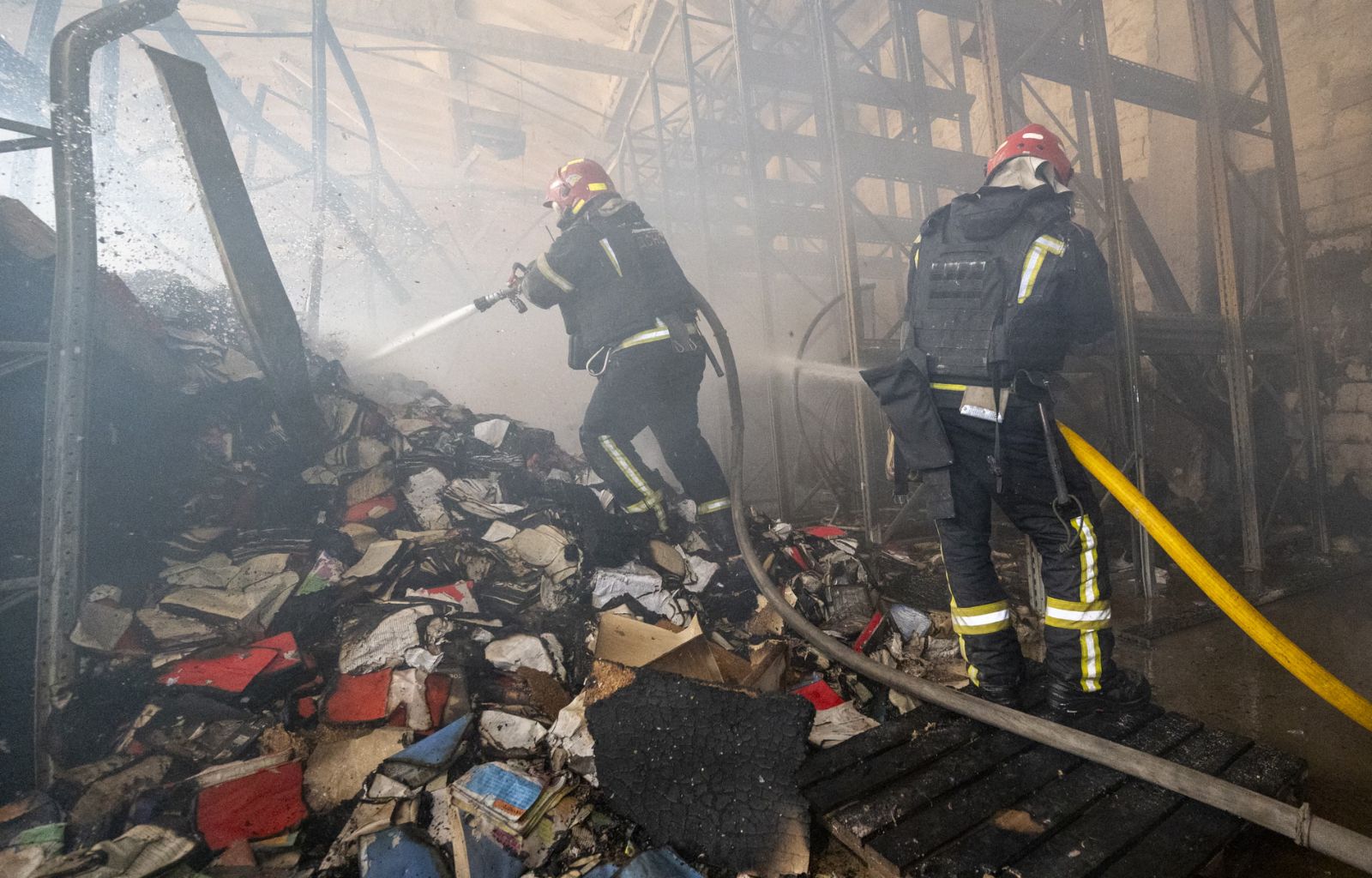
This measure addresses Poland’s need to protect its airspace and territory from Russian drones, missiles and aircraft. In recent years, in fact, there has been an increase in the number of aircraft from the east violating Polish airspace and international law. The Russian missile that exploded on Polish territory on 30 July 2026 and the incursion of 9–10 September 2025 are clear examples of this.
Is Poland, then, taking a step towards war, as reported by *Il Manifesto*; or is it taking measures to defend its airspace, its people and the gates of Europe?
Since the dawn of international law, a country that defends its territory and airspace is not preparing for war; rather, it is adapting to an increasingly critical situation brought about by a belligerent neighbour.
A neighbour, Russia, which is taking many steps towards war. It is therefore up to Poland and the EU to halt these steps, by ensuring the strength of the external borders whilst maintaining the stability of internal institutions.
A country awaiting the 2027 elections
For Poland, as for France and Italy, amongst others, 2027 will be an election year. The parliamentary elections are, of course, a target of Russia’s hybrid warfare, particularly as this is a country that already spends 4.8 per cent of its GDP on defence.
The main Polish political parties are in favour of investing in defence, but it is in the approach that differences arise: whilst the current Tusk government is aiming for greater defence integration with the EU, the PiS advocates a more ‘Polish’ approach (the Tusk–Nawrocki clash over SAFE is proof of this). An extremist view is held by the Eurosceptic Konfederacja, currently the third-largest party in the polls, which even proposes an autarkic approach.
Unlike Italian politics, evidently, rearmament is not a divisive issue. In fact, society views the armed forces favourably. In Italy, pacifists are, alas, becoming increasingly vocal.

An army that is well integrated into Polish society
Poles share a significant part of their daily lives with the military; consider, for example, the patron saints of Polish schools and the numerous parades – the 4 November parades in all Polish towns and cities being particularly famous; consider the sporting activities organised by the army for the community, such as orienteering; and consider, too,the large number of military secondary schools in Polish towns and cities.
An example of this is the city of Kielce, with a population of around 200,000, where I used to live; there are four military secondary schools there; the main non-military school, however, is named after Piłsudski. The main avenue of the city is adorned with army murals; on 4 November, the city comes to a standstill for the military parade – which is always packed with spectators – and even the Scouts take part; whilst walking in the woods, I have often come across young people taking part in orienteering competitions organised by the army. These glimpses of everyday life show just how well integrated the armed forces are into civilian life.
Europe’s leading military power by 2030: Poland’s aspirations, balancing innovation and expansion
Poland is well aware of its geographical position and its recent history as a nation that has been subject to conquest and influence, not only from Russia but from other powers as well. Consequently, since 1999 – with its accession to NATO and subsequently to the EU – it has sought to protect itself from the East and the West, particularly against an uncooperative Russia.
In 2014, whilst Russia was occupying Crimea, Warsaw decided to increase military spending to 2 per cent of GDP. The resumption of the conflict in Ukraine in February 2022 led the government (PiS) to pass the ‘Homeland Defence Act’, which provided for an increase in defence spending.
Under the subsequent Tusk-led government, Poland further increased its investment, bringing expenditure to just under 5 per cent of GDP; given the high rate of growth in Polish GDP, the actual increase is even greater.
The Tusk government has cemented investment in the military sector through the ‘Military Development Programme 2025–2039’, with the aim of making Poland the leading country in Europe in terms of military capability and deterrence. After all, Warsaw understands something that other Western capitals refuse to grasp: it is necessary to demonstrate to Russia – and others – that one is prepared for any eventuality.
The programme focuses on several key areas: being amongst the top NATO nations in terms of defence spending as a proportion of GDP; building the strongest and largest land forces in Europe; making the most of European SAFE funds; and investing in the Polish defence industry to facilitate local production and innovation. This last point is crucial: in fact, Warsaw is not merely aiming for quantity, but above all for quality: state-of-the-art equipment for every unit, air defence and anti-drone systems, greater coordination between the various military branches in operations (land, sea and air forces, as well as space, cyberspace and intelligence), the development of military AI, and training in the use of drones – an area on which Warsaw is placing an ever-greater emphasis. To date, the Polish army has over 200,000 personnel, the largest in the EU; the aim is to increase this number to 300,000 active personnel and 200,000 reservists, and to enhance their capabilities, thereby creating the largest and best-trained army in Europe (after the Ukrainian army)
A Poland ready to defend us
The expansion of the Polish armed forces and innovation in the military sector have made Poland a key player in the EU’s defence. After all, these are not just the Poles’ borders, but those of all of us Europeans.
Yet whilst politicians in Warsaw are divided over how to invest in defence, in Berlin, Rome and Madrid, they are divided over whether or not to invest at all.
We must understand that defence is not a matter for the Poles rather than the Lithuanians, Estonians or anyone else… it is a matter for the Union as a whole. For this reason, Europe and individual countries should look to the Polish model and seek to incorporate it into a European vision of defence. European deterrence would emerge stronger as a result.
In short: a strong Warsaw today makes Berlin, Rome and Paris safer. But that is not enough. As well as Poland’s responses, concrete responses are needed from Brussels and the other EU member states. Will they come by 2027?