The hour of choice: Europe and the bet for democracy in Iran

The Islamic Republic of Iran now presents itself as a system undergoing systemic rejection, where the rift between the ruling elite and civil society is no longer political but ontological. On the one hand, a theocratic hierarchy entrenched in the defence of an anachronistic worldview; on the other, a young, hyper-connected and culturally secularised nation that has now severed every umbilical cord with the central power.
The irreversible crisis of the ayatollahs’ power system
This disconnect manifests itself in an unprecedented crisis of legitimacy: institutions are no longer perceived as organs of government, but as apparatuses of occupation. The foundations of the theocracy, once considered monolithic, are crumbling , not only under the pressure of the squares, but due to a silent defection that has emptied every rite of consensus of the regime of meaning. This rupture, which exploded at the end of 2025 and turned into a generalised insurrection in the first weeks of 2026, has made the split irreversible.
These were not circumscribed protests, but a widespread uprising that inflamed every province, forcing the regime to a repression of unprecedented violence in order to maintain control of the nerve centres. The bloodbath, however, triggered a strategic paradox in the corridors of power: if the brutal intervention of the Pasdaran and the Basij physically crushed the square, it simultaneously convinced a part of the political and military elite that the clerical framework is now an obstacle to the survival of the system.
In this view, the theocracy is no longer the regime’s shield, but its main risk factor
Proof that sheer brute force alone cannot halt the biological decline of a power that has lost all social function. It is in this climate that the leadership of the Islamic Republic has begun to devise an unconventional survival strategy. In the closed chambers of power, the failure of external deterrence and the hostility of the domestic population have pushed the system to seek adiplomatic lifeline, giving rise to that cataclysmic metamorphosis that today threatens to fool Western chancelleries: an extreme attempt by the elite to change the aesthetic forms of command in order to preserve its military and economic substance intact.
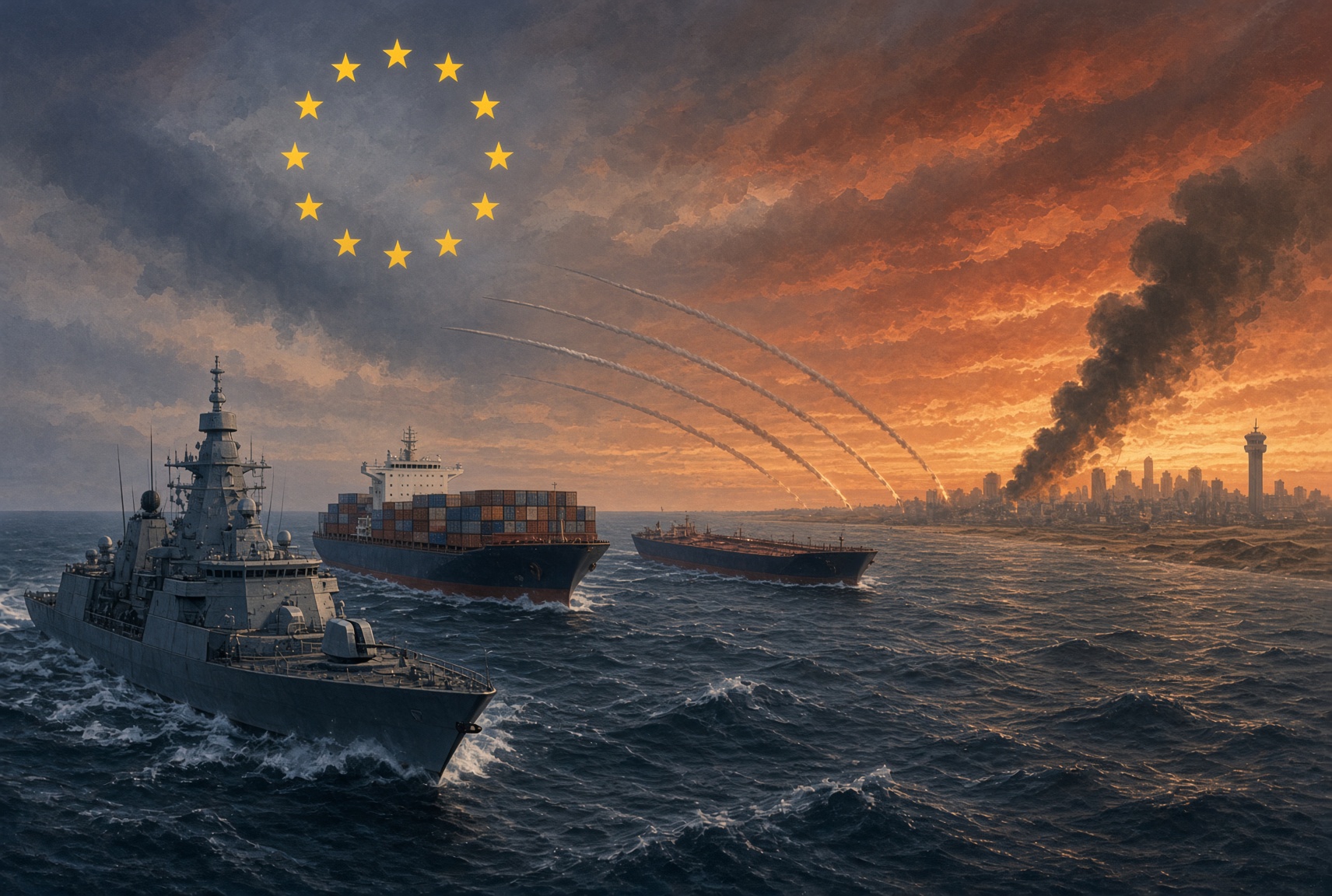
In this scenario, the posture of the White House adds a layer of dangerous uncertainty; the Trump administration alternates betweenmassing troops in the Gulf and messages of dialogue, oscillating between the threat of the final blow and the offer of a grand negotiation. In this volatility, regional powers watch with dread the spectre of a full-scale conflict that would blow up the already precarious Middle Eastern balance. For Ankara, an Iranian collapse would mean unmanageable waves of refugees to the north; for the Gulf monarchies and global markets, the risk is the closure of the Strait of Hormuz and the consequent suffocation of energy routes. It is precisely in this climate of turmoil, after years of hesitation and diplomatic ambiguity, that the European Union has broken the deadlock with a decision of historic significance: the designation of the Islamic Revolutionary Guard Corps (IRGC) as a terrorist organisation.
The West is today at a crossroads that does not admit of neutrality
On the one hand, the legal firmness of Brussels; on the other, the wandering American conduct, suspended between threats of war and the temptation of a transactional dialogue with Ali Larijani. It is a confrontation between two opposing visions: one path aims at the rebirth of a sovereign Iran reintegrated into legality; the other risks endorsing a transition hijacked by the military apparatus, guaranteeing the survival of the system under new camouflaged guises.

To understand the seriousness of this crossroads, it is necessary to retrace what has happened in the region since 7 October 2023
Tehran, acting as the ‘puppeteer’ of chaos, sought to annihilate Israel by triggering a generalised regional conflict, coordinating the entireAxis of Resistance network in a multidirectional aggression. However, what was supposed to be the final move resulted in astrategic overdose. Coming out of the shadows with the direct attacks of 2024 and the failed head-on clash of June 2025, the regime exposed its technological vulnerability and offered the US the casus belli to neutralise the Fordow and Natanz nuclear sites. With its proxies decimated and its atomic ambition reset, the system found itself militarily naked and strategically humiliated. It is precisely this collapse of external prestige that triggered the internal implosion: the uprisings at the end of 2025 definitively emptied the theocracy of legitimacy, leaving power suspended in a vacuum that Ali Larijani, recently installed as Secretary of the Supreme National Security Council, is now desperately trying to fill.
His figure is the perfect embodiment of that throwback catapardism necessary for the survival of the system. Larijani is not an outsider to the apparatus, but a son of the regime with an emblematic biography: a former commander of the Pasdaran, former head of State TV in the years of the fiercest censorship and member of a family dynasty that simultaneously occupied legislative and judicial power. A refined intellectual, expert in Western philosophy and pragmatic negotiator of the nuclear dossier, Larijani possesses the sophistication to offer Western chancelleries what they desperately seek: a presentable interlocutor. However, behind his mask as a ‘moderate conservative‘, he hides the aim of protecting the Supreme Leader’s economic assets and the immunity of the military leadership under a pseudo-reformist veneer.
Rumours of a Washington-Larijani axis smack of a rhetoric of the lesser evil that has already failed
To accept this compromise with the ‘good face’ of repression would be to validate a system that uses dialogue as a tactical diversion. Larijani is not the solution, but the shield erected to preserve the impunity of the leadership and prevent the collapse of the regime from becoming the liberation of the people. At this crossroads of history, the designation of theIRGC as a terrorist organisation is the cordon sanitaire that Brussels has laid down to protect international integrity from cynical realism, creating the precondition for a new regional security architecture, inspired by the OSCE model, capable of replicating in the Gulf that dialogue between opposing blocs that guaranteed stability in Cold War Europe.
This strategy should be based first and foremost on total politico-military transparency, an indispensable move to eliminate the surprise factor of militias and offer collective guarantees to Gulf neighbours. This rigour must be accompanied by the adoption of the FATF standards as a picklock to dismantle the Russian free-riding mechanism, which uses Iranian channels to circumvent sanctions and fuel the war in Ukraine. Finally, the human dimension must become the pillar of stability, removing fundamental rights from the rhetoric of the domestic issue behind which the Iranian regime has always hidden its crimes.
The EU position: protection of human rights, not surrender to political cosmetics
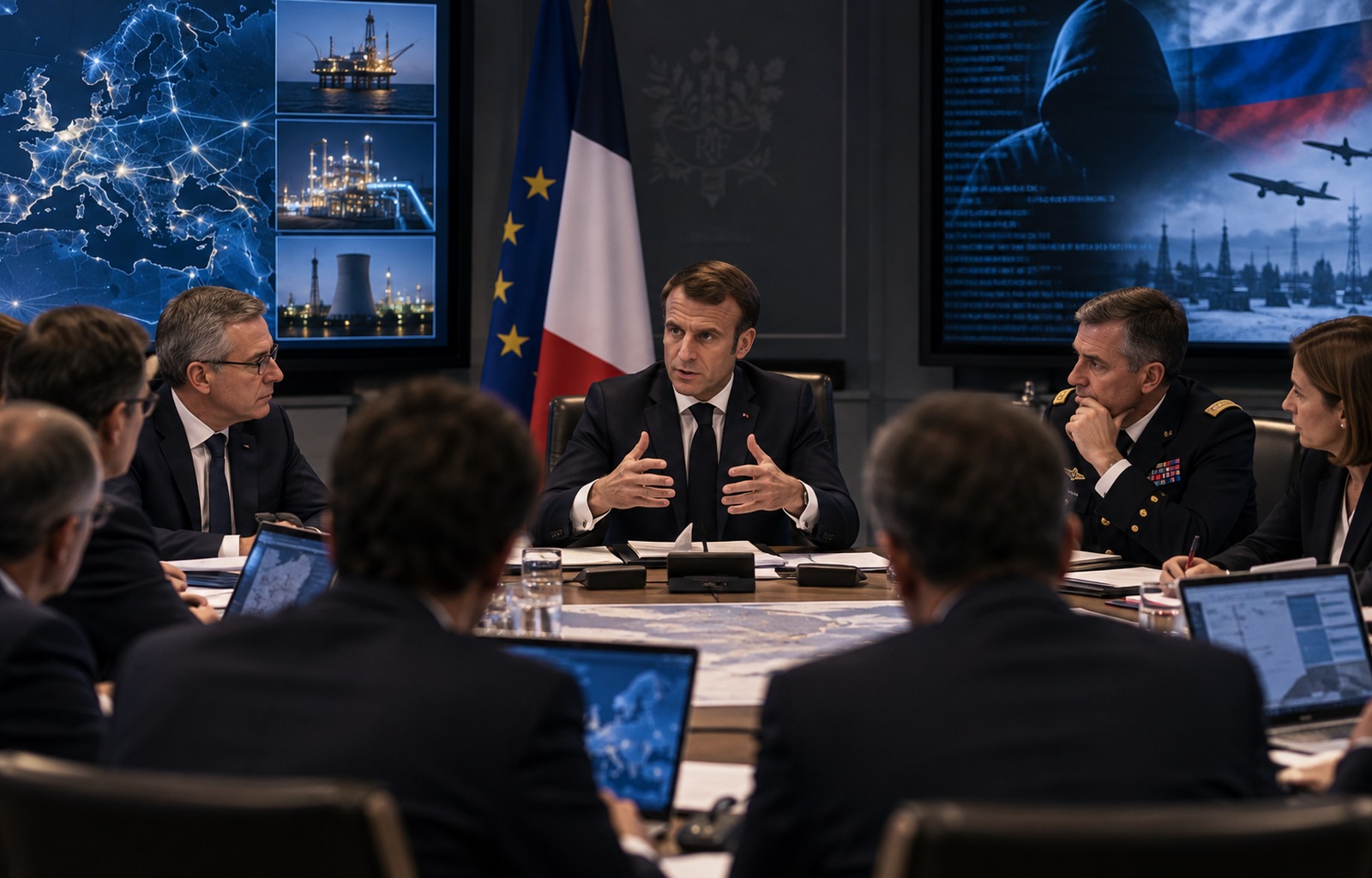
This is the third way that Brussels now has a duty to take: a rejection of both war and moral capitulation before Larijani’s mimicry. European political audacity must also find its natural outlet at the heart of multilateralism. The EU countries currently members of the UN Security Council – led by the firmness of France – must force their hand and demand Iran’s referral to the International Criminal Court for crimes against humanity committed during the January 2026 crackdown. It is certain that Moscow, in order to protect its strategic partner, will use its veto. But this is where that ‘Veto Initiative’ (Resolution 76/262) comes in, which obliges anyone blocking a Security Council resolution to appear before the 193 countries of the General Assembly.
Russia will not be able to limit itself to a no in the shadows; it will be forced to stand at the podium and justify, before the international community, why it chose to protect a regime that massacres its own people. This diplomatic humiliation is the tool to expose the accomplices of the Iranian system and isolate them morally on a global scale.
At the same time, the European presence in the field must change its skin
Our embassies in Tehran can no longer remain passive offices or mere observers of the news. They must be transformed into outposts of witness: open ports for dissidents, shields for human rights defenders and technological hubs ready to provide the necessary means to breach the digital blackouts imposed by the regime. Giving Iranian civil society the ability to document and communicate reality is the only way to definitively break the monopoly of power. It is time to stop negotiating with a crumbling past and to bet, with courage and without the usual double-dealing, on the sovereignty and freedom of the Iranian people.
Ultimately, no diplomatic architecture will have the desired effect if the central role of endogenous democratic forces is not recognised.
The hope for a different Iran lies not in cosmetic reshuffles, but in theWest ‘s ability to stop looking at Iranian civil society as a victim and start treating it as thesole sovereign interlocutor. The real transition passes through direct support to independent trade unions, student dissidence networks , and women’s movements that already administer de facto resistance on the ground. Supporting these grassroots structures is not only a moral duty, but the only rational strategic investment to prevent the vacuum left by the regime from being filled by chaos or new authoritarianism. It is on this new secular and democratic ruling class that Europe must bet.
Read also:
Trump threatens Iran, Europe sanctions: the rhetoric of force and the limits of reality; R.Scognamiglio, L’Europeista
We are being exterminated in Iran. Intervene before it is too late; K.Ahangar, The Europeanist