China: the price of Xi Jinping’s absolute power
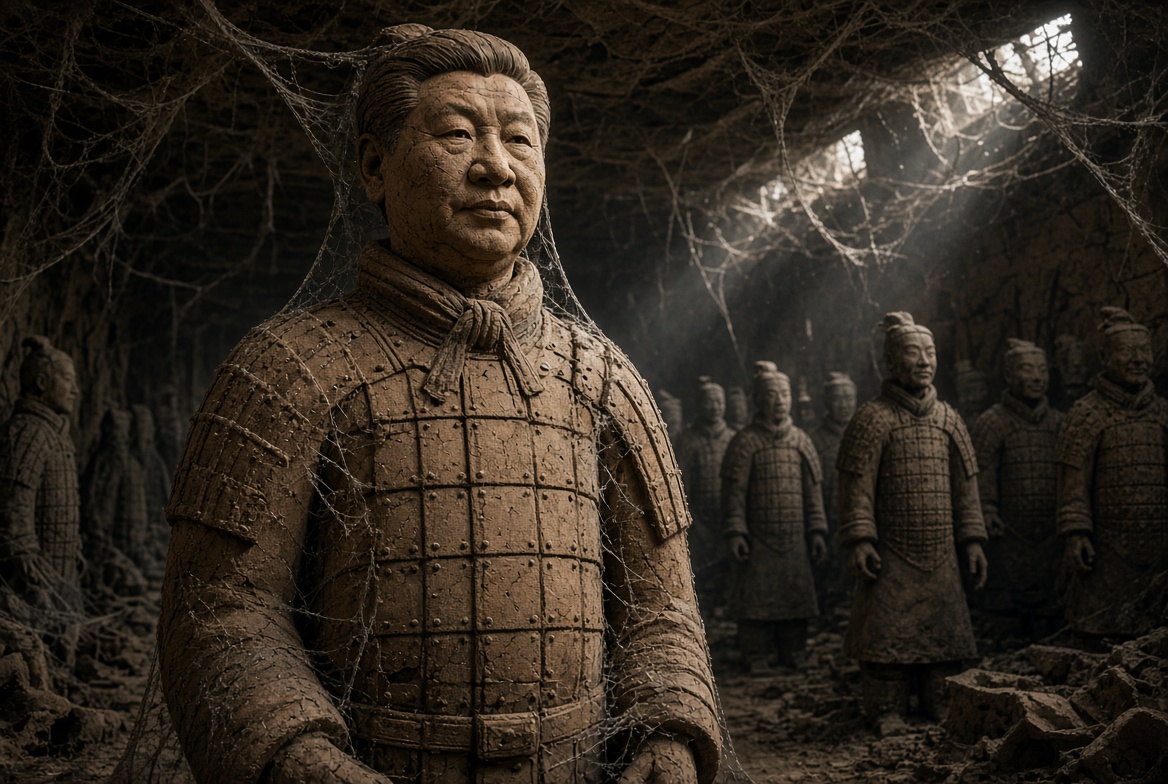
In September 2025, during a conversation accidentally picked up by microphones, Xi Jinping and Vladimir Putin found themselves discussing organ transplants, biotechnology and a future in which living to the age of 150 might become possible.
The idea of immortality even came up in the conversation.
Judging by the consequences of some of the decisions Xi has made in recent years, the West might almost hope that such a prospect were to become a reality. After all, few of China’s adversaries would have managed to challenge its ambitions as seriously as its own president.
Behind the irony, however, lies a far more serious issue.
For years, China has been portrayed as a power destined to inevitably overtake the United States, buoyed by seemingly unstoppable economic growth, immense productive capacity and ever-expanding international influence.
Beijing seemed to have time on its side, whilst Western democracies appeared unable to keep pace with the speed of its transformations. Today, that scenario seems far from a foregone conclusion, and the reasons why deserve to be explained.
“If your opponent is making a mistake, don’t interrupt them”
China remains a leading economic, industrial and military power. It would be naïve to mistake its difficulties for an irreversible decline, particularly given the country’s ability to dominate strategic sectors and influence global supply chains.
Yet, behind the image of stability that the Communist Party continues to project, contradictions are emerging that are becoming increasingly difficult to ignore. The property crisis, weak domestic demand, the difficulties faced by local authorities and trade tensions with other countries paint a picture of an economy struggling to regain its former momentum.
What makes the situation even more delicate is the growing concentration of power in Xi’s hands.
The Chinese president has progressively strengthened the Communist Party of China’s (CPC) control over the economy, institutions and the armed forces, increasingly and openly subordinating economic priorities to political and national security objectives.
This approach has consolidated his authority, but it raises serious questions about the system’s ability to recognise its own mistakes and correct them.
When power is concentrated around a single leader, even admitting that a decision was wrong can become politically difficult.
“You and which army?”
The purges that continue to affect the military leadership add a further element of uncertainty.
Presented by Beijing as part of the fight against corruption, they have involved leading figures within the defence establishment. They do not necessarily indicate a loss of control on Xi’s part, but they do call into question the stability and reliability of a system that is supposed to ensure discipline and continuity, particularly as China steps up the pressure on Taiwan and asserts an increasingly ambitious role in the Indo-Pacific.
It is precisely here that the paradox of Chinese leadership becomes apparent.
Xi has built his legitimacy on the promise of a national renaissance, presenting himself as the man capable of restoring China’s lost central role in history.
But the ambition to strengthen the country through increasingly strict political control risks undermining some of the very mechanisms that had facilitated its rise. Economic dynamism, investor confidence and the ability to adapt to a changing international environment cannot be guaranteed by Party discipline alone.
The Great Wall of Debt: over 300 per cent of GDP
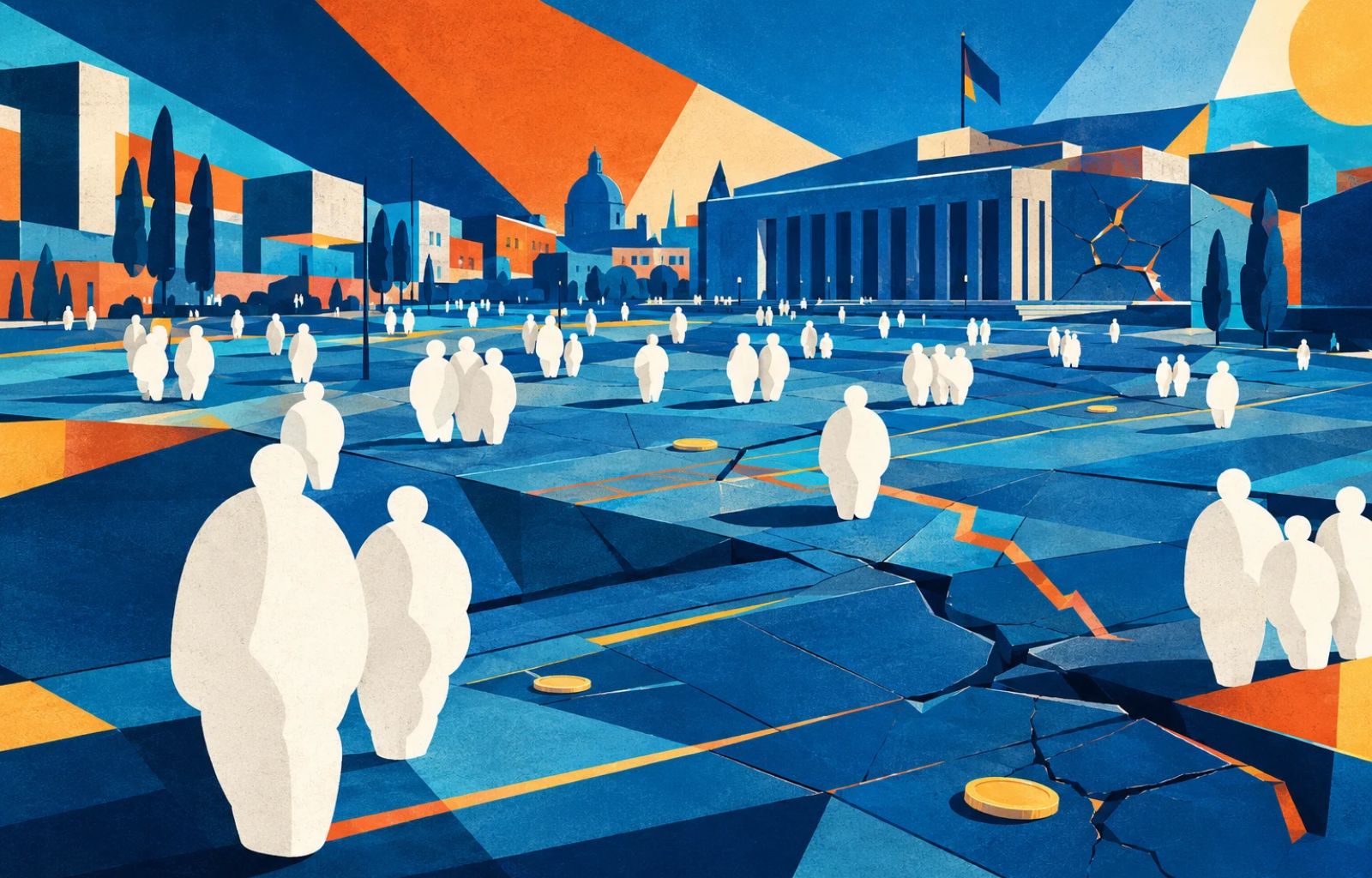
Assessing China’s financial stability by analysing only the sovereign national budget presents a distorted picture. Beijing’s accounting framework conceals far more obscure and dangerous pitfalls.
Since the post-pandemic period, official public debt has exceeded 110 per cent of GDP, accumulating at a rate of $25,000 per second. But this is merely the tip of the iceberg. To finance its expansion, the Chinese leadership has made extensive use of LGFVs (Local Government Financing Vehicles), provincial investment companies set up to raise capital on the market and within theshadow banking system.
Backed by public land as collateral, these vehicles have fuelled a massive infrastructure bubble. With the collapse of the property market and the defaults of giants such as Evergrande, local government revenues have dried up, leaving hidden liabilities estimated by the IMF at between 9,000 and 10,000 billion dollars. When this ‘off-balance-sheet’ debt is added to the official debt, real public debt reaches a staggering 160 per cent of GDP.
The supply-side shortfall: industrial subsidies versus sluggish consumption
Added to the provinces’ deficit is that of the corporate sector, whose debt stands at nearly 150 per cent of GDP, driven by state-owned enterprises (SOEs) which enjoy unlimited credit at preferential rates.
This low-cost liquidity has been systematically channelled into the strategic sectors identified by central directives: batteries, robotics, photovoltaics and electric vehicles. The result is a massive surplus of production capacity that the domestic market is unable to absorb. Unlike the West, which supports demand and incomes during crises, Beijing subsidises supply and production exclusively.
This has led to a profound imbalance: domestic consumption by Chinese households accounts for just 37 per cent of GDP, compared with a Western average of over 60 per cent. Forced to dump its surplus goods onto foreign markets at below-market prices, China is triggering extremely harsh global tariff responses.
When official public debt, provincial-level debt, corporate liabilities and private debt are added together, China’s total debt has now exceeded the critical threshold of 300 per cent of GDP.
The risk of falling into the Japanese trap
The illusion that state planning can replace market forces comes up against the law of diminishing returns: with debt-to-GDP ratio exceeding 300 per cent, every additional yuan of credit generates almost zero marginal growth.
This need to export industrial overcapacity is intertwined with a specific geopolitical strategy. In an attempt to free itself from the dollar and Western financial hegemony, Beijing is reducing its holdings of US government bonds, building up gold reserves and strengthening alternative payment networks such as the CHPS. However, as long as the domestic market remains stifled by debt and unable to consume, any projection of global power risks being built on shaky foundations.
The main danger for Beijing is not a sudden crash like the one in 2008 — which was prevented by state control over the banks — but a prolonged period of secular stagnation and fiscal deflation (as seen in Japan in the 1990s). Without reforms to shift resources from state-owned enterprises to household purchasing power, China will remain trapped in a vicious circle: producing what the world rejects, accumulating debt to prop up unproductive factories and stifling its own domestic demand.
Never count your chickens before they’re hatched
For Europe, however, it would be a mistake to interpret these difficulties as a reassuring sign that China is set to fail.
A power that is slowing down does not automatically become less dangerous, just as an economy in difficulty does not necessarily imply a more cautious foreign policy.
On the contrary, the need to maintain domestic consensus and demonstrate the strength of its leadership could make appeals to nationalism and competition with the United States even more important.
The question, then, is not whether China is on the brink of collapse, but whether – and to what extent – the model built by Xi Jinping is still capable of sustaining the ambitions he himself has fostered.
The latest economic and political developments suggest that the difficulties can no longer be attributed solely to a temporary downturn. To understand how deep-seated they are, and what consequences they may have for the international balance of power, we need to start by looking at the data.