The Central Bank’s Polish gambit: the Tusk/Nawrocki standoff continues
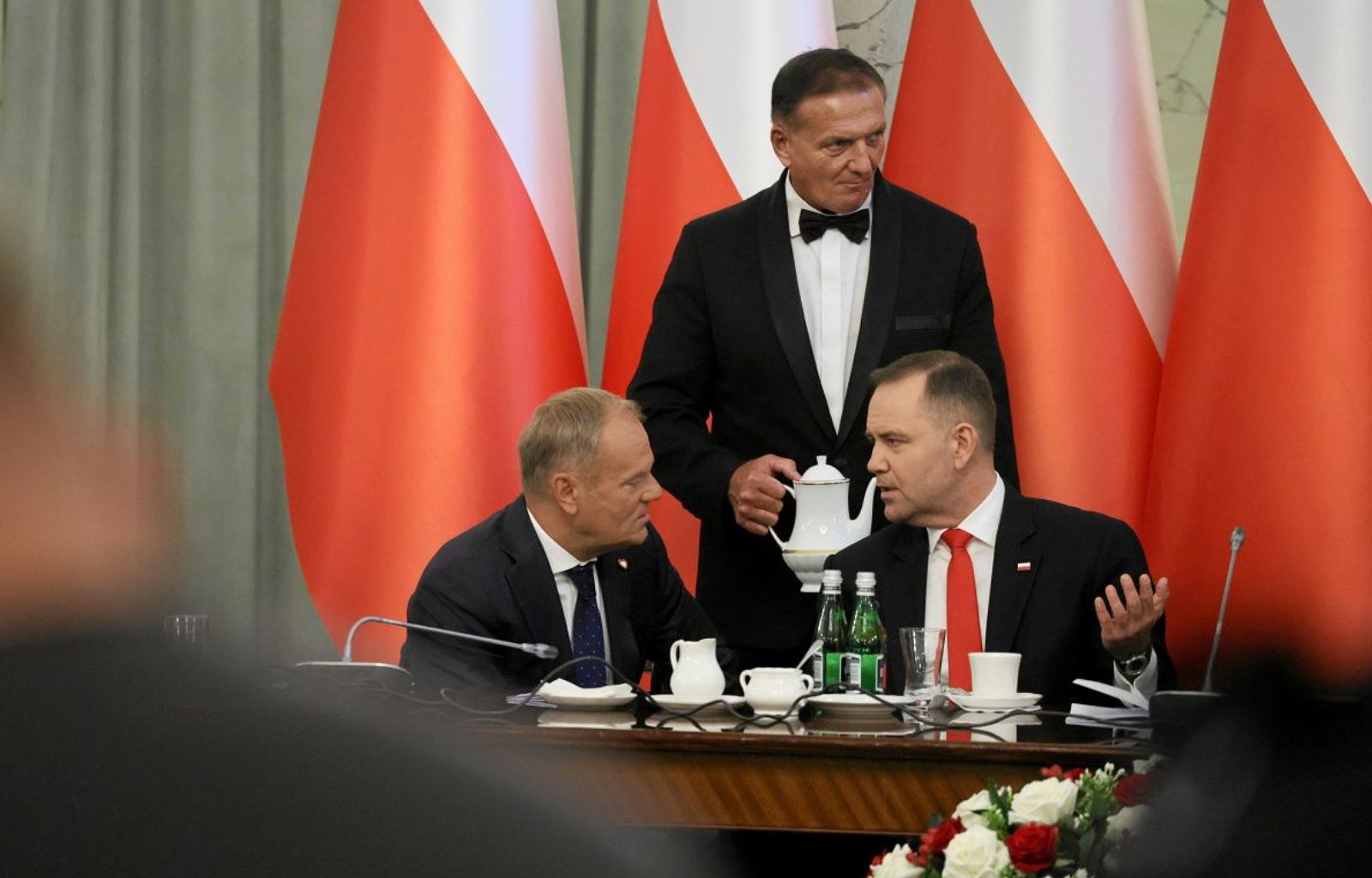
Whilst the crisis at the Polish Constitutional Tribunal is capturing the attention of the international press and drawing hundreds of people to the building on Al. Szucha, just three kilometres away, in the building on ul. Świętokrzyska, a new front in the clash between Donald Tusk and Karol Nawrocki is opening up. This time, the battleground is the particularly sensitive issue of the Polish Central Bank.
The deadlock over appointments
On 4 November, the term of office of the Central Bank’s vice-president, Adam Lipiński – a co-founder of PiS and former member of the Sejm – who was appointed in 2020, will come to an end.
With the end of his term of office, from 5 November the Central Bank’s Board of Directors will fall below the minimum number of members required by Polish law. The legislation stipulates that the Board must comprise between six and eight members, in addition to the President, a role currently held by Adam Glapiński. The latter, who has very close ties to the PiS, is often described by the Polish media as ‘Kaczyński’s banker’, referring to the party’s founder.
From 5 November, therefore, the Board of Directors will consist of just six members in total, including the chairman.
President Nawrocki has appointed, on Glapiński’s recommendation, three new members: Kotecki, Litwiniuk and Zarzecki. Tusk, however, is refusing to countersign the appointments. To understand the reasons behind the deadlock, it is necessary to take a closer look at the candidates’ profiles.
The appointments of Kotecki and Litwiniuk should ensure that the parliamentary majority is represented: both are, in fact, regarded as figures favoured by the Tusk government. However, there is one factor that complicates the picture: both are currently members of the RPP, the Monetary Policy Council, the Central Bank body responsible for setting interest rates and defining monetary policy to combat inflation.
Their appointment to the Board of Directors would therefore entail their resignation from the RPP, just on the eve of two crucial events for Polish economic policy: the interest rate meeting and the finalisation of the budget bill.
Zarzecki, on the other hand, is an economist with right-wing leanings and, like the other two candidates, is a member of the RPP. In the past, he headed the Polish National Foundation, established during the PiS governments with the aim of promoting the country’s image abroad, but accused by the liberals of being a propaganda tool for the party.
Tusk’s refusal to countersign, therefore, is not merely a new chapter in the political clash between the government and the presidency: it also risks having direct consequences for the functioning of monetary policy. The repercussions could extend to the entire Polish economy. Michał Stajniak, an analyst at XTB, believes that developments relating to the Constitutional Tribunal will not necessarily trigger a violent reaction from the markets. Foreign investors, in fact, have been factoring Poland’s political conflict into their assessments for years.
The situation would change, however, if the dispute were to directly involve the Central Bank. As Stajniak himself observed: ‘The real red line for investors would be if the conflict were to spill over to the National Bank of Poland.’
The Glapiński affair
Governor Adam Glapiński has long been at the centre of a series of allegations levelled by the government. Among the main allegations are unauthorised intervention in the markets, the alleged unlawful financing of public debt and a breach of the duty to remain apolitical.
On the first and second points, the allegations relate primarily to the period 2020–2021, when Glapiński is alleged to have purchased government bonds on a massive scale on the secondary market, circumventing the constitutional ban and thereby helping to finance the PiS government’s public spending. As regards political impartiality, however, the decision to cut interest rates in 2023 is being challenged , despite the inflationary outlook suggesting a different course of action. According to the allegations, this intervention favoured the PiS’s election campaign.
Tusk therefore intends to bring the governor of the Central Bank before the State Court. The government’s strategy also aims to secure his suspension from office: under current legislation, a public official is suspended as soon as Parliament votes to refer the case to trial.
To avert this possibility, another judicial body intervened in 2024: the Constitutional Court, which is now one of the main players in the power struggle between the President and the Prime Minister. The Court ruled that the procedure for bringing the Governor of the Central Bank to trial was unconstitutional. According to the ruling by the court based at Al. Szucha, a qualified majority of three-fifths of MPs would be required: a threshold which, at present, Tusk is unable to reach.
Meanwhile, the vote on whether to refer Glapiński for trial is scheduled for the second half of November in the lower house of the Polish Parliament.
Nawrocki and Tusk: a clash on several fronts
The central bank, economic policy, monetary policy, the Constitutional Tribunal, vetoes and counter-vetoes. The clash between Nawrocki and Tusk has now spread to several key institutions of the Polish state.
The PiS continues to exert a strong influence over numerous institutional bodies, including those that are supposed to guarantee the highest degree of neutrality. Meanwhile, the government is attempting to push ahead with its political programme along an increasingly bumpy path, hampered by an institutional system rife with tensions and conflicts.
In short, the issue is no longer merely a matter of the conflict between the government and the opposition, but directly affects the balance of powers within the state.

A test of Polish democracy
In a mature democracy, the independence of institutional bodies cannot be regarded as a mere technicality: it is an essential condition for the proper functioning of the state. Poland is well aware of this principle, but political practice shows just how difficult it is to put it into practice.
When institutions that are supposed to operate independently become a battleground between the main political forces, there is a risk that their role will gradually become subordinate to the dynamics of the ruling majority and party strategies.
The clash between liberals and sovereigntists therefore represents a decisive step towards Poland’s democratic maturity. For the real challenge lies not merely in whether Tusk and Nawrocki can gain the upper hand over one another, but in whether the state’s institutions can continue to function free from partisan considerations.