The violence in Milan and the great misconception of capitalism
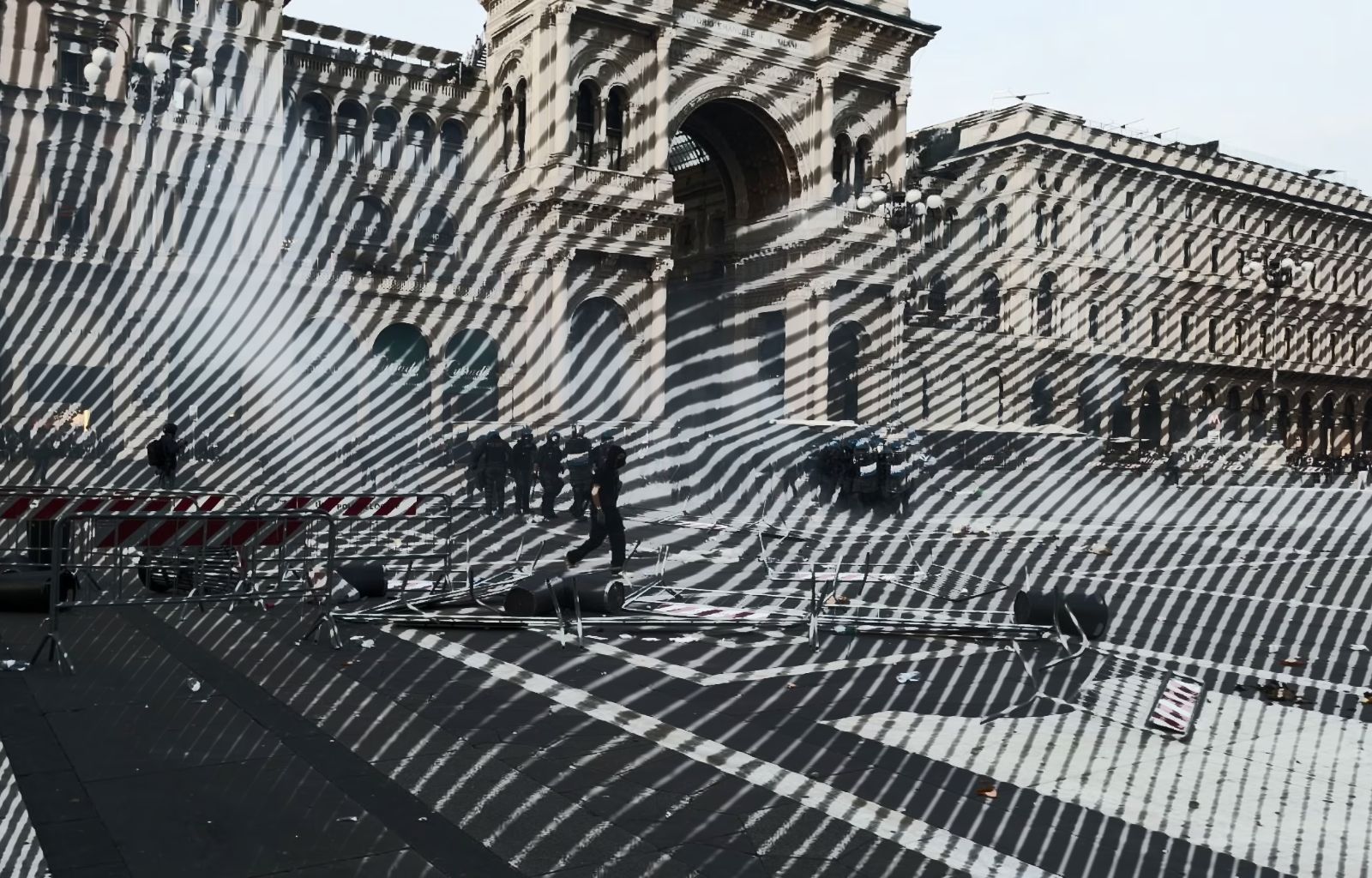
The images of Milan torn apart, shop windows smashed, and police officers attacked during the protests against the rising cost of living are disgraceful. I hope those responsible are identified and held accountable. There really isn’t much to discuss here. Violence is not a form of protest. It’s violence. Period.
What I do find interesting, however, is the debate that has followed. Over the last few hours, I have read dozens of statements, from the right to the left, all essentially identical: we strongly condemn the methods, but the reasons behind the protest are understandable, justified and worthy of support.
Well, I’m not so sure that they are. Or rather, the problems are understandable, but the solutions aren’t necessarily so. And it seems to me that this distinction has now disappeared from public debate.
From Milan to Paris, via other European capitals, we are witnessing growing discontent over the cost of living, inadequate wages, unaffordable rents and a lack of prospects. These are problems I am familiar with and which also affect my generation. Yet the political narrative that underpins much of this discontent continues to pinpoint capitalism, profit and the market as the main culprits behind the situation.
Not all protesters see things in the same way, of course. In Milan, there were also protests against the tax burden, and this should spark an interesting debate. But the prevailing cultural mindset in Europe remains one of calling on politicians to intervene further, spend more, regulate more and provide greater protection.
I believe the problem is exactly the opposite. Europe has not become less prosperousbecause it has had too much capitalism. It has become less dynamicbecause it has gradually stopped believing in economic freedom.
Capitalism that doesn’t exist
There is something paradoxical about constantly hearing about the failings of the free market on a continent where the public sector accounts for a huge proportion of the economy.
In 2024 , Italian public spending amounted to 50.4 per cent of GDP. In the European Union, the average for the same year was 49.1 per cent. These figures come from the European Commission, not from some dangerous libertarian group.
Half of GDP. And yet, in the political debate, one always gets the impression that we are living in a sort of capitalist Wild West, where the state is a mere, powerless bystander in the face of the markets’ overwhelming power.
I wonder where this unbridled capitalism is.
In a country where setting up a business often means spending months dealing with authorisations, permits and administrative requirements? Where the legislature is constantly changing the rules of the game? Where entire sectors of the economy are protected by concessions, licences and privileges guaranteed by politicians?
We have created a system in which the state claims the right to decide how we should produce, hire staff, invest, build and even consume. Then, when the economy fails to grow, we blame the market.
We have become accustomed to taking it for granted that a business must obtain permission to operate. That an entrepreneur spends a considerable amount of their time filling in paperwork. That larger companies can afford armies of consultants to deal with regulations that often discourage those who would like to enter the market.
This is not a free market. It is an economy in which the state has amassed enormous influence, whilst competition has become something to be tolerated, preferably without causing too much disruption to those who already hold a privileged position.
And by constantly protecting everyone from competition, we have ended up protecting, above all, those who do not want any.
Do we want higher wages? Let’s help businesses grow
Let’s take one of the main issues behind the protests: wages.
In Italy, they are low. Far too low. But I constantly hear talk of the need for new government measures, and far less about the economic conditions that would enable businesses to pay more.
In 2025, the tax and social security wedge for a single worker on an average salary stood at 45.8 per cent of labour costs. The OECD average was 35.1 per cent. This means that, out of every hundred euros spent by a company on that worker, almost forty-six are absorbed by taxes and social security contributions, rather than going towards their net pay.
And is this supposed to be an economy in which there is no state intervention?
Of course, the tax wedge alone does not explain thirty years of wage stagnation. But I find it absurd that, whilst we are discussing how to increase wages, so little is said about the cost of creating jobs in this country.
The key issue, however, is quite another: productivity.
If a business generates little value, it is unlikely to be able to pay high wages. If it does not invest in technology, if it cannot grow, if it fails to attract capital, it will continue to compete by cutting costs. And if businesses compete little with one another, even when it comes to recruitment, workers will have fewer options and less bargaining power.
You don’t need to be particularly free-market-minded to understand how it works. You simply need to stop believing that prosperity stems from a political decision.
Politicians can set a minimum wage, amend contracts and offer incentives. But they cannot decree an increase in productivity. They cannot create innovative companies by law. They cannot make an economic system competitive simply by holding a press conference.
For wages to grow steadily, we need investment, capital, innovation and businesses competing for workers. In Italy, however, we have spent decades discouraging the expansion of companies, making investment more difficult and defending a myriad of privileges, both large and small.
It is hardly surprising, then, that the wealth generated is growing only slightly. The European Commission has forecast GDP growth of just 0.5 per cent for Italy in 2025 and continues to highlight low productivity and barriers to competition as among the country’s structural problems.
We could carry on debating for another thirty years about how to redistribute wealth. But unless we start creating more of it, we will simply have less and less to distribute.

Houses are too expensive. What if we tried building one ourselves?
Then there is the issue of housing, which is particularly acute in Milan. It is a city where a young worker may find themselves spending a disproportionate amount of their salary on a room.
The most common political response is to call for new benefits, more social housing and tighter controls on rents. In short, anything, as long as the state takes care of it.
I’d like to start with a much simpler question: why don’t we make it easier to build houses?
Why does every new housing development have to contend with endless procedures, restrictions and opposition? Why do we view property investment as though it were a morally suspect activity, rather than a possible solution to the growing demand for housing?
When demand for housing rises and supply fails to keep up, prices go up. It is one of the most basic laws of economics. Yet it is incredible how often it is ignored.
This does not mean that every plot of land should be made available for building, or that there are no urban planning or environmental requirements. It means recognising that preventing the construction of new homes comes at a cost. And it is primarily those who do not yet have a home who bear that cost.
Of course, we can also take action through social housing and support schemes for those in need. But we cannot expect to solve the housing shortage simply by handing out money to enable people to compete for the same few homes that are available.
It is a politically convenient solution, because it promises an immediate benefit. Economically, however, it risks leaving the problem unresolved.
We have come to believe that, to make something affordable, all we need to do is fund its purchase with public money. We have almost forgotten that it is possible to make it cheaper by increasing production and competition.
The real enemy of the free market is often those who claim to defend it
And let me be clear on this: I’m not just talking about the left.
A significant section of the European right has now embraced a form of economic interventionism which, in many respects, is every bit as interventionist as that of its opponents.
People claim to be liberal when it comes to criticising taxes, but as soon as a company faces difficulties, they call on the state to bail it out. They talk about competition, only to then defend concessions and protected sectors. Entrepreneurs are celebrated, provided they are not foreign, do not take over a national company and do not cause difficulties for any industrial giants deemed strategic.
It’s capitalism on an on-and-off basis. The market is fine when it generates profits, but if it leads to an election defeat that’s politically inconvenient, then the government has to step in.
That’s not my idea of free-market economics.
I do not believe in a state that picks winners, hands out favours to its cronies and shields from competition those businesses that cannot survive on their own. Nor do I believe in a form of capitalism made up of companies that privatise profits and try to pass on their losses to taxpayers.
The free market is not a system designed to guarantee entrepreneurs’ success. It is a system in which entrepreneurs must continually earn their success.
Anyone who offers a better product, a more efficient service or a more competitive price must be able to win over the market. Anyone who fails to do so must be allowed to go out of business. Even if it is a long-established company, even if it employs thousands of people, even if it has excellent relations with the minister in office.
Of course, it is easier to defend capitalism in words when everything is going well. The real test comes when competition causes difficulties for someone.
The problem is that in Europe we have gradually turned every economic difficulty into a call for political protection. And by constantly protecting the present, we have made it increasingly difficult to build the future.
We are even afraid of wealth
There is, however, an even deeper problem – one that is cultural rather than economic. Europe seems to have developed a sort of instinctive mistrust of individual economic success.
Getting rich has become something one almost has to apologise for. Profit is viewed with suspicion. A successful entrepreneur must constantly prove that they have not enriched themselves at the expense of the community.
I find this attitude unbearable.
There is nothing immoral about wanting to earn a lot of money, build a successful business or become rich. There is nothing to be ashamed of in having ambition.
And yet the European political debate revolves almost entirely around the distribution of wealth. We talk constantly about those who have too much, about how much they should be taxed, and about how to redistribute their wealth. We talk far less about how to create the conditions that would enable other people to become wealthy in their own right.
The economy is not a zero-sum game. The success of one business does not necessarily mean that someone else becomes poorer. A new technology, a better product or a productive investment can create wealth that simply did not exist before.
This is the extraordinary strength of capitalism. Not that it guarantees the same outcome for everyone, but that it enables millions of people to pursue their own goals and, through voluntary exchange, contribute to general prosperity.
The market does not promise that everyone will succeed. It promises something that I consider far more important: that success should not depend on political approval.
Instead, we have built a culture in which asking the state for help seems increasingly more respectable than trying to make one’s fortune.
I would like to live on a continent where a twenty-year-old can openly say he wants to become a millionaire without being seen as selfish. Where starting a business is considered at least as commendable as winning a public sector recruitment competition. Where individual ambition is encouraged rather than treated as a social problem to be rectified.
A Europe that no longer has faith in its ability to prosper will inevitably end up focusing solely on how to manage its own decline.
Young people should ask for fewer privileges, not more protection
It is particularly when I am young that I find it hard to understand certain demands coming from the streets of Europe.
I belong to a generation that is constantly being told it will have fewer opportunities than previous generations. More expensive housing, lower wages, more uncertain pensions. And all too often, the solution we are offered is to seek protection from the state.
More bonuses, more benefits, more safeguards, more measures.
But I’m not interested in the state promising me a mediocre life, provided it’s sufficiently secure. I’m interested in living in an economy where it’s possible to do better. Much better.
I’d like to be able to choose between companies competing to hire me, rather than having to be grateful just for having found a job. I’d like it to be easier to set up a business, invest, change jobs, and build something. I’d like a young person with no political connections and no wealthy family to be able to compete with those who start from a position of advantage.
That is why I find it curious that so much of young people’s discontent is directed against capitalism rather than against the barriers that restrict competition and social mobility.
I do not expect those taking to the streets to share this view. But neither do I accept the idea that anyone who criticises state-centred policies is automatically insensitive to the problems faced by young people.
On the contrary. It is precisely because those problems exist that I believe we need to radically change our approach.
I don’t want a state that protects me from the possibility of failure. I want a state that doesn’t stop me from trying to succeed
A state that enforces contracts, protects private property, guarantees security, administers justice efficiently and prevents competition from being stifled by monopolies and privileges. Not a state that presumes to plan the economic future of millions of people.
Because, ultimately, the point is this: in Europe, we have all too often confused security with stagnation, protection with privilege, and solidarity with dependence on the state.
And yet today we are surprised that economic growth is weak and that young people view the future with pessimism.
We don’t need yet another government intervention. What we need is a liberal revolution
The protests we have seen in recent days – setting aside the violence, for which there can be no justification – should compel us to engage in a serious discussion about Europe’s economic future.
But I don’t think we need yet another debate on how much public spending should be increased, what new tax should be introduced, or which sectors of the economy should be subject to further scrutiny.
We’ve been down that road before. For decades.
I would like to see a return to discussions about liberalisation, privatisation, competition, tax cuts and deregulation. I would like to see a European single market that is truly single – not a collection of twenty-seven economic systems that continue to erect barriers to the free movement of services, capital and business activities.
I wish politicians had the courage to say that not every business needs to be rescued, that not every sector deserves a subsidy, and that not every problem requires a new law.
And, above all, that wealth is not created in government departments. It is created by ideas, by invested capital, by labour, and by taking risks. It is created by people who decide to do something and find others willing to pay of their own accord for what they have created.
It is perhaps a less reassuring message than those we hear in the streets, because freedom entails responsibility, uncertainty and even the possibility of failure. But it is the only economic model in which I truly believe.
I’d like to see a generation that’s angry not because someone has become rich, but because they’re being prevented from trying to do so. A generation that protests against taxes that stifle enterprise, against the privileges of those who’ve already made it, and against a bureaucracy that turns private enterprise into an obstacle course.
And above all, I would like those who call themselves liberals to have the courage to be so even when it is inconvenient, without resorting to interventionism at the first sign of difficulty.
The smashed shop windows in Milan will be replaced. The material damage, however serious, can be repaired. But the cultural issue that has emerged from the debate over the last few hours is much more difficult to tackle.
We continue to live on a continent that is convinced that economic freedom is something to be curtailed and that the state must be the solution to every crisis. Only to then complain about the consequences of an economy that is growing too slowly.
I believe the time has come to challenge this belief. Not with some half-hearted reform, not with yet another compromise between interventionism and the free market, but by returning to a genuinely free-market vision of the economy and society.
We must not ask capitalism to take a step backwards. We must stop preventing it from moving forwards.
Because the problem with Europe is not that we have given the market too much freedom. It is that, for far too long, we have been afraid to give it enough.