Not the ANPI, not its attackers. Ukrainian Resistance owns April 25th

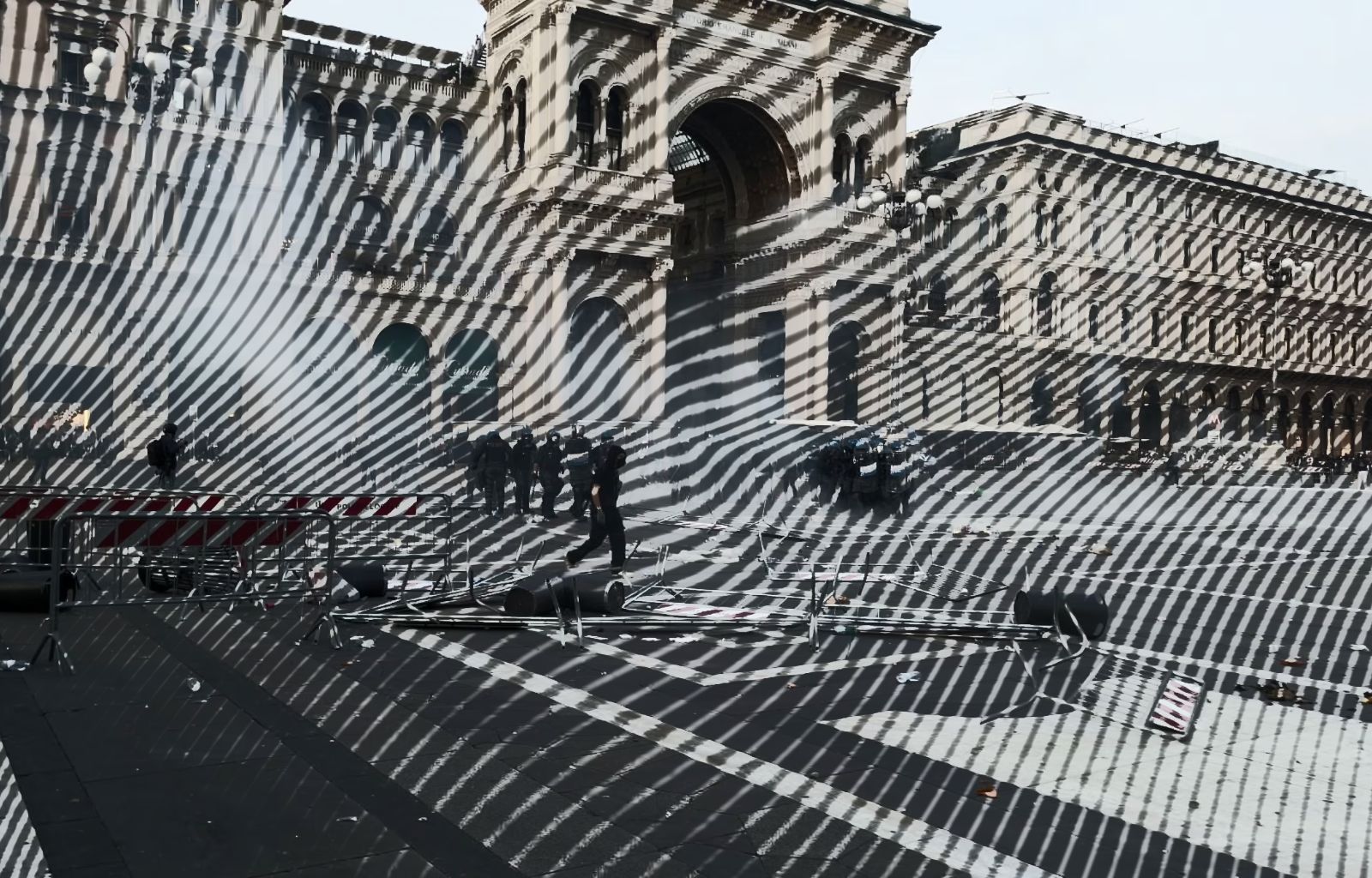
Let’s start with what is beyond dispute: those who opened fire in Rome on demonstrators wearing the ANPI neckerchief committed a criminal and cowardly act. No political context mitigates the judgement. That must be stated plainly, before anything else.
And yet that clarity demands a further step, an uncomfortable one. There is a savage irony in what happened: the political thugs who pulled the trigger and the current leadership of the ANPI share, in substance, the same worldview. It is what has been called, since the term emerged in the 1990s to describe the convergence of ex-communists and nationalists in post-Soviet Europe, a “red-brown” vision — reflexively anti-Western, studiously equidistant in the face of tyrannical aggression, provided the tyrant opposes the liberal order. The red of the far left and the brown of authoritarian nationalism discover that, on the things that matter, they stand on the same side. It is a vision with nothing in common with the values of 1945.
An institution that has betrayed itself
Founded in 1944 to keep alive the memory of those who fought against Nazi-fascist occupation, the Associazione Nazionale Partigiani d’Italia long embodied — at least in the republican imagination — the moral conscience of Italian anti-fascism. That chapter is over. The ANPI no longer represents the values of the Resistance. This is not a polemical verdict: it is a conclusion that follows from the association’s public conduct in recent years. Faced with Russia’s invasion of Ukraine — the largest armed aggression in Europe since 1945 — its leadership chose not solidarity with those resisting, but equidistance. It preferred to “understand Moscow’s reasons” rather than recognise in the army defending Kyiv a direct echo of the partisan brigades. It tolerated, and at times encouraged, antisemitic and anti-Zionist currents in the far-left circles with which it has grown increasingly entangled. It embraced an anti-Western and anti-European narrative that jars with any coherent reading of what 1945 meant.
The point of no return came with the declaration by Gianfranco Pagliarulo, the ANPI’s president, that Ukrainian flags should not be carried in Liberation Day marches “because there are no Russian ones either.” With those words — which Elisabetta Gualmini, a member of the European Parliament for Azione, rightly called bewildering — Pagliarulo placed aggressor and victim on the same moral plane. He equated the executioner with the condemned. He did so on the very day Italy celebrates the triumph of those who resisted a foreign occupation.
Gualmini identified the contradiction with precision: April 25th, she observed, has become “a place of sectarianism and discrimination, of extremism and polarisation — the exact opposite of the values that were supposed to be celebrated.” It is an apt description of an institution that has inverted itself, using anti-fascism as an ideological shield behind which to advance positions that have nothing to do with anti-fascism. The ANPI has become, in substance, an organisation in the service of that same red-brown narrative — the same, in its essential content, as the one held by those who shot at its marchers.
The real European Resistance is in Kyiv
Can Liberation Day be given back its meaning? We at L’Europeista believe it can. But doing so requires a recognition that Italian politics has so far lacked the courage to articulate: the only Resistance today with a genuine claim to the inheritance of 1945 is the Ukrainian one. A people that since February 2022 has fought against an invading army, defending its land, its language, its right to self-determination. A people dying for the same values that Italy’s partisans died for: freedom against tyranny, national dignity against foreign occupation.
To refuse to recognise in Ukrainian resistance the natural heir of the European Resistance is to have failed to understand — or to have chosen not to understand — what 1945 was actually about.
Reclaiming a date
Let it be said plainly: April 25th does not belong to the ANPI. It does not belong to the marches that mistake anti-fascism for anti-Westernism. It belongs to the Republic and to the universal values written into the Constitution that was born from that date — freedom, the self-determination of peoples, the repudiation of wars of aggression. These are, not by coincidence, the founding values of the European Union.
Anna Paola Concia declared provocatively that “April 25th is dead.” But historic dates do not die forever: they are reclaimed. Reclaiming this one means marching — in the streets and in the digital public square — with the Ukrainian flag; stating without ambiguity that anti-fascism and antisemitism are irreconcilable; and refusing to let others speak in the name of values they abandoned long ago. Until Italy’s liberals, pro-Europeans and democrats — in government and in opposition — are willing to do precisely that, Liberation Day will remain the hostage of those who wish to be liberated from liberation itself.