How often do you think about the Roman Empire?
A while ago on TikTok, a challenge went viral asking young people how often they thought about the Roman Empire. Riding the wave of this trend, Ipsos actually crunched the figures: one in eight British men thinks about it at least once a week. If they were to carry out the survey in Italy, I’d be in that 12 per cent, along with anyone who spent five years at a classical sixth-form college poring over translations of Cicero.
On 15 June, at the Franco Parenti Theatre in Milan, during the Europeisti.eu event, Carlo Calenda put this obsession into a political context: ‘Europe is in danger of collapsing because the age of empires has returned, but we are not the empires; we are the colonies. We have spent a great deal of time criticising ourselves for having been empires, and we must be careful not to become colonies, because I can assure you that it is worse than being empires.”
The sense of guilt Calenda refers to has a source text, and it was written by a Roman. In *Agricola*, Tacitus puts into the mouth of Calgacus, leader of the Caledonians, the most frequently quoted condemnation ever levelled at an empire: ‘ubi solitudinem faciunt, pacem appellant’ – where they create a wasteland, they call it peace. For decades, Europe has read this as an indictment of itself. Meanwhile, in Mariupol, in the spring of 2022, someone else has created the wasteland, and calls it liberation.
Calenda is right. The age of empires is a matter of structure: with the bipolar world of the Cold War and the unipolar world that followed it now over, in a multipolar system every great power carves out a sphere of influence for itself, and those without one end up in someone else’s sphere. We have ended up in the sphere of three.
We are colonies – plural. A multicolony.
Multicolonia
Three masters, four leashes. We buy our security from Washington: between 2021 and 2025, according to SIPRI, 58 per cent of the weapons imported by European NATO countries came from the United States. We buy our green transition from Beijing, which produces 94 per cent of the world’s permanent magnets – the ones used in electric cars and many wind turbines. Until 2022, our energy came from Moscow, which in 2021 supplied 45 per cent of the gas imported by the EU. Meanwhile, our data is stored on American servers: Amazon, Microsoft and Google account for 70 per cent of the European cloud, whilst European companies account for 15 per cent.
Faced with these figures , the Italian debate does just one thing: it argues over which side is the villain. Those who side with Moscow retort that the Americans spy on us too: ‘Everyone does it, not just the Russians’, and it’s true: since 2021, we’ve known that between 2012 and 2014 the NSA eavesdropped on Angela Merkel via Danish intelligence cables. Those who side with Washington point out that the Russians are worse, because they hacked into the network of the organisation that manages German air traffic and, on 29 December 2025, attacked Polish power stations – which, according to Tusk, left half a million people without heating. Let’s try an experiment.
Let’s assume that they are both right. Or that it’s all a lie – propaganda, with everyone pitted against everyone else . In either case, 58 per cent of the weapons, 94 per cent of the magnets and 70 per cent of the cloud remain where they are. Anyone who argues over which master is more honest has already accepted that they have one, and a colony that chooses its own master remains a colony. The only ally Europe can count on is Europe itself.
After all, the master on whom we depend most has set this out in writing. In the National Security Strategy of December 2025, Washington sees the prospect of ‘civilisational erasure’ looming over Europe. A hegemon that describes you in such terms has already begun to close its umbrella.
Who defends a colony when its master starts to see it as a problem?
It was better to be Roman
Carthage and the kings of Macedonia also had armies, and they ended up as chapters in the history books of Rome. The reason why Rome endured is explained by Cicero, who, in *De re publica*, puts it into the mouth of Scipio: a people is a united multitude ‘iuris consensu et utilitatis communione’, through consensus on the law and a shared interest. Law and interest, nothing else.
Cicero knew what he was writing about, because he was a stranger in Rome. He was born in Arpino, a municipality in the mountains of Ciociaria which had only recently been granted the right to vote in Rome. He had no consuls amongst his ancestors, and Catiline, in the Senate, called him ‘inquilinus civis’, a citizen by lease. In 63 BC, he became Consul. Seven years later, he defended Lucius Cornelius Balbus, a man from Cadiz whom they sought to strip of his citizenship, and before the judges he recalled that Romulus, through his pact with the Sabines, had taught the city to grow by welcoming even its enemies. Balbus retained his citizenship. Sixteen years later, he too became consul – the first consul not born a Roman citizen.
Then there is the year 212. Caracalla extended citizenship to almost all free men in the empire, and Cassius Dio, who detested him, writes that he did so for tax reasons: more citizens meant more taxpayers for the inheritance tax, which Caracalla himself doubled. Perhaps that is true. It makes no difference. Self-interest has always driven men and states, and a form of citizenship that benefits those who grant it as much as those who receive it is the most enduring there is. Rome endured because it was in people’s interests to be Roman.
The same thing is happening to the European Union, which is why there is a queue to join it. In November 2013, people took to the streets in Kyiv because Yanukovych had reneged on the Association Agreement with the EU, and in February, on the Maidan, shots were fired at demonstrators carrying blue flags with stars. In November 2024, in Georgia, hundreds of thousands of people took to the streets every day for over a year, waving EU flags in protest against a government that had put the accession process on hold. In February this year, even Canada signed up to join the European defence funding programme, becoming the first non-European country to do so. And it is also possible to leave the Union, something that was not envisaged in Rome: the United Kingdom did so, and in June 58 per cent of Britons told YouGov that it had been a mistake.
I am a citizen of Europe
In 70 BC, Cicero brought charges against Verres, the governor of Sicily, and the most harrowing part of the indictment concerns the death of Publius Gavius. Verres had him flogged in the forum of Messina and then crucified facing the Strait, so that as he died he might see Italy. As he was being flogged, Gavius repeated a single phrase: ‘civis Romanus sum’ – ‘I am a Roman citizen’. For Cicero, those three words should have been enough to protect a man to the very ends of the earth.
This phrase has a modern-day equivalent. Wherever Italy does not have an embassy, an Italian national can go to the embassy of any other EU country and receive assistance just as if they were one of their own. We are European citizens.
We use the rest every day; it’s everywhere, which is why we no longer notice it. I myself am currently on Erasmus, one of over fifteen million Europeans who have taken part in that programme since 1987. This winter I’ll be choosing my master’s degree, and I can look for one in twenty-seven countries, knowing that in each one I’ll be treated as if I’d been born there, and that afterwards I’ll be able to work there without needing a permit. Anyone travelling to Spain uses their mobile phone just as they would in Milan, and from 15 June 2017 they won’t have to give it a second thought. Cicero, in *De legibus*, said that anyone from a municipality has two homelands, one by nature and one by right – Arpino and Rome – and that the second is larger, large enough to encompass the first. Like him, I have two. The second has twenty-seven capitals.
And let’s stop reducing Europe to Brussels, which is merely the address of its offices. Europe is Rome, it is Berlin, it is Paris, and also Warsaw, Dublin, Riga and Tallinn – places where Rome once saw nothing but barbarians.
Cedant arma togae
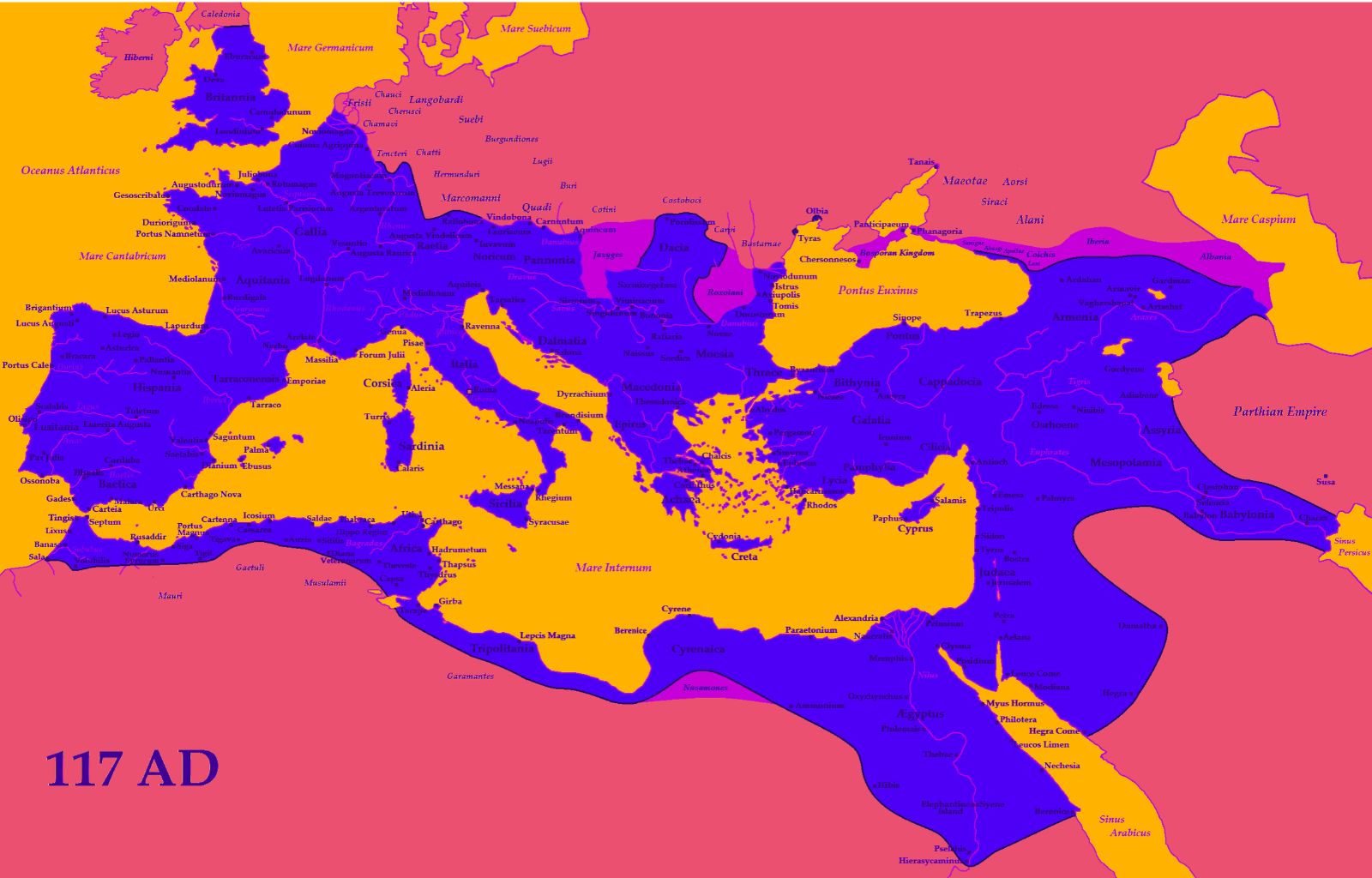
Let’s focus on the ‘barbarians’. At least ten EU capitals lie outside the borders that the empire reached under Trajan: Berlin, Prague, Warsaw, Copenhagen, Stockholm, Helsinki, Dublin, Tallinn, Riga and Vilnius. Today, Europe’s border runs through those regions, and there they take it more seriously than elsewhere: in 2026, Poland spent 4.8 per cent of its GDP on defence, more than any other NATO country. On 19 September 2025, three Russian MiG-31s entered Estonian airspace and remained there for twelve minutes with their transponders switched off; they were escorted out by F-35s from the Italian Air Force. The legions never made it to the Baltic. Today, Italian pilots are patrolling the area, and it was the people living there who called them in.
Without an army, Rome would not have lasted a generation, and this is where the European debate always gets bogged down, because here the word ‘rearmament’ strikes fear into people’s hearts. A pacifist is someone who is capable of waging war but chooses not to. Those who cannot wage war are lambs in a world of wolves, and their peace depends on the mood of the wolves.
Cicero had a saying for this too: ‘cedant arma togae’ – let arms yield to the toga. Years later, Piso threw this in his face in the Senate to mock him, and he had some justification for doing so, for it was the words of a man in love with himself and his role. It does, however, highlight what European pacifism overlooks: for arms to yield, they must first exist. Europe must not use force. It must be capable of using it, for it is this capacity that lends credibility to the rights it offers.
And when it expands, it does so on the basis of rights. Every country that has joined the Union has done so of its own accord, and has ratified its accession through a vote in its parliament or a referendum; no one has seen an army at their gates. It is the only empire in history that expands on request.
Calenda also told Parenti why we become colonies: ‘The reason we become colonies lies not in our size or strength, but in our will – or rather, in the absence of our will.’ Rome agrees with him. It had established citizenship, the rule of law, currency and roads free of customs duties, and for twelve centuries it also had the will to defend them. We already have the first four things. We are lacking the fifth.
The treaties that laid the foundations for a united Europe were signed in Rome, on the Capitoline Hill, on 25 March 1957. My Roman Empire is sixty-nine years old. All it needs to reach twelve centuries is the will to do so, and that will is the one thing no master can sell us.