Four years later Ukraine is winning the war

Kyiv is integrating into a more conscious Europe, it is time to change the narrative that wants it inevitably doomed.
In February 2022, the invasion was to last only a few days, we know. Russia was preparing for a trip to the Dnipro River and perhaps a stroll along the Odesa waterfront. It was looking for a favourable regime change, a total conquest or at least a recovery in its sphere of influence and, while it was at it, also a warning for Europe.
Four years later, Russia has achieved nothing of this.
On the contrary, Ukraine has become a more European country, has shown that it is ready to take to the streets when its democracy is at risk, and is on its way to becoming a pivot of the continent’s future security.
State survival and European destiny
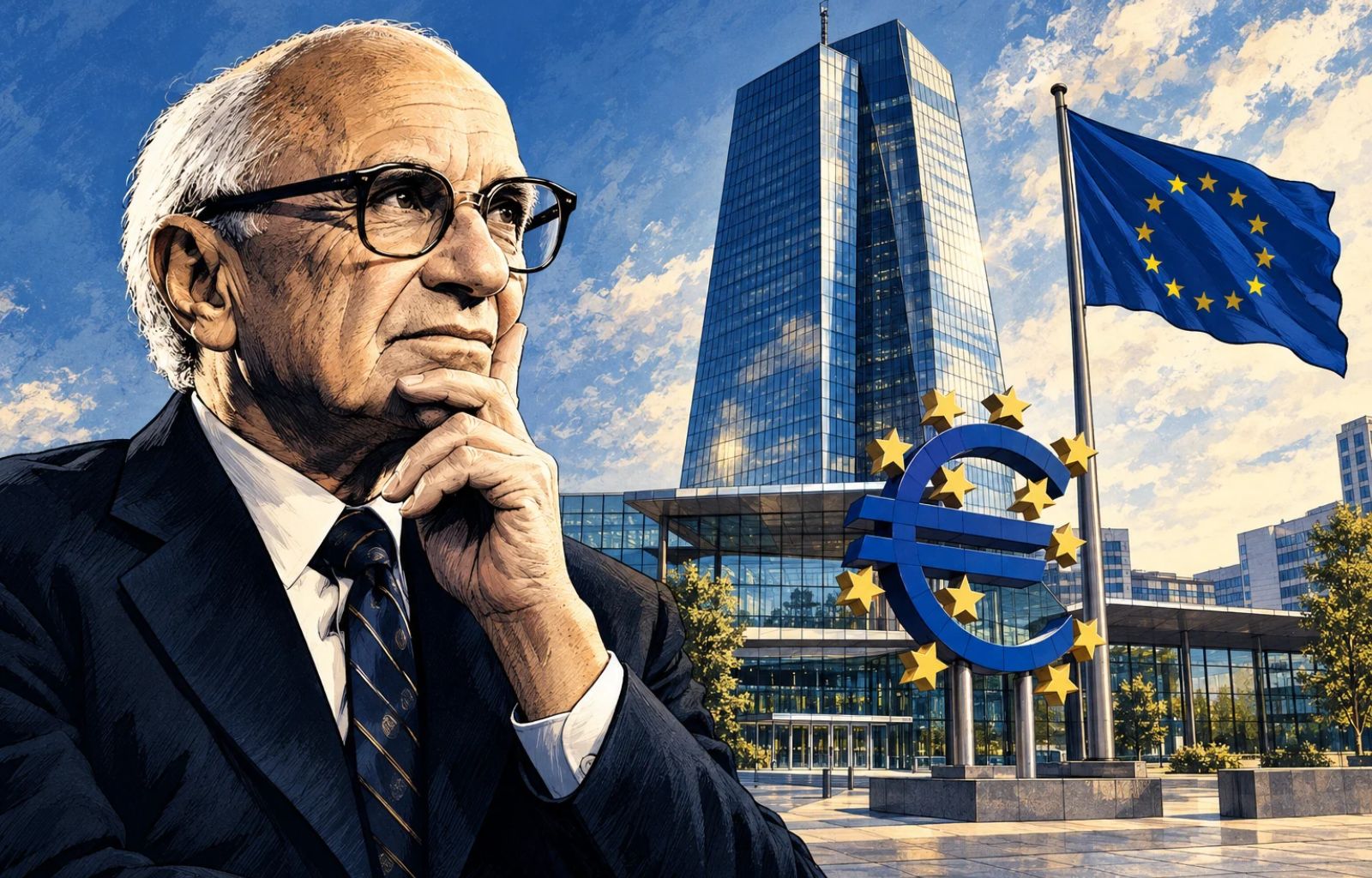
The first argument for this victory is elementary: Ukraine still exists. Not only that, it flies its flag in Brussels along with all the others. Not bad I would say, in a Europe that has often left other countries in the antechamber for a long time. A little bit of Ukraine in the coffee has done us good too, however: the 90 billion in common European debt is proof of that .
If the Russian objective was to redefine the European security order and reassert its own sphere of influence, I am afraid it has gone the other way round. The European Union, even with its ‘slow pace‘, has started to talk timidly about common defence and financing it with common debt. Barring sovereignism to keep us on our toes, this is more or less the way to go, although a bit of pace wouldn’t hurt.
Zelensky is no longer begging for ammunition, not a laughing matter
Let’s be clear: if Ukraine does not win this war in every sense of the word, it is because the West is NOT yet providing it with all the necessary weapons. But a recent turn of events shows that Zelensky is no longer the beggar of those days.
Ukraine will start exporting drones and know-how to produce them in Europe.
Not a bad move. For a country that we imagined fighting with the remnants of the Soviet arsenal, becoming an exporter of the most technologically advanced weapons of our time is no small feat.
A bit nerdy, perhaps.

The situation in the field
Mark Rutte – of whom I am not a fan, to tell the truth -, NATO Secretary General, said: ‘Russia is moving in Ukraine like a snail’. This is not correct.
In the ‘fastest’ sector of the Russian advance, between Pokrovsk and Huliaipole, the invaders are advancing about 72 metres per day. Not like a snail, but like a sea cucumber at best: about 80 times slower. In other areas, the speed is comparable to that of a starfish that occasionally pauses.
In an interview with The Atlantic, Zelensky stated that for every kilometre of Ukrainian territory Russia loses 170 soldiers. 38 per cent of the Russian military budget is now used to cover compensation to the fallen, roughly the same share (40 per cent in this case) allocated to the salaries of the living sent off to fight.
This is not good news, of course, if we consider that precisely to compensate for this inaction, Russia continues to bomb civilians in Ukraine every night.
The year 2026 opened with a different signal: for the first time in almost three years, Kyiv regained ground visibly, in a few days the equivalent of what Russia gains in a month. It is not much, but it is a signal that Ukraine is not just on the defensive and that the conflict can still change.
How to measure a victory
If it is a question of map, the conflict remains uncertain. To say that Ukraine ‘is winning’ is not to deny the enormous human costs, it is to recognise that a war is not just measured on the map. World War I Germany teaches us this.
If we measure it by the long-term effects – a Ukraine anchored to Europe and a Union more aware of its potential – then the conclusion may change.
The country is winning because it exists, resists and builds a future. In a Europe marked by uncertainties, Ukraine has become the symbol of a new awareness: freedom and dignity are not only defended with weapons, but above all with confidence in one’s European destiny. Today, Ukraine is a laboratory of European integration, a test of continental solidarity.