The tragic Middle Eastern drama that permeates and wounds the West

There are conflicts in which it is not difficult to determine who is right and who is wrong, and there are others in which the issue becomes much more complex, because it becomes clear that any decision on the matter will inevitably lead to a moral, political and human catastrophe.
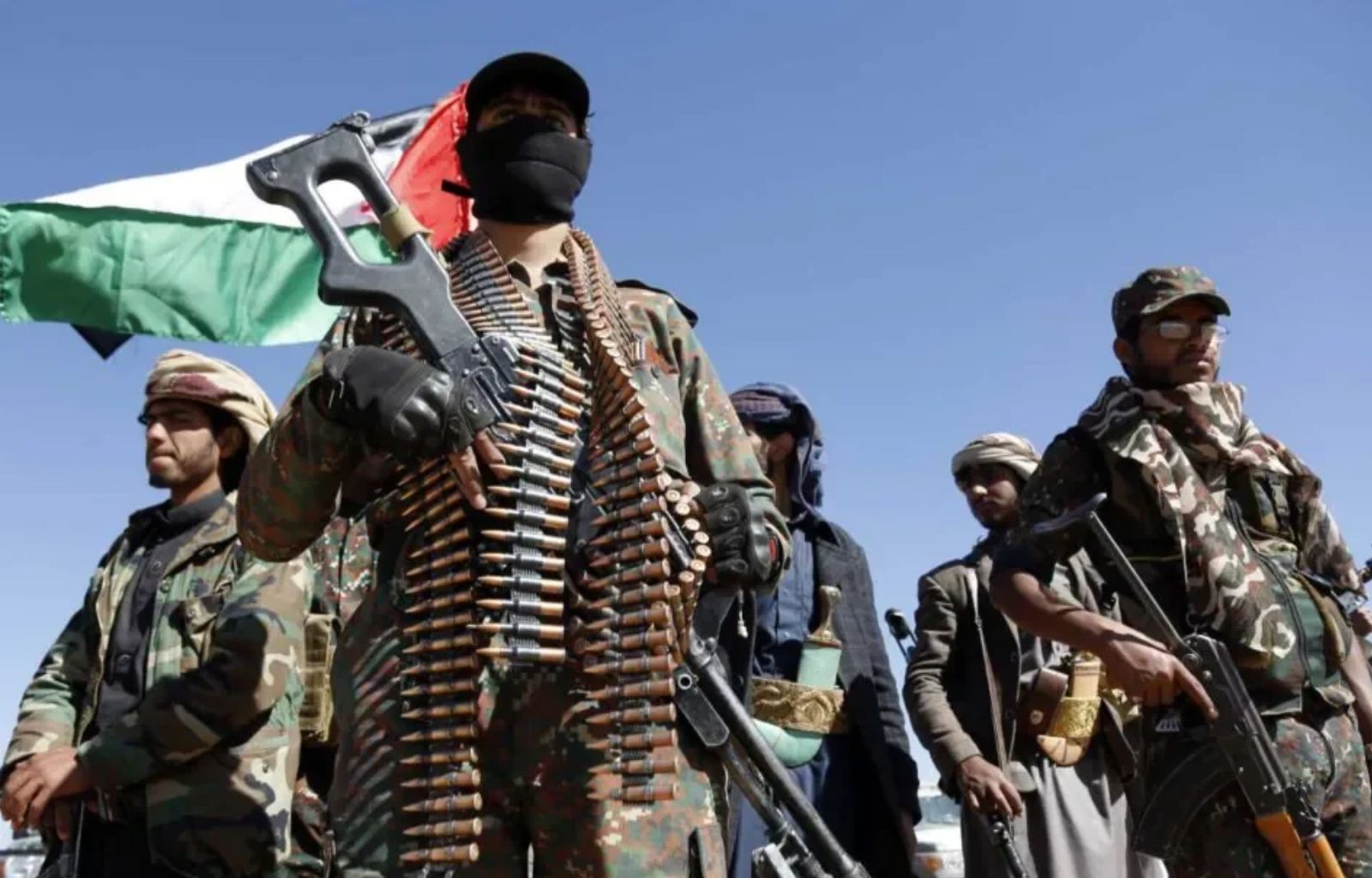
The crisis in the Middle East appears to fall precisely into this second category: we are, in fact, faced with a form of asymmetric warfare in which a political-military organisation is fighting using terrorist methods against a technologically and militarily superior power. In such a situation, the strength of that terrorist organisation does not stem from its ability to occupy territory or destroy enemy armies, but from its capacity to turn the very vulnerability of its civilian population into a strategic tool and a political weapon.
The more the conflict takes place within residential neighbourhoods, hospitals, schools, streets and squares, the more the adversary is drawn into an almost insoluble dilemma: either to abandon the destruction of the enemy, whilst conceding them an enormous and probably irreversible political and symbolic victory, or to fight them anyway, at the inevitable cost of humanitarian devastation that will ultimately provoke global outrage, moral delegitimisation and growing divisions within democratic societies themselves.
The dilemma in the Israeli-Palestinian conflict
This is the dilemma: if the systematic use of children and civilians as human shields were to result in a strategic victory for Hamas, the historical message would be devastating. It would implicitly teach all future armed movements that the most effective method of neutralising any form of cultural, scientific and technological superiority consists precisely in making it impossible to distinguish between combatants and civilians, by turning the deaths of their own children and citizens not directly involved in the conflict into a systematic political and propaganda tool.
Any government that found itself at the helm of a country that had suffered the events of 7 October would have faced the same dilemma: either to do nothing, thereby forfeiting the chance to free its own hostages whilst knowing full well that they were in the hands of torturers no better than those who operated in certain Nazi concentration camps, and thus succumbing to the moral blackmail of a strategy based on terror; or do what the Israeli Government did in Gaza until the hostages were freed and Hamas’s power was completely destroyed – a destruction that remains necessary even today to avert the possibility of finding ourselves in a similar situation again in a few years’ time.
From this perspective, the conflict is not seen as a free choice between different political options, but as a strategic necessity imposed by the very nature of the threat. And yet it immediately becomes clear that if one wages war against an enemy embedded within one’s own civilian population, the inevitable result is a humanitarian catastrophe of immense proportions: thousands of civilians killed, cities destroyed, generations traumatised, the growing radicalisation of hatred, and global ideological polarisation.
It is therefore not merely a Middle Eastern conflict, but one that tears at the very conscience of Western civilisation
Liberal democratic societies, in fact, exist in a very delicate balance between security and moral legitimacy. They cannot survive by force alone: they need their citizens to continue to believe in the existence of ethical limits that distinguish a democracy from a government capable of carrying out massacres, condemning thousands of people to death or to terrible suffering. Yet it is precisely this moral sensibility that also makes them extremely vulnerable to the emotional and symbolic pressure of images of modern warfare.
Every child killed, every city devastated, every hostage, every attack, every bombing thus inflicts a fresh wound on the Western conscience. One section of public opinion focuses primarily on a state’s right to defend itself against an existential threat carried out through atrocious methods; another sees, above all, the humanitarian devastation, and tends not to realise that this was necessary to free the hostages held by their torturers and to ensure that an action carried out in a Nazi-like manner was not rewarded. The risk is that, for both points of view, an unstoppable spiral of hatred has been set in motion and that the fight against the criminals of Hamas will end up destroying the credibility of the very moral principles it claims to defend.
The problem is that there is some truth in both of these views. And it is precisely this that makes the dilemma insoluble, because if we fail to combat effectively a strategy based, amongst other things, on the cynical and bloodthirsty exploitation of its own civilian population and children, we risk allowing that strategy to succeed and be replicated everywhere. If, on the other hand, one fights it to the bitter end, the human cost risks becoming so enormous as to trigger a permanent moral crisis within the very democratic societies called upon to support and judge it.
The consequences of this rift could be tragically dangerous, because Western democracies are perhaps the only historical societies in which moral conflict is not concealed, but continually amplified through the media, universities, social media, public squares, parliaments and open cultural systems. They thus become extraordinarily powerful technologically whilst at the same time being extraordinarily vulnerable psychologically and symbolically, and the divisions that may run through them can prove to be devastating and self-destructive.
Autocracies and dictatorships do not suffer in the same way
They can impose a single narrative, suppress dissent and use propaganda without running the risk of descending into a permanent moral civil war. Open societies, on the other hand, tend gradually to split into factions that are increasingly incomprehensible and hostile to one another.
War in the Middle East or a Greek tragedy?
The conflict still raging in the Middle East thus ends up taking on a structure surprisingly similar to that which characterised Greek tragedies. These do not, in fact, depict a simple clash between good and evil, but arise from the collision of demands that are both well-founded and yet irreconcilable.
Antigone wishes to give her brother a proper burial because she believes that there are moral laws superior to those of the state; Creon, on the other hand, fears that the city will descend into anarchy if the traitor is accorded the same honours as the defenders of Thebes. Both hold a grain of truth; both are swept away by the very logic of the conflict.
In Aeschylus’s *Oresteia*, Agamemnon sacrifices his daughter Iphigenia to save the Greek army and enable the expedition against Troy. Clytemnestra kills Agamemnon to avenge her murdered daughter. Orestes kills his mother to avenge his father. Every act appears both necessary and monstrous. Tragedy arises precisely from the fact that guilt stems not only from the wickedness of men, but from the contradictory structure of the situation.
In *The Seven Against Thebes* too, the civil conflict between Eteocles and Polynices gradually leads to the city’s destruction. No one can stop the spiral of revenge, pride and fear. The war continues even when everyone realises by now that it will produce no true victors.
It is difficult not to recognise a profound parallel in the historical and humanitarian tragedy currently unfolding in the Middle East, because even today the danger lies not merely in the physical continuation of the war, but in the fact that it brings about a gradual erosion of the moral, cultural and psychological foundations upon which Western democratic societies are built, to the extent that this very erosion appears to be the ultimate aim of the strategy pursued by Hamas and its allies.
Greek tragedy offered the possibility of catharsis: suffering was depicted, contemplated and symbolically processed to the point of bringing about an inner transformation. The strategy adopted by Hamas, on the other hand, multiplies in the West the very effects it had deliberately sought and announced: images of suffering children, media outrage, and the polarisation of public opinion, with no real possibility of a shared collective process of coming to terms with the situation.
Pain that teaches us nothing
In this case, tragedy is not observed in a theatre in order to elicit a cathartic effect capable of raising the audience’s awareness; rather, it is experienced on a daily basis within the media-driven nervous system of the entire Western civilisation, which could be torn apart to the point of gradually becoming the battleground for a fratricidal war, where people accustomed to living together whilst respecting democratic rules are led to take sides with one of the conflicting parties, to the point of reproducing and re-enacting, on a much larger scale, the dynamics of hatred and violence.
In this case, if this grim prediction were worthy of Cassandra, it would, however, contradict the fundamental law of Aeschylean tragedy—that knowledge springs from suffering—because such a scenario would demonstrate that we are incapable of learning anything, not even from suffering repeated many times over, and that, ultimately, Eugenio Montale was right when he noted that ‘history is no teacher of anything that concerns us’.