Italy-Philippines, a strategic cooperation for security in the Indo-Pacific

In a passage marked by tensions in the South China Sea and a Europe looking increasingly eastwards, the defence cooperation agreement between Rome and Manila has slipped almost into the background. And yet, it tells much more than a signature on the sidelines of an international conference: it speaks of maritime routes, strategic industry, new balances and a relationship that has consolidated away from the spotlight.
The Rome-Manila axis is strengthened
The agreement was signed by Philippine Foreign Secretary Ma Theresa Lazaro and Italian Defence Minister Guido Crosetto during the Munich Security Conference.
A highly symbolic context, where European issues intertwine with Asian scenarios.
The signing represents the culmination of a path that began years ago, made up of naval visits, technical memoranda, seminars on maritime safety, and contacts between major states. The agreement, therefore, is certainly not improvised: it is part of a progressive convergence between Rome and Manila on topics ranging from freedom of navigation to industrial cooperation.
The Philippine Ambassador to Italy, Neal Imperial, spoke openly about strengthening the political and security partnership. An important definition, which must be read in the broader framework of the international posture of the two countries. In short, one needs to broaden one’s views to better understand the agreement between the two countries.
Concrete interests
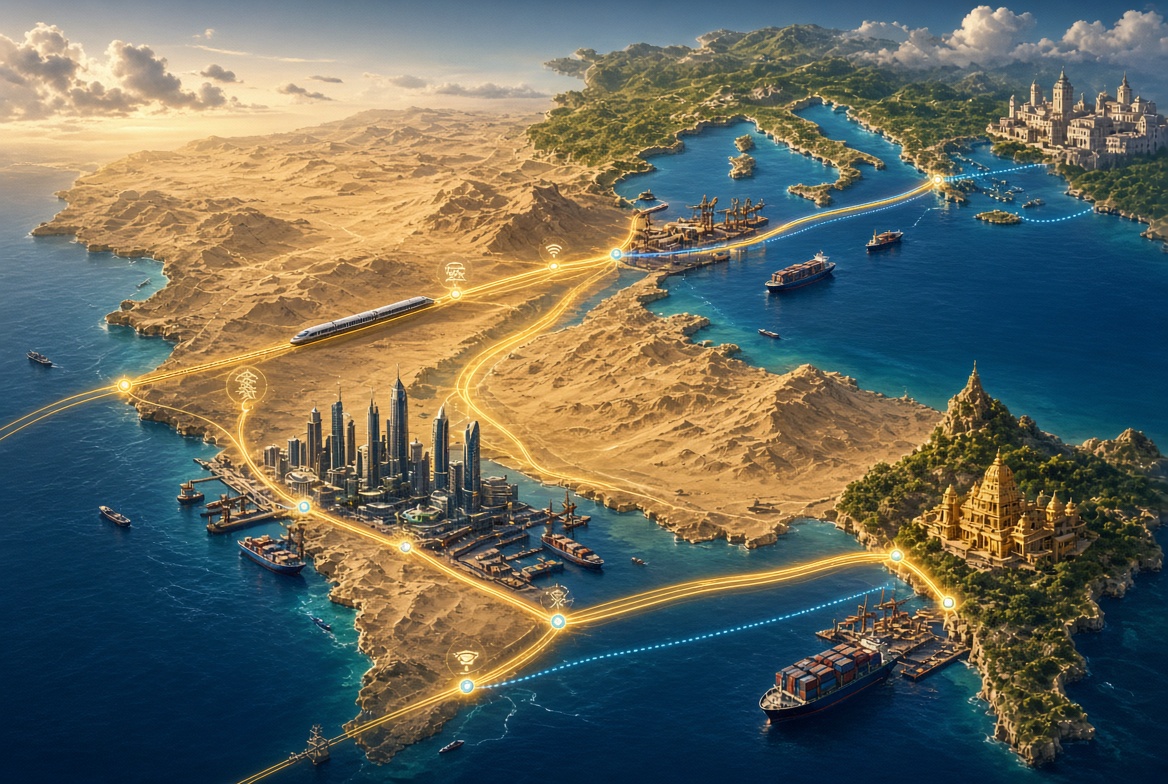
In recent years, Rome has broadened its focus towards the Indo-Pacific, while keeping the ‘Wider Mediterranean’ dimension central. The stability of Asian sea routes directly affects an exporting economy, especially the Italian one. The routes through the South China Sea are crucial for trade flows to South Korea, Japan, China and South-East Asia. Defending the route to Taiwan is equally vital.
The Italian position is based on a clear adherence to international law and the UN Convention on the Law of the Sea. In this sense, the convergence with Manila is quite evident: the Philippines has defended its maritime prerogatives in arbitration against Chinese claims, becoming a point of reference for those who support a maritime order governed by shared rules.
The visits of Italian Navy units to Philippine ports and the talks initiated on shipbuilding cooperation have consolidated a dialogue that now finds a more structured and balanced legal framework.
On the defence industry the axis is already operational
The agreement strengthens areas such as procurement, co-production, logistics and technology transfer. These are sectors where Italy already has a significant presence.
Leonardo has in fact supplied Manila with P-72 patrol aircraft and AW159 Wildcat naval helicopters, with further deliveries planned. Italian naval artillery equips several units of the Philippine Navy. Fincantieri, together with its subsidiary WASS for MU90 torpedoes, looks with interest at the Philippine military modernisation programme, offering platforms such as the U212 NFS submarine.
The Philippine Armed Forces ‘ Horizon 3 plan envisages the acquisition of advanced capabilities for external defence, with an emphasis on maritime and air domains.
For Rome, supporting these ambitions means strengthening an industrial presence in an expanding market, entering a competitive scenario where countries such as South Korea, Israel and the United States operate.
Manila and strategic diversification
On the Philippines side, the agreement with Italy is part of a broader strategy of partner diversification. Chinese assertiveness in the South China Sea has prompted Manila to seek extra-regional cooperation to strengthen its position. Agreements with European countries help give political weight to Philippine claims and support the concept of ‘comprehensive defence of the archipelago’, focused on the protection of the territory and surrounding waters.
Cooperation with Italy offers access to very specific expertise, particularly in naval and underwater security. The protection of submarine cables, the protection of critical infrastructure and the management of seabed resources are increasingly sensitive issues in the area.
At the same time, diversification reduces exclusive dependence on US military acquisition channels, which are often costly and subject to economic variables. Expanding the range of suppliers allows Manila greater negotiating flexibility, no small detail given the recent developments in tariffs from Trump’s US.
An agreement that weighs more than it seems
The agreement between Italy and the Philippines may have received limited attention compared to other international issues, but its significance is profoundly relevant. For Rome, it consolidates its presence in a region crucial for global trade and enhances its strategic industry. For Manila, it strengthens the international support network in a delicate phase of maritime disputes with Beijing.
The agreement clearly speaks of security, economy and foreign policy at the same time. It marks the coming together of a European country expanding its reach and an Asian archipelago determined to strengthen its defensive capabilities, ready to defend its sovereignty.