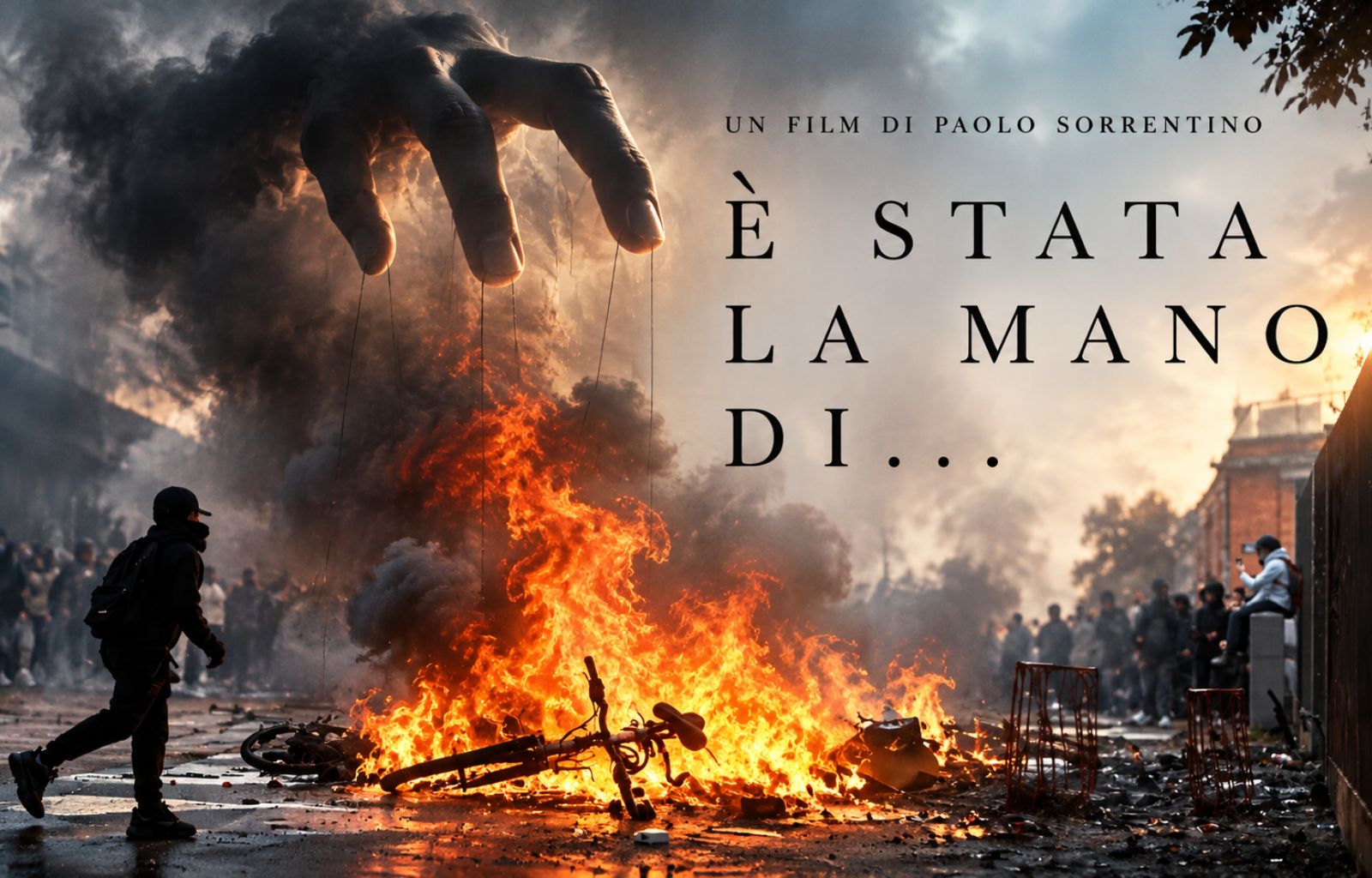
It was the hand of…
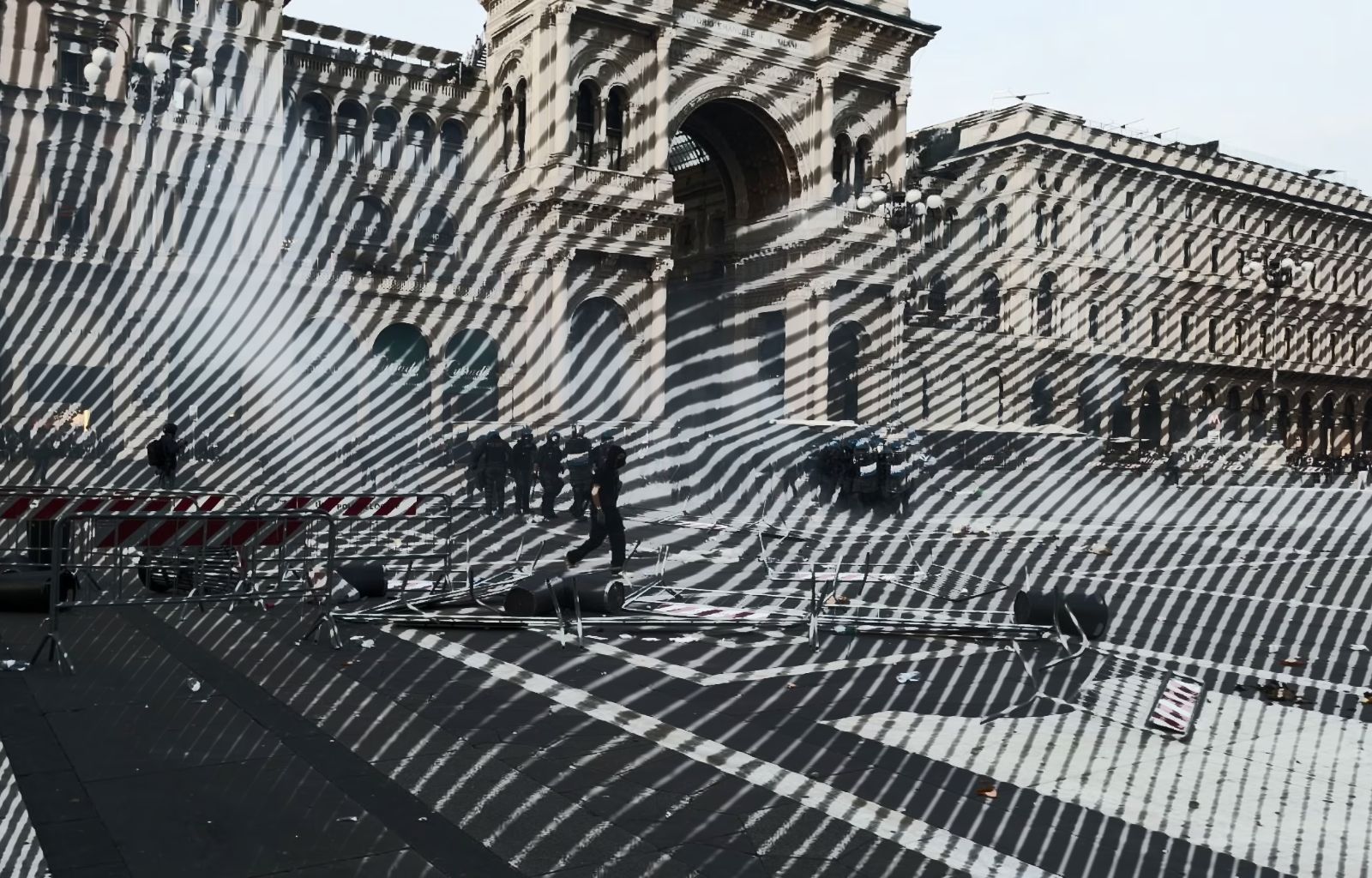
Europe is in turmoil. Last weekend saw uncontrolled violence return to the streets of our continent; this is an indisputable fact.
France is in the grip of anarchic chaos, with Italy and Belgium not far behind; Spain is in a state of perpetual pre-election mobilisation; and Germany is in turmoil.
After a summer that inherently soothes the soul, we could hardly have expected an autumn with temperatures that differed all that much from those we are experiencing today.
There is far too much tension caused by the difficulties striking at the very heart of our way of life: rising fuel and energy prices, and the cost of living (and now we’re facing the unsustainable extra costs of construction sites). The situation is far too tempting for those who are hostile to us not to capitalise on it. Students? Workers? Lorry drivers in southern Italy?
No way…
Are they just students?
The question, particularly when looking at France, springs to mind.
It all began with the occupation of a secondary school in the heavily built-up south-east of Paris – the Saint-Exupéry in Créteil – in mid-September. The pupils, supported by the teaching staff, were protesting against staff shortages, dilapidated buildings and small, dirty classrooms. Since then, a snowball effect fuelled by social media feeds has swept across France, from Marseille to Amiens, bringing tens of thousands of students (and others) onto the streets.
The viral spread immediately turned into a virulent outbreak, infecting neighbouring countries before we even realised what was happening.
It would seem to be the classic, clichéd tale of global, spontaneous mobilisation. But on closer inspection, too many things don’t add up, and too many details are, to say the least, baffling.
The power and (alleged) resources of the internet
Molotov cocktails, sledgehammers, battering rams, flammable propellants: trench warfare tactics. These are not tools typically associated with protest, but rather with organised guerrilla warfare. Nor should we underestimate another aspect: the coordination of actions, the calls to rally demonstrators, and the resilience of the organising centres despite being hit by thousands of arrests.
However well organised they may be, secondary school and university students cannot achieve this level of widespread reach. Nor can the resurgent ‘Gilles Jaunes’, who have been dusted off from the back of the memory drawer to stir up sentiment and rally the ranks of the protest movement. Complete with a centralised website, promptly registered and populated: https://17octobregiletjaune.net/
Nor can we simply place all the blame on the usual extremist fringe groups that have infiltrated these disorganised protests. These protests are anything but disorganised, and rather than focusing on the infiltrators, we need to focus on those pulling the strings.
Introduction: At present, it is not known for certain whether foreign interference or internal collusion – in Italy as well as in France – has driven the protests; this matter will certainly be clarified before long.
At present, we can only connect a few dots.
Political responsibilities, infiltration and the struggle
There is no denying that, in France more so than in Italy (for the time being), the Mélenchon-led left – which is more aligned than ever with the extra-parliamentary stances of the various groups and collectives – bears a heavy political responsibility for what has happened.
Not a single word of condemnation of the violence came from the mouth of Mélenchon, leader of ‘La France Insoumise’; on the contrary, on Saturday, whilst leading a march in Paris, he spoke in praise of the revolution and the outbreak of youth unrest. Let us take heart: the Italian left, at least, condemns the violence – albeit with that inevitable, patronising “but the protests must be understood”, because certain violent individuals are always regarded as “comrades who have gone astray”.
If one were to take a closer look, there is another elephant in the room in France. That is the Muslim Brotherhood which, according to an intelligence report on the basis of which Macron convened a Defence Council in 2025, is said to be tightening its grip in order to subvert the country’s secular institutions, through a covert and sophisticated campaign to systematically spread radical political Islam.
This (externally directed) action, according to the American journalist Asra Nomani, finds ready support and ramifications in a network of at least 54 communist and revolutionary trade union organisations, closely linked to international media outlets around the world, united under the slogan ‘Fight for Our Future, not their wars!”
Who benefits from it
Whilst we are still unable to identify exactly who is behind the protests, it is becoming increasingly clear who is benefiting from them.
The forces systematically spreading this destructive content across Europe are Russian propaganda – where the protests have been given extensive coverage on national news programmes, with thousands of bots actively spreading the message online – and the American right.
On the one hand, the detailed map of the protests enthusiastically circulated by the Rybar propaganda outfit, the surviving offshoot of Yevgeny Prigozhin’s Internet Research Agency. On the other, the warnings against European governments’ migration strategies, coming directly from President Trump.
And let’s not forget the other two major pawns in Western disinformation: China andIran.
There are many groups (far more than I have listed) with different objectives, which may converge on a frighteningly and surprisingly common goal: the dismantling of what we now call Europe.
It is clear that there are far too many hands at work above our heads, and they are becoming increasingly threatening. These hands do not lead to direct wars, but to asymmetrical conflicts waged against Trojan horses that are extremely difficult to root out of our societies.
I recognise that this may seem difficult and complex to read. Nor is it intended to attribute the protests – which are always legitimate – to alleged ‘puppet masters’; that would be biased and untrue.
It simply means that we are weak today, and we can no longer afford to be.
And talking about disinformation is the most political thing you can do. We’re kicking off on 7 November in Bologna – what about you?