Georgia: here’s the blow to Putin. Can Europe believe it?
Tbilisi has joined the condemnation of Russia’s aggression against Ukraine. Just a few days earlier, the pro-Russian candidate had won the elections in the breakaway region of South Ossetia. Europe is now awaiting a turning point.
A surprise turn of events. On 24 September, on the sidelines of the UN Security Council meeting on Russia’s aggression against Ukraine, EU High Representative Kaja Kallas included Georgia amongst the signatories of the joint statement calling for an immediate cessation of hostilities.
This event takes on even greater significance when viewed against the backdrop of a critical moment in relations between Tbilisi and Moscow. On 18 September, in the breakaway region of South Ossetia, which declared itself independent in 1990, the pro-Russian candidate Marat Kambolov won the presidential election with a landslide of over85 per cent of the vote, raising concerns within the international community, with the European Union refusing to recognise the result and condemning Moscow’s interference. Georgian reactions were not long in coming, with the Foreign Ministry describing it as“an illegitimate so-called presidential election”in an official statement issued on polling day.
Whilst it is true that the Georgian authorities have never regarded the independence claims of Ossetia and Abkhazia as legitimate, they had never publicly identified Russia as the hidden force behind the population’s demands for self-determination. It was precisely during the UN General Assembly debate that Georgian Prime Minister Kobakhidze explicitly named Moscow as the occupying power, pointing out that “twenty per cent” of their country “remains under the occupation of the Russian Federation”, breaking with the tendency of previous Georgian leaders to use more indirect language without referring to specific actors.
Georgian foreign policy had already caused Moscow some headaches. Relations with Kyiv had broken down in March 2022, when Zelensky recalled the Ukrainian ambassador to Tbilisi, Ihor Dolhov, after the Georgian government had blocked a flight carrying volunteers bound for the front line. The thaw began in January, with the appointment of a new full-fledged Ukrainian ambassador after more than four years, and was formalised on 4 May 2026 in Yerevan, on the sidelines of the European Political Community summit, by the first meeting between Zelensky and Kobakhidze since the start of the aggression. The renewed trust between the two leaders has sparked a series of contacts between the governments, which have expressed an interest in continuing the process of normalising diplomatic relations.

The doubts
The short time span between the vote in Ossetia and the signing of the declaration raises the question of whether the government led by Georgian Dream, which has been accused by the opposition and Brussels of veering strongly towards Russia, is beginning to doubt Moscow’s intentions and fears the declared annexation of the breakaway regions.
The Russian government itself fuelled these fears on 9 May, with the signing of an economic cooperation treaty aimed at boosting investment in Ossetia. However, this document contains a clause allowing citizens of either party to hold state and municipal office in the other – the very loophole that made Kambolov’s rise possible. Upon signing the treaty, the outgoing Ossetian president, Gagloev, described it as “a step towards unity with Greater Russia”, reviving a pattern of language consistent with the rhetoric already used in the context of the invasion of Ukraine. It is unclear whether Moscow harbours genuine ambitions regarding Georgian territories, or whether it is instead exploiting this ambiguity to exert pressure on Tbilisi and prevent it from drawing closer to Brussels.
Although the international community does not consider formal annexation to be imminent, Georgia still has cause for concern: Kambolov is the first Ossetian leader whose political career is entirely tied to Russia, and this significantly reduces the region’s scope for autonomy from Moscow. On the trade front, too, it is difficult to imagine Georgia being free from Moscow’s influence: according to the RIDL think tank, over 80 per cent of Georgia’s national requirements for wheat, flour and vegetable oil are met by Moscow and , even through trade triangulations with Kazakhstan and Kyrgyzstan, Georgian exports remain heavily oriented towards the Russian market. Georgia fears Russia more than ever, but it still depends on it.
The obstacles
On the western front, however, Georgia’s accession process to the European Union has stalled. The main reason why Tbilisi is “a candidate in name only” is none other than Georgian Dream, the pro-Russian and ultra-conservative party which holds a majority in parliament and forms the Kobakhidze government. It was the Prime Minister himself who, in November 2024, announced that Georgia would not begin negotiations “at least until 2028”, whilst marking 2030 on the calendar as the deadline for accession to the Union. The plan seems far too ambitious: the most recent countries to join took much longer to complete the entire process. Croatia, for example, took six years.
The pro-European outlook for Georgia, as recently foreshadowed by the Prime Minister himself, could be a way of easing tensions with the population, which has not hesitated to voice its strong dissent in recent years. In the spring of 2024, whilst parliament was debating the ‘foreign agents’ bill – effectively modelled on the one passed by the Duma in 2012 – tens of thousands of people, mostly students, took to the streets to protest against the government’s departure from the path towards EU accession. According to the EU Neighbours East survey, conducted between January and February 2026, 71 per cent of Georgians still support accession, unlike their government.
Relations between the public and the government deteriorated irrevocably following the elections on 26 October 2024, which were officially won by Georgian Dream but contested from the very outset. OSCE observers documented pressure being exerted on voters and public officials, as well as breaches of voting secrecy, concluding that the integrity of the process could only have been compromised. The opposition parties, convinced that the result did not reflect the will of the people, refused to take up their seats, and the new parliament was sworn in at the end of November without any opposition MPs. The protest, however, came at a cost: in February 2025, the majority annulled the mandates of 49 MPs who were already boycotting sessions, and for around eleven months, Georgian Dream remained de facto the only active party in the chamber, free to legislate without any counterbalance. A country whose parliament is considered illegitimate by the EU due to electoral irregularities does not meet the Copenhagen political criteria and cannot therefore progress on the path to accession. Moreover, as early as 2023, Brussels had identified electoral reform in line with the OSCE’s recommendations as one of the conditions for moving forward.
Compared with the line taken so far by Kobakhidze and his predecessors, the signing on 24 September marks a partial shift in foreign policy; however, in light of the crisis currently affecting Georgia’s democratic system, it should be viewed with a critical eye. Rather than the result of a change of heart on the part of the government, this appears to be an attempt to keep the door open to the Western world following the tough measures adopted by the EU against Tbilisi in the wake of the unrest of the past two years. It should also be noted that the Commission recently blocked a €130 million grant due to the democratic backsliding observed by Brussels-based monitors. It is unlikely that the Georgian government would choose to turn its back on the European market, thereby further increasing its dependence on Russia, at a very particular moment in history when it is already facing significant interference from Moscow over the separatist regions.
EU: a trump card?
Under these circumstances, the Georgian government’s declarations of intent do not appear to be entirely trustworthy. Kobakhidze’s reassurances – in which he describes the path towards Europe as ‘stable and irreversible’ – have so far been accompanied by a long series of steps in the opposite direction.
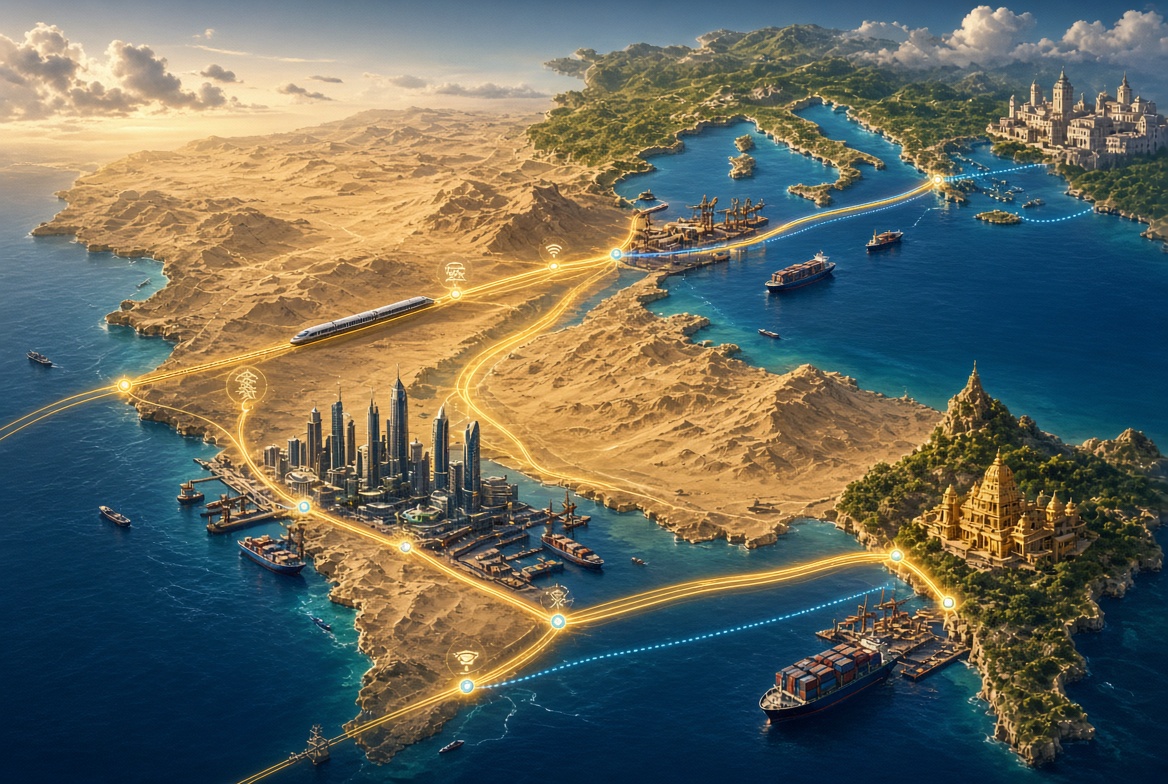
The EU, however, has some significant bargaining chips on its side, particularly in relation to the Middle Corridor, the trade route linking China and Europe via the Caucasus. It is precisely by exerting greater influence over this route that the European Union would have the opportunity to carve out a place for itself amongst the world’s major powers: this would mean exponentially increasing trade with the East (this time on a more balanced footing), competing on equal terms with China and its New Silk Road, and excluding Russia from the West-East trade route.
This would only be possible if Georgia were guaranteed a fair share – both politically and economically – in the management of the route. The EU Commissioner for Enlargement, Marta Kos, has made it clear that Georgia’s involvement in connectivity projects will depend on Tbilisi’s willingness to make commitments in other areas as well, such as the rule of law; consequently, this remains conditional until the Georgian Dream government changes its approach.
Georgia is already well integrated economically, particularly through the DCFTA, a kind of enhanced free trade area. It is chiefly thanks to this agreement thatGeorgia has managed to become an official candidate for EU membership. A further expansion of trade and financial cooperation could then, through a knock-on effect, extend to all other sectors as well.
Ultimately, we are still a long way from a turnaround in relations between Tbilisi and Brussels, which have already deteriorated significantly in recent years. At the same time, a country whose parliament is deemed illegitimate by the EU due to electoral irregularities cannot aspire to a path towards European integration without first carrying out far-reaching democratic reforms to its domestic system. Without a decisive change of course by the ruling party, integration remains a mirage. Georgia, however, with this unexpected support for the Ukrainian cause, has shown that it is not completely subjugated by Russia, and Putin will be more reluctant to push its hand any further. Amidst all this, Europe waits hopefully.