Peace through Music: West-Eastern Divan Orchestra and The Voice of Peace

In 1999, Weimar was elected European Capital of Culture. It was a singular choice because this name recalled at the same time the highest and lowest peaks of humanity: on the one hand Goethe, Schiller and the Bauhaus, Bach and Liszt, the Enlightenment and the artistic avant-gardes; on the other hand the extermination camp of Buchenwald, built nearby in 1938 precisely because of the local Nazi fervour and in which more than 65,000 people found their deaths. Well, the main theme of the event was exchange and cooperation between countries, cultures and religions; in a newly reunified Germany, this seemed a sensible idea.
Initiatives included a full-time summer seminar for young Middle Eastern musicians
They passed the selections in 78, and leading them were Chinese-American cellist Yo-Yo Ma, Columbia literature professor Edward Said, from Palestine, and conductor Daniel Barenboim, from Israel. They played during the day and discussed in the evening, without preconceptions or taboos, in a sometimes heated but bearable atmosphere. In the very first days, however, an Israeli cellist and soldier stood up and said:look, I am not interested in all this cultural talk you give us. I am here to play, full stop. And to be honest, I also feel uncomfortable: do you understand that I could be sent on duty in Lebanon, and maybe be forced to shoot some of these people?
The West-Eastern Divan Orchestra

If you don’t like it you can leave, Barenboim replied. But he stayed. The group continued the rehearsals as well as the tours, the heated discussions of politics, the clandestine love affairs. From that experience was born the West-Eastern Divan Orchestra, named in honour of the collection of poems Goethe wrote inspired by Hafez; to this day it still provides the most talented with a neutral space in which to meet, learn, compare notes. And play, of course: the orchestra tours the world together with guests and conductors of distinction. Among the available recordings is one from BBC Proms 2016 when, with Marta Argerich at the piano, Ferenc Liszt’s first concerto was performed; an overflowing, stratospheric, extraordinary performance. As sceptics, however, we cannot help but ask: what is the point of all this if in the meantime there is no trace of the peace process? Is it not the case that the musician soldier was right, that there is no point in fraternising if one is then forced to kill each other?
Music is, however, a physical expression of the human soul
Barenboim’s and the late Said’s opinion in this regard is that music cannot turn the world upside down, but it is nevertheless a physical expression of the human soul; it therefore has an effect on those who practise it, and therefore becomes a means of awareness. There is ignorance about theother also and especially in the Middle East, where Israelis are seen as the absolute disgrace and Arabs are regarded as weeds.
Nonsense, so much so that after playing and achieving results together the looks of mistrust – or worse contempt – disappear. The orchestra, in short, is not an alternative to the peace process: it is an opportunity for its members to reconsider, to avoid falling into the ideological enemy-building trap set for them by their respective governments. In other words, peace made by politicians is countered by the hope of peace made by citizens: a noble and definitely not new concept.
“The voice of peace’ and Abie Nathan
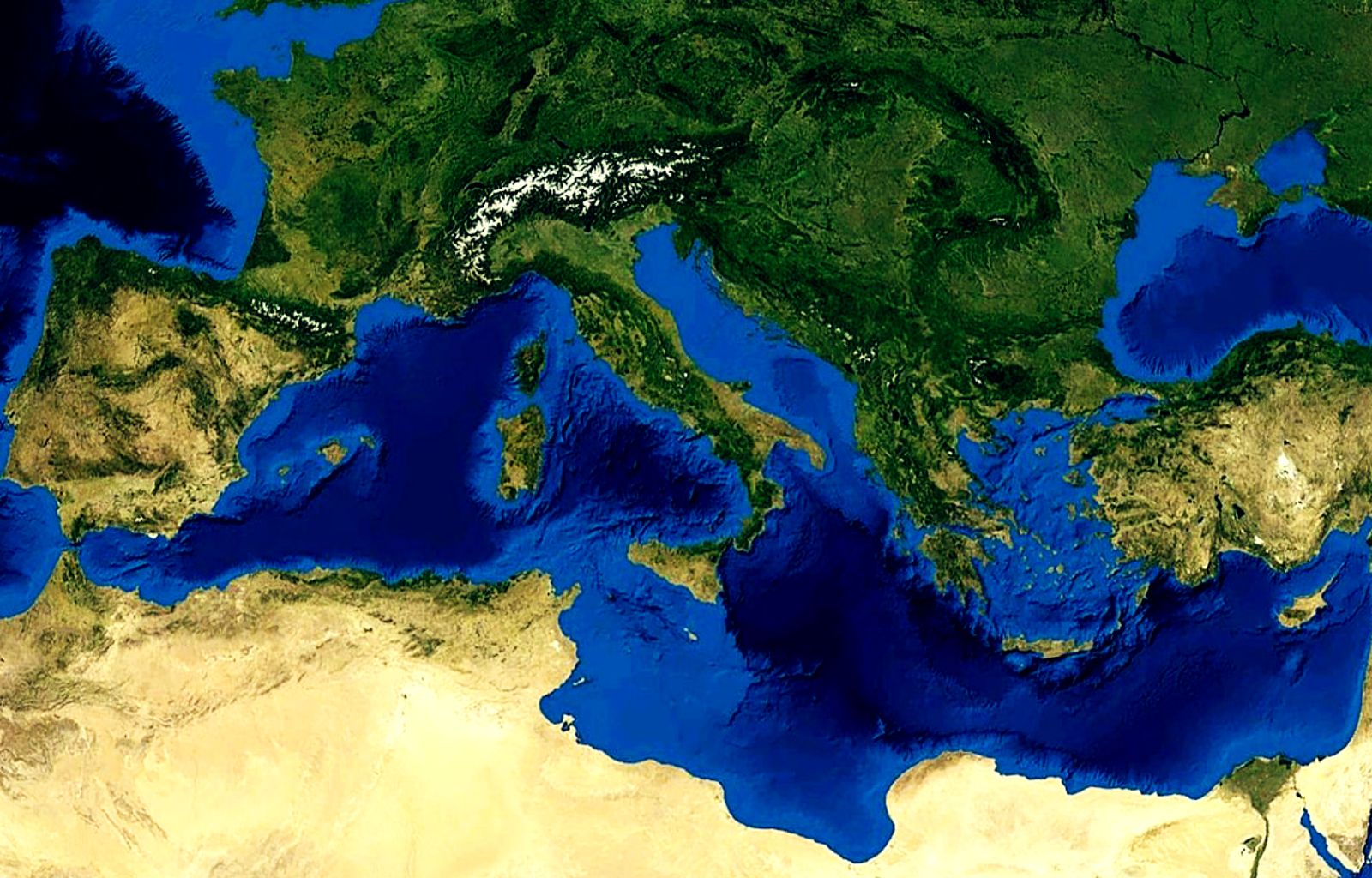
The one who had already introduced him to the region was Abie Nathan, the DJ and founder of the free radio station The voice of peace , which from May 1973 onwards entertained listeners all over the Levant with programmes and music against the tide. The station broadcast from a boat around the eastern Mediterranean as it was unlicensed; it played funk, R’n’b, soul and rock, and was a hit wherever its signal reached. On the strength of his credibility, Nathan sent listeners a message of peace from below, urging them to keep a critical attitude towards what politicians and mainstream media were saying. As a result, his programmes annoyed the authorities: Moshe Dayan repeatedly called for his arrest and the closure of the radio station, as he was guilty of polluting the national culture with pop music and pacifist proclamations, while for Prime Minister Golda Meir, he became a headache because he forced her to argue, albeit indirectly, about the appropriateness of her decisions. Nothing to be surprised about: if the monopoly on war and peace had slipped out of the hands of politicians, they would have lost their power.
But who was this Abie Nathan, and why did he go to such lengths?

Everyone in Tel Aviv knew him as the owner of the California, the first fast food restaurant in the city to introduce American burgers and snacks when Israel was still all kibbutz and morality. Before that he had worked as a pilot in El Al, had been an art collector and playboy; but above all in his youth he had been a military pilot and in 1948, at a very young age, had fought in the first Arab-Israeli war.
He knew that the bombs dropped in the line of duty had hit innocent people and he bore the remorse of this. He then came to the conviction that no war was worth fighting. His idea of a radio broadcasting a message of peace was unacceptable in a militarised country, so he came up with the idea of broadcasting from the sea. With the sale of his art collection, he financed the purchase of the boat in Holland, then sailed to New York in search of sponsors and technical means: he found some, including John Lennon who mentioned it in‘Give peace a chance‘, and others, mainly thanks to exponents of the American pacifist movement. And so came the broadcasts: the words ‘From somewhere in the Mediterranean here is the Voice of Peace‘ immediately identified his frequencies. Civilians and military personnel, Arabs and Jews, supporters and detractors listened to it: it brought a refreshing breeze in an extreme heatwave climate.
Initiatives in Egypt
Nathan was the protagonist of a series of initiatives that shook public opinion. In the 1970s, for example, he landed on Egyptian soil in a small plane to carry a petition with over a hundred thousand signatures of Israelis for peace while the two countries were still formally in a state of belligerence. Instead of shooting him, the Egyptians welcomed him with affection and sympathy: everyone there listened to him – but on his return he was arrested, because his country’s law forbade any travel to Arab countries.
In another initiative called ‘Flowers for Egypt’, he collected thousands of bouquets in Israel and transported them in his boat through the Suez Canal; apparently the crossing was authorised by Nasser himself. His hunger strike against the first settlements of settlers in the West Bank in 1978 caused a stir: his life was feared for, but he insisted, realising that these settlements would be the most insidious obstacle to peace between Israelis and Palestinians.
The meeting with Arafat

The climax came when he met Yasser Arafat in his office in Tunis during the first intifada in 1988: he offered him his hand, tried to promote a conciliatory message and in fact shortly afterwards Arafat renounced terrorism; but on his return Nathan was arrested again. In the microphones of those who interviewed him, he said that he cared little for prison: had it been necessary, he would have done far worse. In short, as in the case of the orchestra mentioned above, radio did not have the tools to change the course of history; but it was successful in convincing its listeners to reconsider, and has continued to do so for twenty years.
Peace from below is the only peace
In conclusion, the two experiences teach us that a lasting peace from above requires extraordinary individuals, favourable conditions, but above all an electorally expendable convenience or at least one that can strengthen the proponents in their respective contexts. Neither the Israeli nor Palestinian leaderships (to say nothing of the Lebanese, and many others) have been pursuing peace for decades, convinced that the balance has changed and it is convenient to wage war. At the moment, peaceful coexistence can only be sustained from below: so welcome a thousand of these orchestras, and a thousand of these radios.
Read more:
The voice of peace (2014), documentary by Eric Friedler
The West-Eastern Divan Orchestra conducted by Daniel Barenboim at BBC Proms 2016 – guest Martha Argerich
Parallels and paradoxes. Explorations in music and society (2003), Daniel Barenboim and Edward Said interviewed by Ara Guzelimian; Bloomsbury, London (Italian edition published by Saggiatore).