Europe begins with the freedom to stay
Defence, energy, industry and foreign policy call for a stronger Europe. But European sovereignty loses its meaning if entire regions continue to lose young people, jobs and services. The ability to choose one’s own future also depends on this.
Sovereignty is the freedom to choose
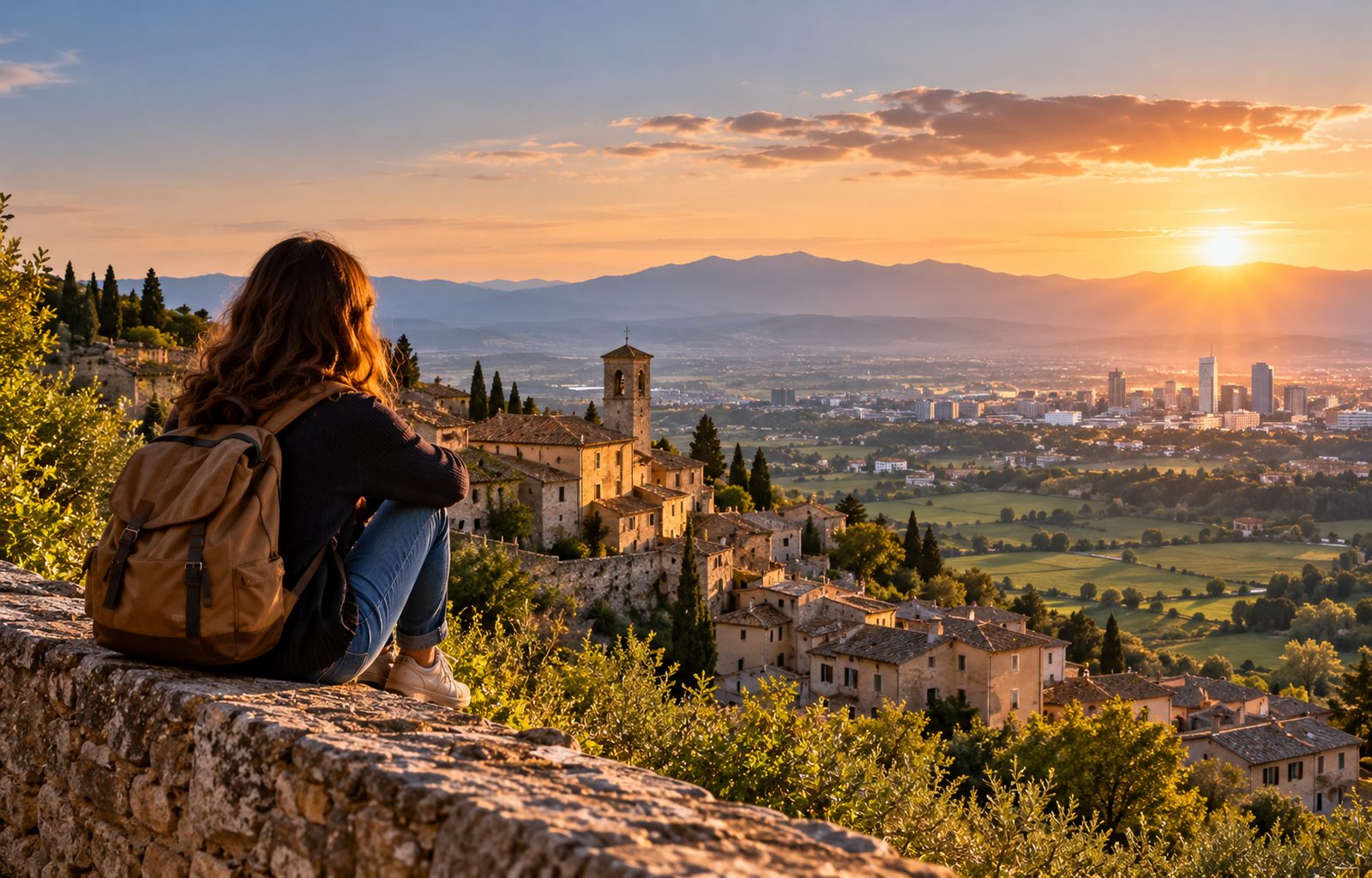
A young person leaving a small Italian town to study in Milan or abroad is not a problem. Leaving home, getting to know other places and experiencing different environments is an enriching experience. The problem arises when returning home means giving up the job you trained for, settling for fewer opportunities or living in a place where amenities become more and more out of reach with each passing year. The freedom to leave is an achievement. Having to leave because there are no alternatives is another matter altogether.
This choice also applies to Europe. War, energy, migration, industry and technology have transcended national borders. Twenty-seven governments, each acting on its own, are unlikely to carry the same weight as the United States and China. The EU has built a large single market and a common currency, but remains weak in foreign policy, defence, energy security and industrial policy.
We need a more autonomous Europe with greater political capacity, without distancing ourselves from the United States, which remains a key ally. We must be strong enough not to always depend on the decisions of others. A Europe capable of defending itself, producing strategic technologies and safeguarding its own industrial interests would also be a more credible ally. Today, sovereignty is above all about the ability to choose. On many issues, European states, taken individually, risk having ever less of that ability.
THE REGIONS THAT ARE BECOMING DESERTED
The strength of a continent is also measured far from the capital cities, in the Italy of small towns, mountains and inland areas. It is possible to gain geopolitical clout whilst losing strength in the very territories that make up that continent. In Italy , around 13.3 million people live in inland areas – more than one in five Italians. Between 2014 and 2024, these areas lost 5 per cent of their residents – far more than the larger towns and cities.
This phenomenon is not limited to Italy. In many rural and remote regions of the European Union, the population is declining and ageing more rapidly than in urban areas. The European Commission has set a target for 2040 of stronger, more connected, resilient and prosperous rural areas. But European strategies only matter if they translate into real opportunities in the places where people live.
The Italian statistics have recognisable faces: young people who leave and often do not return, businesses that close without finding anyone willing to take them over, villages where the average age is rising and the reasons for envisaging a future life are dwindling. No one should be forced to stay in the place where they were born. Staying, or returning, must be a real option, without having to give anything up.
A policy for inland areas should be assessed using simple criteria. Will it be easier to find a job after public investment? To set up a business? To have a child? To get to a hospital? To live there in ten or twenty years’ time? We have invested heavily in the regeneration of villages, the restoration of buildings, the promotion of tourism and the organisation of events. These are useful measures, but they are not enough.
A restored village can still lose its population. A more attractive square does not keep a business afloat, and a programme of events is no substitute for a stable job. A community stays alive when it is productive: someone sets up a business, a craftsman finds someone to pass on their trade to, and a family can plan for the future without seeing relocation as their first option.

EMPLOYMENT, SERVICES AND THE OPPORTUNITY TO STAY
In the first quarter of 2026, real wages in Italy were still 6.1 per cent lower than in the same period of 2021 – the widest gap among the major OECD economies. Employment figures alone are not enough. You can have a job and still be unable to support yourself, have a child or cope with an unexpected expense.
In inland areas, economic fragility goes hand in hand with demographic decline. When a company, a shop or a craft business closes down, it is not just a job that is lost. The local market shrinks, the population declines, services become more expensive to maintain, and the area loses its appeal. It is a slow downward spiral, difficult to halt.
The healthcare sector illustrates this point clearly. In 2024 , 9.9 per cent of Italians – some 5.8 million people – went without a medical consultation or diagnostic test, even though they needed one. In remote areas, distance is an additional factor on top of waiting lists.
A service may be available, but a distance of fifty kilometres, the lack of public transport or the need to accompany an elderly person can make it far less accessible. Public policies should also be assessed in terms of the difference between a service that is planned and one that can actually be used.
POLITICS MUST ONCE AGAIN OPEN ITS DOORS
For years, we have gradually closed down the places where politics used to meet the people. I do not miss the old party branches, nor would it make sense to bring them back in the same form. They did, however, have one feature that we have lost: a door through which one could enter.
A political venue, today, could once again fulfil that role: hosting a doctor who talks about what is happening in the local health service, an entrepreneur and a worker who discuss matters without playing pre-determined roles, a young person who explains why they left, and another who has tried to return. A place that is also open to those who do not have a party membership card in their pocket.
There are decisions that require the strength of a continent: defence, energy, technology, industry and security; others call for an almost yard-by-yard understanding of the territory: a bus that doesn’t run, a health centre that’s too far away, a school losing pupils, or a business that can no longer find workers.
Subsidiarity should serve this purpose: deciding together what requires a European dimension, and, at a local level, what can only be understood by knowing a community. In between lies a responsibility for the state: to ensure that the place where a person is born does not determine the quality of the rights to which they are entitled.
A Europe capable of exercising sovereignty on the world stage but unable to address the fragility of its own territories would have weak foundations. These are tangible foundations: jobs that provide a living, businesses that invest, families making plans for the future, accessible services, and communities where staying put is still a viable option.
Europe is asking us to look up. Politics must also be capable of looking down, low enough to meet people’s gaze.