The statesman’s lesson
On 27 May 1952, the foreign ministers of six countries signed the treaty establishing the European Defence Community in Paris. On 27 May 2025, exactly seventy-three years later, the Council of the European Union adopted the SAFE Regulation, which makes up to 150 billion euros available in loans for joint arms purchases. The coincidence in the dates is purely coincidental; the issue linking the two dates is the same.
Alcide De Gasperi realised back in 1951 something that people in Brussels today prefer to gloss over. A common army – or even just a common defence industry – without a political centre to decide how and when to use it remains merely an administrative body. It can function as long as no one has to make difficult decisions. When a crisis strikes, it reveals that it has no leadership. This is why we should revisit De Gasperi’s ideas today: to recognise a risk that has already derailed the European project once and is now re-emerging in new forms.
‘Everything is against me’
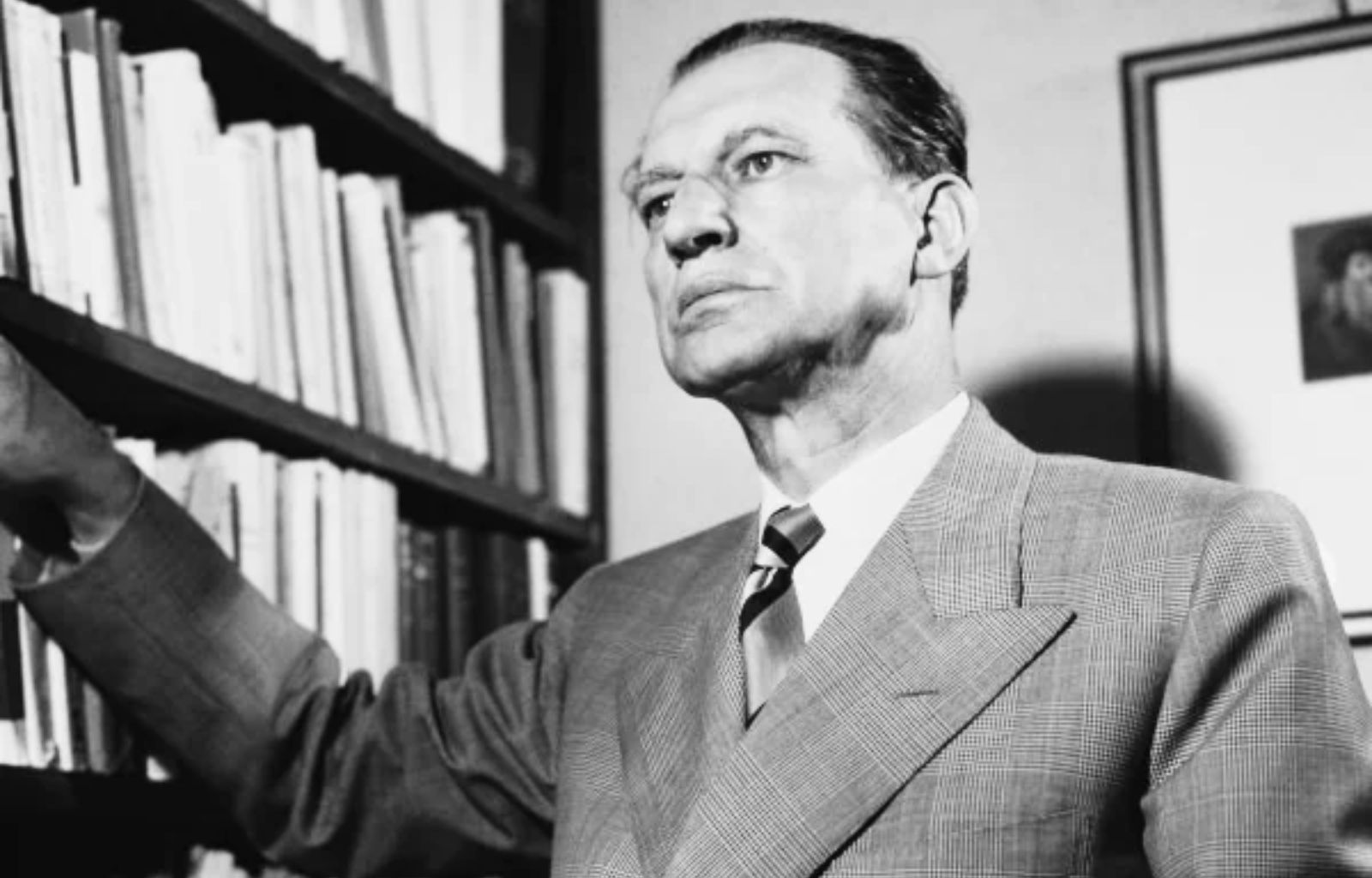
On 10 August 1946, at the Luxembourg Palace, De Gasperi took the floor at the Paris Peace Conference as head of the government of a defeated country. He began as follows: ‘As I take the floor in this global forum, I feel that everything, apart from your personal courtesy, is against me’. Standing before the victors, he asked them to ‘give the Italian Republic breathing space and credit’, that is, to treat the new Italian democracy as a partner in dialogue, distinct from the regime that had led the country into war.
That speech marked the start of a series of decisions, each with broader implications than the last. In 1946, the aim was to preserve the international dignity of a country that had emerged from the war on the wrong side. In 1949, Italy’s accession to the North Atlantic Treaty placed it within the alliance of Western democracies. In 1951, the ECSC placed Italy on an equal footing with France and Germany within Europe’s first supranational community. In 1952, De Gasperi attempted to take the greatest step of all: to give that community political authority. In six years, Italy moved from the ranks of the defeated to the table where the rules of Europe are drawn up.
It is this progression that makes De Gasperi a statesman. Each decision broadens the scope of the one that preceded it and paves the way for the next. None is merely a response to the emergency of the moment. All aim to build institutions capable of outlasting those who established them, and it is from this point that we must begin in order to understand what the EDC was and why its collapse still weighs heavily on us today.
The army that needed a leader
The CED arose from a military problem. Following the Korean War, the Americans called for the rearmament of West Germany, and Paris sought a way to accept this without seeing the re-emergence of an autonomous German army. The answer came in the form of a plan put forward by the French Prime Minister, René Pleven: an integrated European army, with national units merged under a single command. In its original conception, it was a technical solution to a security problem.
De Gasperi turned it into a political issue. On 10 December 1951, addressing the Consultative Assembly of the Council of Europe in Strasbourg, he delivered a speech that remains the most lucid text on the subject. He warns that establishing ‘merely joint administrations, without an overarching political will’ risks producing structures that will appear superfluous or oppressive. Administrations, he says, ‘form the framework: they represent what the skeleton represents for the human body’, and a lifeless skeleton does not move. He then sets out the pillars of a political structure: ‘the first, the main pillar, must be a common, elected and deliberative body’, and the second a common budget with its own revenue, so as not to depend on contributions from the Member States.
The following day, at the meeting of foreign ministers, De Gasperi declared that ‘Italy is prepared to transfer extensive powers to a democratically organised European Community’. The proposal, supported by Altiero Spinelli’s European Federalist Movement, was incorporated into the treaty signed in Paris on 27 May 1952 as Article 38. The article entrusts the Community’s Assembly with the task of examining the creation of a democratically elected assembly, forming part of a federal or confederal structure based on the separation of powers.
Governments stepped up their efforts. On 10 September 1952, in Luxembourg, the six ministers asked the Common Assembly of the ECSC – meeting in an enlarged format as an ‘ad hoc Assembly’ – to draft the treaty for a European Political Community directly. The draft was submitted in March 1953 and provided for five institutions, including a Chamber of Peoples elected by direct universal suffrage. For the first time, European integration had a political constitution on the table, born of the need to provide leadership for an army.
This sequence is worth noting because it overturns a common misconception. It is often said that Europe chose the economy because politics was premature. In 1952, the opposite was true: it was defence that made politics necessary, because no government could place its soldiers under a common command without knowing who would decide on their deployment. De Gasperi had realised this before anyone else and had turned a military constraint into an opportunity for constitutional reform.
Eleven days in August 1954
The project ground to a halt within a year. Stalin died and the Soviet threat seemed to be easing; France was embroiled in Indochina, and the governments in Paris fell one after the other. The ministerial conferences watered down the Political Community’s status to the point of transforming it into a ‘community of sovereign states’. The fate of the political project remained tied to that of the EDC, which neither of the two key countries, France and Italy, had yet ratified.
By 1954, De Gasperi was no longer Prime Minister. He was elected Presidentof the Common Assembly of the ECSC and spent his final months pressing for Italy to ratify the treaty before the French vote, in the belief that a fait accompli might sway Paris. He died on 19 August 1954 in Sella di Valsugana, on the eve of the Brussels conference that was intended to save the treaty.
Eleven days later, on 30 August, the French National Assembly brought the matter to a close with a procedural motion, the ‘preliminary question’, which was passed by 319 votes to 264. The treaty was not even debated on its merits. Gaullists and Communists voted together, for opposing reasons, and Prime Minister Pierre Mendès France chose not to make the government’s survival contingent on the vote. With the CED, the European Political Community also came to an end.
German rearmament, the issue that had sparked the whole affair, was resolved within a few weeks by other means: the Paris Agreements of October 1954 established the Western European Union and opened the doors of NATO to West Germany, which joined in May 1955. The military issue found an Atlantic solution. The political issue remained unresolved, and the integration process resumed the following year in Messina on the economic front, leading to the Treaties of Rome in 1957.
Since that August, Europe has built a single market, a single currency and a legal system. Defence has remained in the hands of NATO – that is, ultimately, Washington – and the political leadership that De Gasperi called for in 1951 has never materialised. For seventy years, this division of labour held up, because the American security umbrella made a European decision on security matters superfluous. The starting point for today’s discussion is that that umbrella can no longer be taken for granted.
The method
De Gasperi’s major decisions followed a recognisable approach, which provided a common thread running through his actions between 1946 and 1954. This can be summarised in three principles.
The first is the choice of side as a prerequisite for autonomy. For De Gasperi, joining the Atlantic Pact in 1949 was the way to guarantee a defeated country – one with the largest Communist party in the West – the stability needed to rebuild its institutions and economy. This external anchor served to protect domestic democracy.
The second isthe use of external constraints. Speaking before the Senate on 15 March 1952, De Gasperi defended the ratification of the ECSC by replying to the opposition that the Constitution already permitted the necessary limitations on sovereignty, through Article 11, and that this was ‘a coalition of democracies founded on the principle of freedom’. The transfer of powers to Europe was presented as the implementation of the Constitution, and therefore as an internal decision, thereby avoiding accusations of foreign imposition.
The third is the primacy of institutional structure over declarations. De Gasperi was wary of pro-European proclamations lacking institutional backing. In his speech in Strasbourg, he called for an elected assembly and a budget with its own revenue – in other words, the two elements that transform an agreement between governments into a political entity. For him, federalism was measured in terms of institutions and resources.
These three decisions share a common feature. De Gasperi treated European politics as a matter of governance, consisting of constraints, incentives and institutions, and left the rhetoric to others. His plan failed due to a parliamentary vote in Paris, even though the objectives had already been clearly set out in writing.
The Skeleton Without a Body
Read today, the Strasbourg speech seems to have been written with the debate on European defence in mind. The Union is developing common instruments at an unprecedented pace. The SAFE Regulation provides loans of up to 150 billion to Member States that purchase armaments jointly. In December 2025, the European Council agreed to a 90-billion loan to Ukraine for the two-year period 2026–2027, financed by joint debt guaranteed by the EU budget, after the plan based on frozen Russian assets had run aground due to resistance from Belgium. These are real steps forward, which would have been unthinkable just a few years ago.
Under De Gasperi’s approach, however, there are still separate administrations. SAFE funds national armies that procure equipment jointly, and the decision on how to use them remains with the capitals. The loan to Ukraine went ahead, leaving Hungary, Slovakia and the Czech Republic – which did not wish to contribute – out of the financing: with unanimity, every agreement is built around exceptions. The framework is taking shape, but the political body that should drive it is missing.
The issue has once again come to the fore. In June, Defence Commissioner Andrius Kubilius stated that one of the advantages of a European Defence Union would be precisely ‘moving away from unanimity and using qualified majority voting’, and proposed an architecture open to Ukraine, the United Kingdom and Norway. On 1 September, eleven governments sent a letter to High Representative Kaja Kallas asking her to explore the transition to qualified majority voting in certain areas of foreign policy. The letter was signed by Germany, France, Spain, the Benelux countries, the Nordic countries, Austria and Romania. Italy is not among them. The country of De Gasperi, who in 1951 declared himself ready to transfer extensive powers to a European Community, today remains outside the group seeking to push in that direction.
ForUkraine, this is a practical matter. Kyiv is associated with SAFE on the same terms as Member States, and its defence industry can take part in joint procurement. Its long-term security, however, depends on a European partner capable of taking swift and binding decisions, even when a single government objects. Every aid package negotiated around a veto is time given away to Moscow. A Europe with a unified political approach to defence would be a more solid guarantee for Kyiv than any sum of money allocated.
Forthe Union, what is at stake is the credibility of its very structure. Seventy years ago, the lack of a political centre was offset by NATO and American commitment. Today, that commitment has become negotiable, and Europe finds that it has built a market, a currency and a defence industry that is in the process of integration, without having established a body capable of deciding when to use them. This is the problem that De Gasperi raised in Strasbourg, which has remained unresolved since 30 August 1954.

What remains to be done
The integrated European army envisaged in the Pleven Plan belongs to a bygone era, and national armed forces will remain the core of the continent’s defence for a long time to come. To bring De Gasperi’s vision up to date means revisiting the question he had raised – and which the Paris vote left unanswered: who decides when the common instruments should be used.
In 1954, the political initiative failed because a national parliament rejected it. Today, the risk is different and more insidious. The political initiative may fail to materialise because no one proposes it, whilst the instruments are developing sufficiently to give the impression that the problem has already been resolved. Loans, joint procurement and industrial programmes provide Europe with the framework of a common defence, whilst leaving it without the nervous system. The history of the EDC teaches us that such a framework holds together only as long as someone else – in that case, Washington – ensures it remains functional.
In 1946, in Paris, De Gasperi spoke on behalf of a country that had everything stacked against it. In 1951, in Strasbourg, he called on Europe to establish an elected assembly and a common budget. In between lies the mark of a statesman: ever greater decisions, each designed to endure beyond the circumstances that made them necessary. De Gasperi died eleven days before the greatest of them all was rejected. It has taken Europe seventy years to find itself facing the same question again, and this time it cannot count on anyone to answer it on its behalf.