Spiders in a jar
In Abu Dhabi, discussions took place on Europe’s security without Europe. Moscow is keeping us out in the cold, and in Dublin we agreed with them
On 10 and 11 November, in Abu Dhabi, the Americans, Russians and Ukrainians sat down at the same table for the first time in nine months. The Europeans were left outside the door, waiting in the corridor. The Commission, NATO, and advisers from London, Paris, Berlin and Rome were received separately by the Americans and Ukrainians, at a safe distance from the Russian delegation. So much so that Sergey Lavrov remarked that they might as well have stayed in their hotel.
It must be said that, ‘at least’, this trilateral meeting was not particularly fruitful: a prisoner exchange, nothing more. But what matters is what was discussed, and the starting point was far from positive. The Russian chief negotiator, Vladimir Medinsky, had explained that the security system established in Europe at Yalta and Potsdam “works very badly”. Two days earlier, Donald Trump had promised “a big agreement” that would concern “more than Ukraine”.
They were talking about our own country whilst we were in the corridor.
The bills and the hotel
And yet, we are not as small as they would have us believe. According to the figures, the European Union is the world’s second-largest economy. Russia, on the other hand, has a GDP only slightly larger than Italy’s. Since 2022, European countries have provided Kyiv with around 200 billion euros, whilst the United States has provided 115 (figures from the Kiel Institute). In Belgium, 202 billion in frozen Russian assets are currently held. The war is being fought with our money on our border, and peace – whatever form it takes – will be ours to live through as neighbours.
The Poles, who know a thing or two about partitions, have been repeating this in Latin for centuries: *Nihil de nobis sine nobis* – nothing about us without us. That a small state squeezed between two empires should have to invoke this is understandable. That those who pay almost twice as much as America should have to invoke it is humiliating.
The embrace
It goes without saying that Moscow would prefer a Europe that pays up and keeps quiet. The new development is Washington. Trump’s stance towards Europe is not that of an ally. It is clearly stated in the US National Security Strategy of December 2025: in their view, Europe risks ‘civilisational erasure’ and the EU undermines political freedom and sovereignty.
And this is not limited to policy documents alone. On 8 October, Reuters reported that Jared Kushner and Kirill Dmitriev, Putin’s investment chief, had discussed the involvement of an American investor in Nord Stream: Russian gas flowing back to Germany, for American profit and against German wishes.
It’s a hug between Trump and Putin, and we’re the ones being suffocated in the middle. Since 2022, Russia has not been the pariah of the international system that the sanctions had predicted; it sells half its crude oil to China and does business with the White House: it stands with Beijing against America and with America against Europe. In 1971, Kissinger flew to China to drive a wedge between Moscow and Beijing. Today, it is Moscow that is driving a wedge between Washington and Europe, and neither side is stopping it.
Who answers the phone?
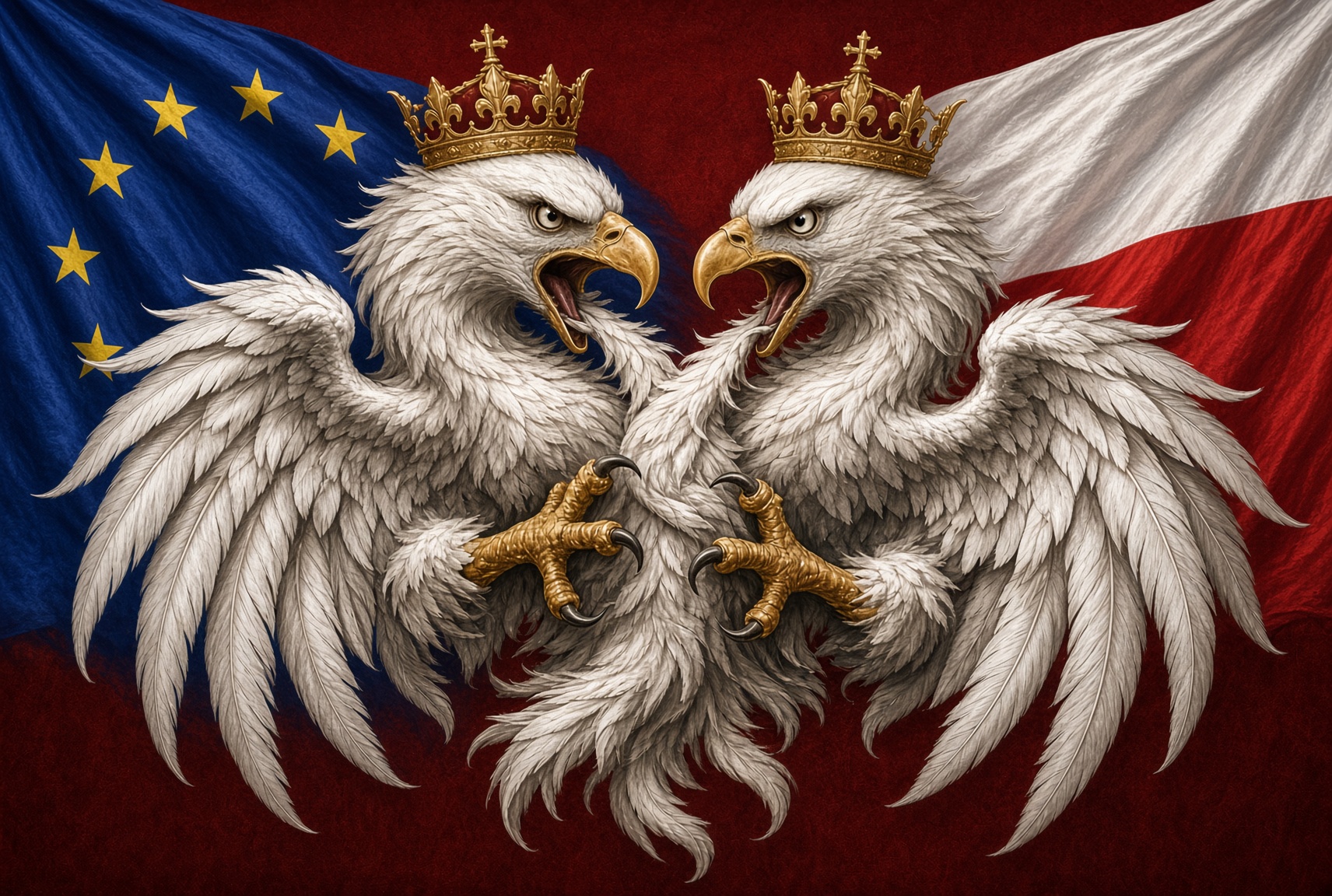
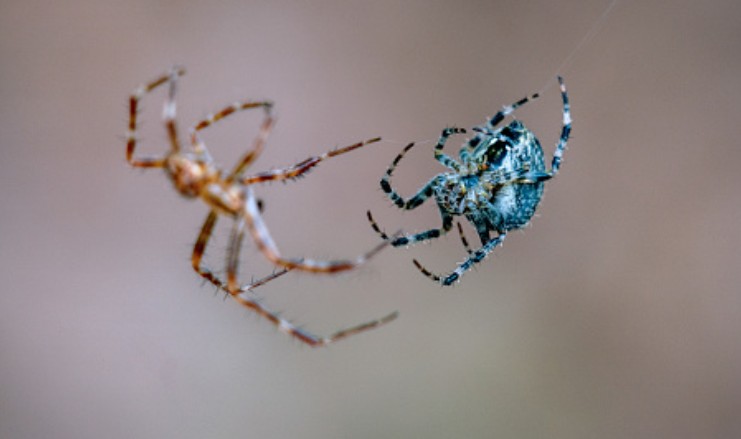
It would be all too easy to stop there and say that they are the bad guys. However, on 12 November, Kremlin spokesman Dmitry Peskov said that Europeans “are squabbling like spiders in a jar”.
That same day, in Dublin, we Europeans proved him right.
Friedrich Merz defended the three-way format with Paris and London. Giorgia Meloni called for a new envoy. Kaja Kallas pointed out that the treaties are clear and that it is up to her and António Costa to speak.
Emmanuel Macron wants the substance first and the name second. Meanwhile, Kushner, who would like us to attend the next meeting, has asked for just one thing: a single person to speak on behalf of Europe.
For fifty years, people have been attributing to Kissinger the question of which number to call to speak to Europe. This time, it was Trump’s son-in-law who asked it, and we didn’t know how to answer.
If we can’t decide who’s speaking, how will we decide what to say?
We’ve already got a name.
Costa chairs the European Council, Kallas is the High Representative: we chose them in 2024 for these roles.
The format of the three capitals, one of which is outside the Union, is a club that does not represent us.
An extra envoy would be a fifth person joining four who are already stepping on each other’s toes.
Those two need a mandate from all twenty-seven, without any vetoes. And above all, we need to make the cards we’ve already put on the table count: the 202 billion, the sanctions, the 90-billion loan, and Kyiv’s accession.
No agreement signed in Abu Dhabi applies without the EU’s signature on these four points. Anyone with such significant clout cannot remain on the sidelines; they must assert themselves and make it clear that without them, the table will not hold.
As I write, the 27 are meeting in Dublin to discuss this. I’ll make a prediction: they’ll come away without a name and with a postponement until the European Council in December.
As long as we’re squabbling inside the jar, someone else is holding the lid.