Is El Salvador invading Haiti? Bukele’s mission, the gangs and the shadow of the United States
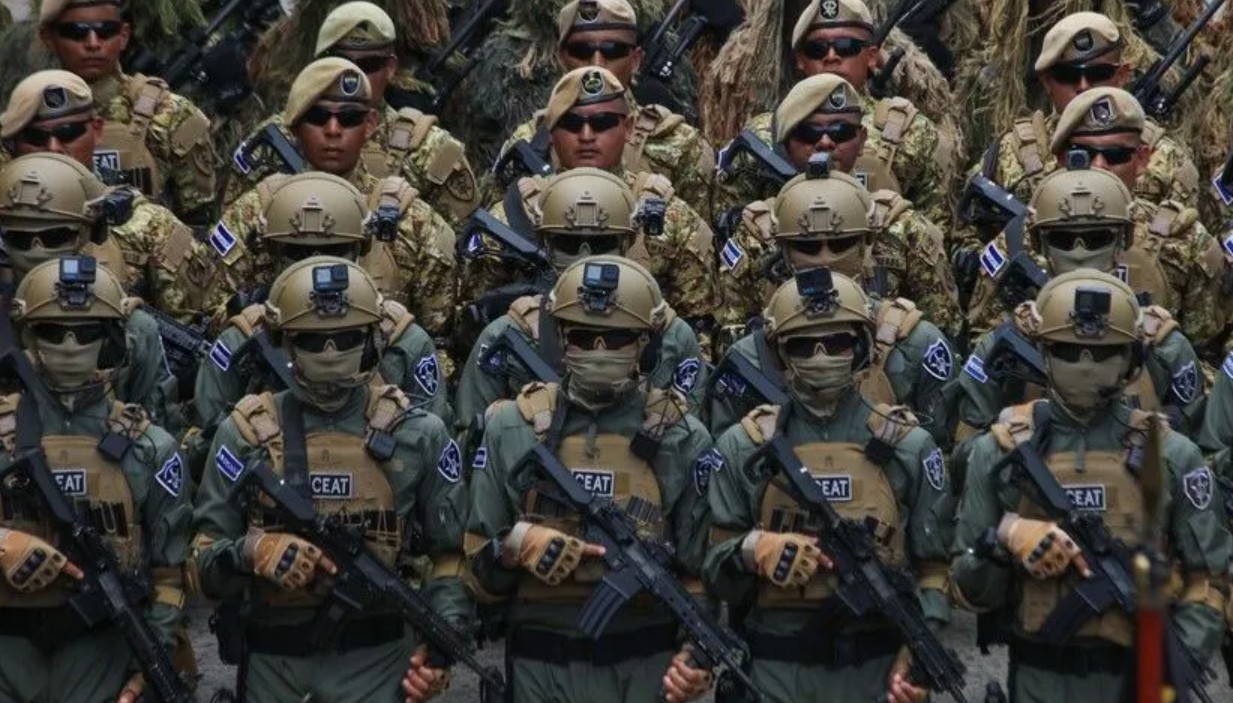
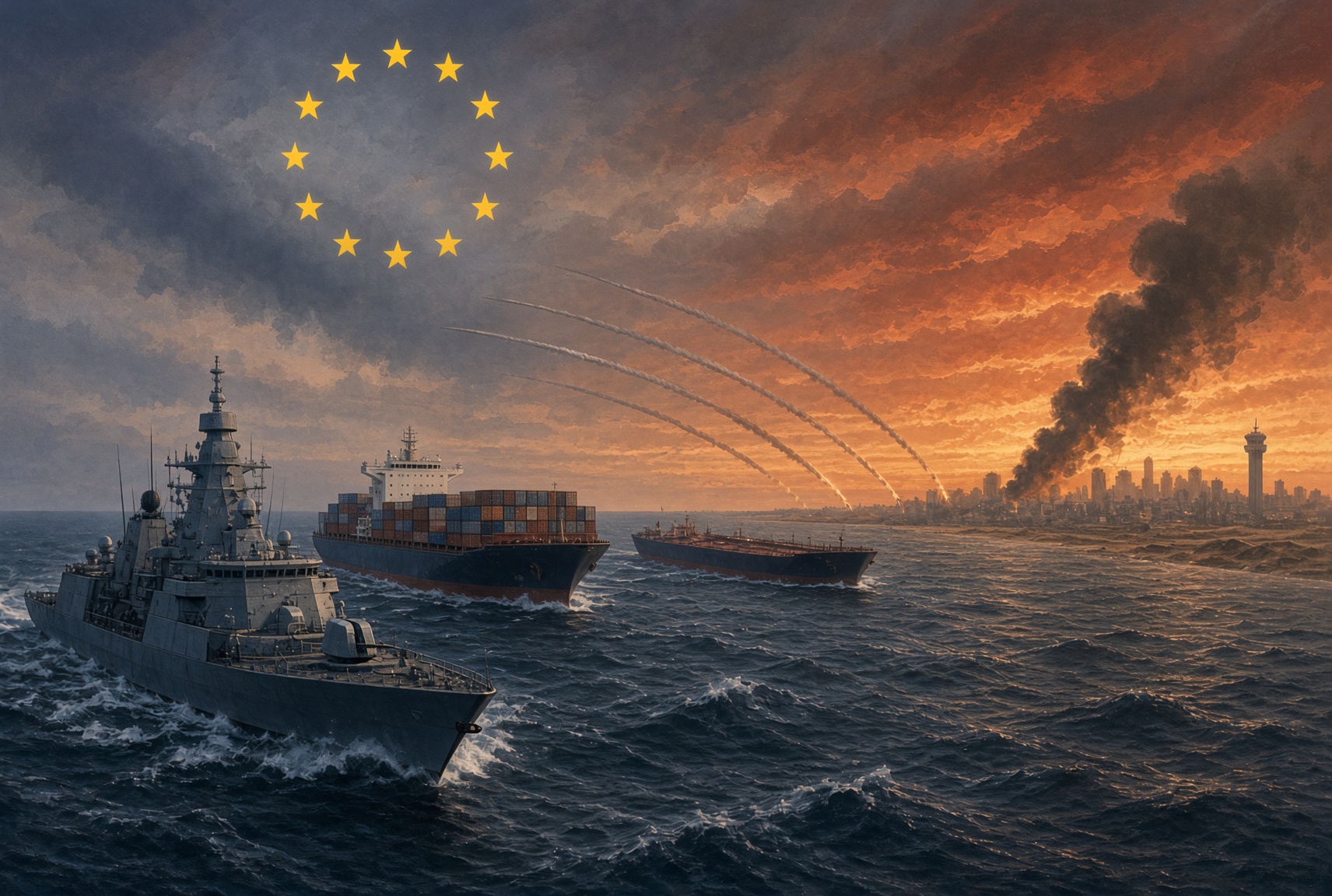
Over two thousand Salvadoran soldiers have arrived in Haiti following the disappearance of four aviation technicians in an ambush by criminal gangs. Nayib Bukele rejects accusations of invasion and promises to bring his men home. But the operation, which is receiving logistical support from the United States, risks opening up a new front in a country where institutions are on the brink of collapse and gangs control much of the capital.
From an international mission to a military operation
It all began on 18 October, on the outskirts of Port-au-Prince. An armoured vehicle carrying Salvadoran personnel was attacked by armed men in the Croix-des-Bouquets area, one of the parts of the Haitian capital where criminal gangs exercise tight control. Four aircraft technicians manage to escape from the burning vehicle, but from that moment on, all trace of them is lost.
The four are part of the contingent sent by El Salvador as part of the Gang Suppression Force (GSF), the multinational force authorised by the United Nations to support the Haitian authorities in their fight against criminal organisations. Until then, El Salvador’s contribution had focused mainly on air operations and medical evacuations.
President Nayib Bukele’s response came on 21 October via X. The message was addressed directly to the gang leaders: the four compatriots must be returned alive and unharmed. Otherwise, the president warns, the attack they suffered will pale in comparison to the reaction that will follow.
Bukele adds a remark that is bound to resonate far beyond Haiti’s borders: El Salvador has already defeated its own gangs and can do the same with the Haitian ones.
Words are followed by reinforcements. Within a few days, special forces, armoured vehicles and helicopters arrive. According to Reuters, by 28 October, around 2,000 Salvadoran soldiers were already in Haiti, with the possibility of this number rising to 2,500.
It is a considerable mobilisation for an operation officially presented as a rescue mission. This marks a rather clear shift in stance on the part of the Salvadoran President.
Is El Salvador really invading Haiti?
This is where the misunderstanding arises. Talking about an ‘invasion’ may immediately convey the scale of the operation, but it risks attributing to it a political and legal significance which, at least for the time being, is not borne out by the available facts.
El Salvador was already taking part in the international mission against gangs, and the Haitian authorities cooperated in the operations following the ambush. On 29 October, Bukele reiterated – this time writing in Haitian Creole – that his country has no intention of occupying Haiti, subjugating its people or appropriating its resources.
According to the chairman, there is still just one objective: to bring the four coaches home.
The problem is that the scale of the deployment has exceeded that of a normal search operation. Questions remain regarding the chain of command, the rules of engagement and the relationship between the Salvadoran troops and the multinational force already in place.
This distinction is crucial. There is insufficient evidence to characterise the operation as a military invasion against the Haitian state. There are, however, valid reasons to wonder whether a rescue mission might escalate into a more extensive armed intervention.
And it is precisely this uncertainty that is causing concern amongst observers.
Gangs are defying Bukele, but Haiti is not El Salvador
The Salvadoran president’s ultimatum has sparked a direct confrontation with criminal organisations that have long been accustomed to exercising their power through kidnappings, extortion and violence against civilians.
Among the gangs present in the area of the ambush were Chèn Méchan and 400 Mawozo. The leader of the latter organisation claimed that the four Salvadorans had been killed in territory controlled by an allied gang. However, this statement does not constitute independent confirmation of their deaths.
The fate of the engineers remains uncertain. In the days following the attack, some human remains were recovered, but Bukele denied that they belonged to his compatriots. The information circulating regarding their identification has been contradictory.
The challenge facing the president therefore goes beyond his confrontation with criminal leaders. Bukele has built much of his popularity on the drastic reduction in violence in El Salvador, achieved through a crackdown on gangs that has involved mass arrests and serious concerns over human rights.
Haiti, however, is a very different case.
For years, criminal organisations have exploited the collapse of institutions, the weakness of the justice system and the fragmentation of the security forces. They control territories, transport routes and economic activities, whilst the civilian population continues to suffer the consequences of a conflict that knows no respite.
Applying the Salvadoran model in this context does not necessarily mean replicating the same results.
Domestic support and the temptation of the strongman
Meanwhile, in San Salvador, the operation is bolstering Bukele’s image as a leader capable of tackling gangs even beyond the country’s borders.
A CID Gallup poll published on 28 October indicates that 86 per cent of Salvadorans support the mission in Haiti. In the same poll, however, 82 per cent expressed concern for the safety of the military personnel involved in the operation.
These two figures paint a picture that is less straightforward than that suggested by political propaganda. Support for the president is widespread, but this does not dispel the fear that a show of force could escalate into a conflict that is difficult to control.
For Bukele, Haiti also represents an international test case. The president, who promised to rid El Salvador of gangs, is now positioning himself as a potential key player in regional security.
It is a politically powerful image, particularly in Central America and the Caribbean, where organised crime continues to affect the lives of millions of people. However, success at home does not automatically guarantee the ability to stabilise another country.
The United States is helping, but without getting too deeply involved
The American dimension is one of the most significant aspects of the whole affair.
According to a report published by Axios on 30 October, Bukele is said to have telephoned Donald Trump to ensure that Washington would not oppose the deployment of reinforcements. The US president is said to have given his informal approval.
The same report states that El Salvador had requested military equipment from the United States, including drones and transport aircraft, without receiving official approval.
This does not mean, however, that Washington has remained completely on the sidelines of the operation.
Once again, Reuters has reported that a US military official has confirmed that Pentagon C-130 aircraft were used to transport Salvadoran forces.
What emerges, therefore, is a picture of concrete logistical support, accompanied by considerable political caution. No direct American participation in combat operations has been announced, nor is there sufficient evidence to describe the intervention as an invasion organised by the United States via El Salvador.
The fact remains that Washington continues to have a clear interest in the stabilisation of Haiti, not least because of the migration implications of the crisis and for the security of the Caribbean region.
The close relationship between Trump and Bukele adds a further political dimension to a situation that is already difficult to interpret and understand.
A balance that is in danger of being disrupted
Haiti is facing a devastating humanitarian and institutional crisis . According to United Nations figures reported by international agencies, nearly one and a half million people have been forced to flee their homes in recent years. Between January and the first half of September 2026, there were over 5,700 deaths and injuries linked to violence.
The arrival of the Salvadoran military is not, in fact, taking place in a stable environment, but in a country where the civilian population is already exposed to an extreme level of insecurity.
There is a real risk that an operation designed to rescue four men could end up fuelling further clashes, provoking reprisals and making life even harder for those living in the areas controlled by the gangs.
Bukele has given assurances that El Salvador has not come to Haiti to conquer the country. This is an important clarification, but it is not enough to resolve the questions surrounding the mission.
Because the issue here is not merely to determine whether this can be described as an invasion. It is to understand who is actually in control of the operation, how long it might last, and what consequences it will have for a population that has already paid a very high price.
In Haiti, where the state struggles even to maintain a presence, the promise to defeat the gangs may seem like a glimmer of hope. But without a political and institutional strategy to complement military action, there is a risk that this promise too will end up becoming yet another chapter in the long history of foreign missions that have failed to restore stability to the country.