The Middle Eastern triangle that changes everything
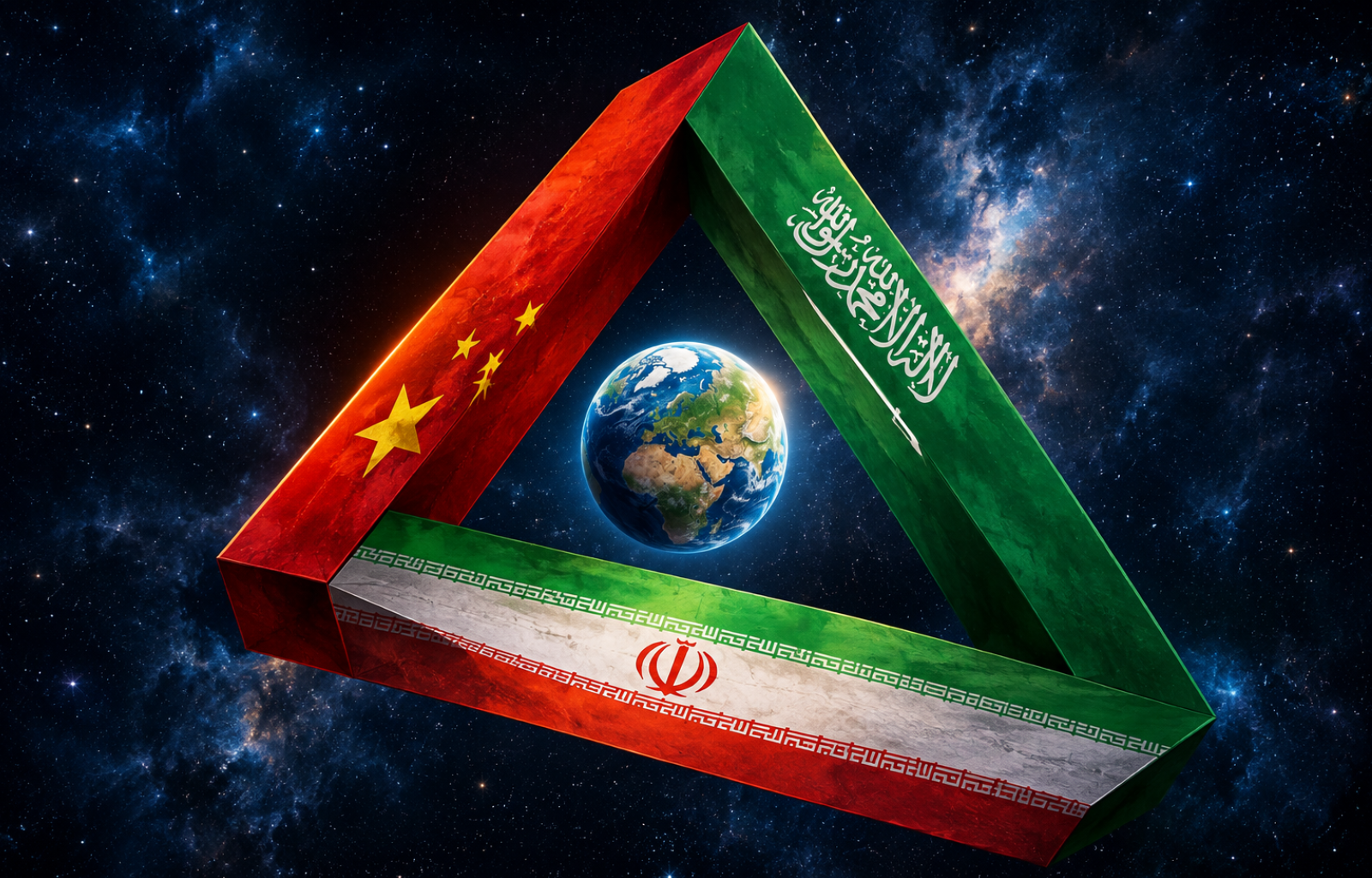
A diplomatic triangle that has emerged over the past forty-eight hours reveals something specific about how the power structure in the Middle East is changing. On 16 September, in Beijing, Wang Yi met with the Iranian Foreign Minister, Abbas Araghchi. The Chinese statement was couched in the usual diplomatic vagueness, but Wang Yi had added something more direct: he called for the Strait of Hormuz to be reopened ‘as soon as possible’, for the security of international shipping lanes to be guaranteed, and for the stability of global energy transport to be preserved. The following day, Reuters revealed, citing three Iranian sources, that Beijing’s private message to Tehran had been far more direct: China had asked Iran to use its influence to rein in the Houthis in Yemen. And that request had come after Saudi Arabia had turned to Beijing for help.
The whole story lies in that triangle. Riyadh turns to Beijing. Beijing turns to Tehran. The Saudi monarchy, which for decades has been accustomed to seeking protection from Washington, is now looking to Beijing for what Western navies have failed to provide. The United States has refused to intervene directly against the Houthis, partly because of the diplomatic rift with Riyadh that emerged in May, when Saudi Arabia suspended US access to its bases and denied airspace during ‘Operation Freedom’ in the Strait of Hormuz. Trump was “outraged”, reported the New York Times. Riyadh had gambled that it could side with the Americans without paying the price. Now it is paying that price, and without a reliable ally in Washington, it is turning to Beijing.

Tangible interests and real levers
China buys almost all of the Iranian oil sold despite the sanctions. When Beijing speaks out, Iran listens. But China’s interests at stake are also direct and measurable. Saudi oil production in August fell to its lowest level since 1990, at 6.238 million barrels a day. On 10 September, drones from Iraq damaged pumping stations 8 and 9 onthe East-West pipeline, Saudi Arabia’s only alternative to the Strait of Hormuz. On 16 September, shipping traffic through Bab el-Mandeb fell to three vessels, compared with a ten-year average of seventeen. Chinese port infrastructure along the entire east coast of Africa depends on that route. This is not merely a Middle Eastern crisis: it is a crisis that directly affects Chinese interests.
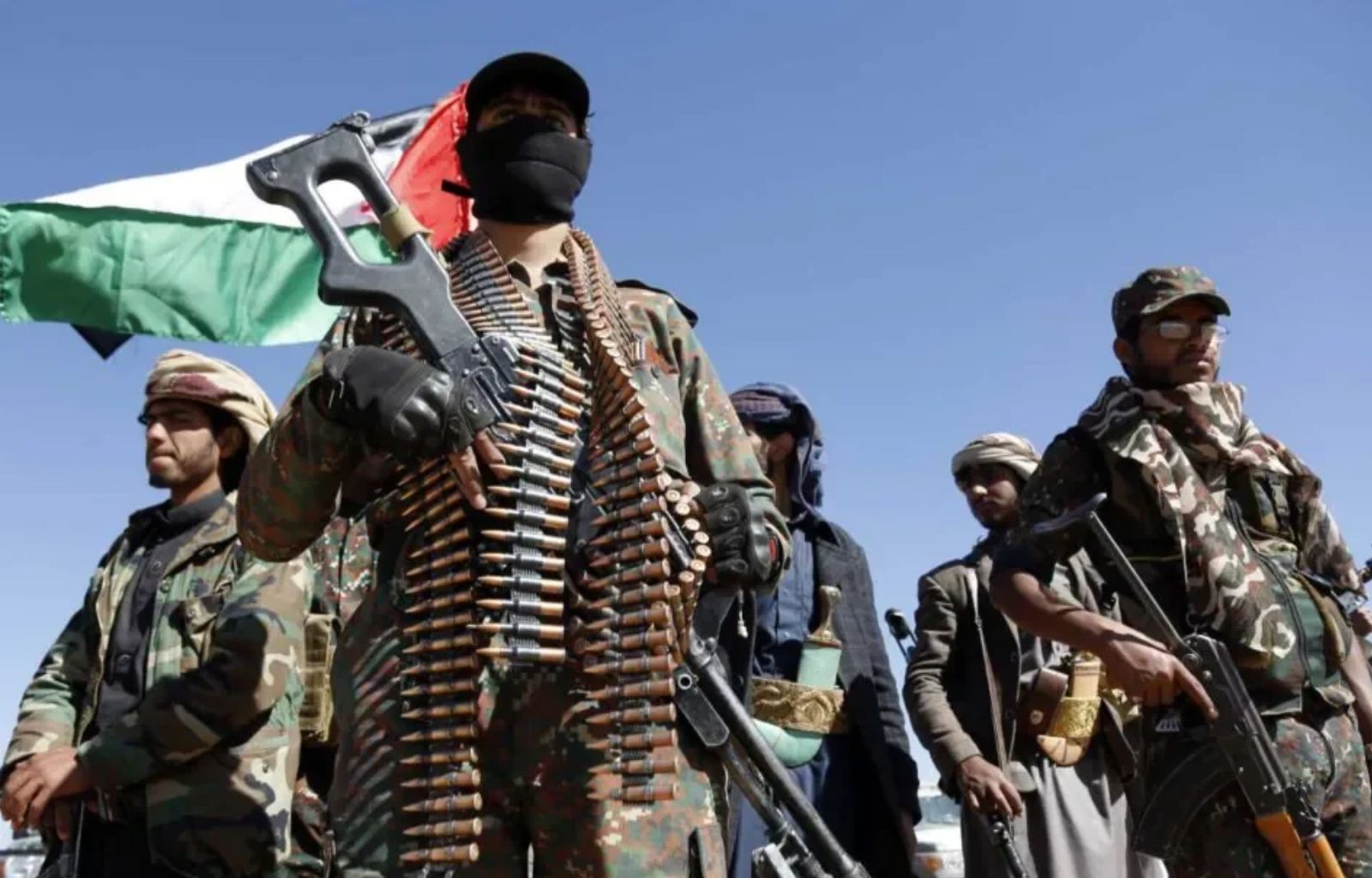
Beijing’s response was not merely diplomatic. At the end of July, Reuters revealed that China had already established direct contact with the Houthis to secure the passage of its oil tankers, with each vessel negotiated on a case-by-case basis. Two Cosco supertankers had passed through the strait after obtaining Houthi authorisation. This is Beijing’s pragmatic approach: to negotiate with those exercising effective control without formally recognising their sovereignty, and to keep all channels of communication open without taking sides.
Tehran has responded with a statement that is both a reply and a rejection: ‘Stability depends on an end to the war waged by the US and Israel against Iran.’ It is a condition that Beijing cannot fulfil on its own, and one that turns China’s request into a bargaining chip for Iran in its dealings with Washington. Iran needs China far more than China needs Iran. And it knows it.
The ‘responsible power’ framework
What this triangle reveals goes beyond the protection of energy interests. Every move China has made in this crisis – the public call to reopen the Strait of Hormuz, the private message to Tehran, the direct contacts with the Houthis – systematically reinforces the narrative of a ‘responsible power’: the only capital that maintains open channels with everyone, that calls for restraint rather than issuing threats, that achieves results without resorting to force. This is not diplomacy in the traditional sense. It is the gradual construction of a structural position: in a Middle East where Washington is no longer a reliable arbiter, Beijing is positioning itself as the indispensable interlocutor, the one without whom no solution is possible.
In March 2023, again in Beijing, Wang Yi had presided over the signing of the agreement marking the thaw in relations between Saudi Arabia and Iran, bringing an end to seven years of diplomatic rift. The diplomatic capital accumulated at that time is precisely what Beijing is drawing on today. And it is doing so with the same logic: not taking sides, not making threats, but creating the conditions under which all parties ultimately come to rely on Beijing to resolve their problems.
China does not want a new order in the Gulf – it has neither the interest nor the capacity to act as the policeman of an unstable and costly region. It wants something much more specific and far less burdensome: a change of point of contact. It wants the Gulf states to stop turning to Washington as the number to call when they have a problem, and to start turning to Beijing instead. It does not want to govern the Gulf – it wants to be the only one talking to everyone, accumulating diplomatic capital without ever spending it definitively, being indispensable without bearing responsibility.
The fact that Riyadh has turned to Beijing rather than waiting for Washington is, in itself, the result. There is no need for the Houthis to stop. The shift in points of reference has already taken place.