Iceland’s ‘No’ to Europe and the real reason behind the rift between the city and the countryside

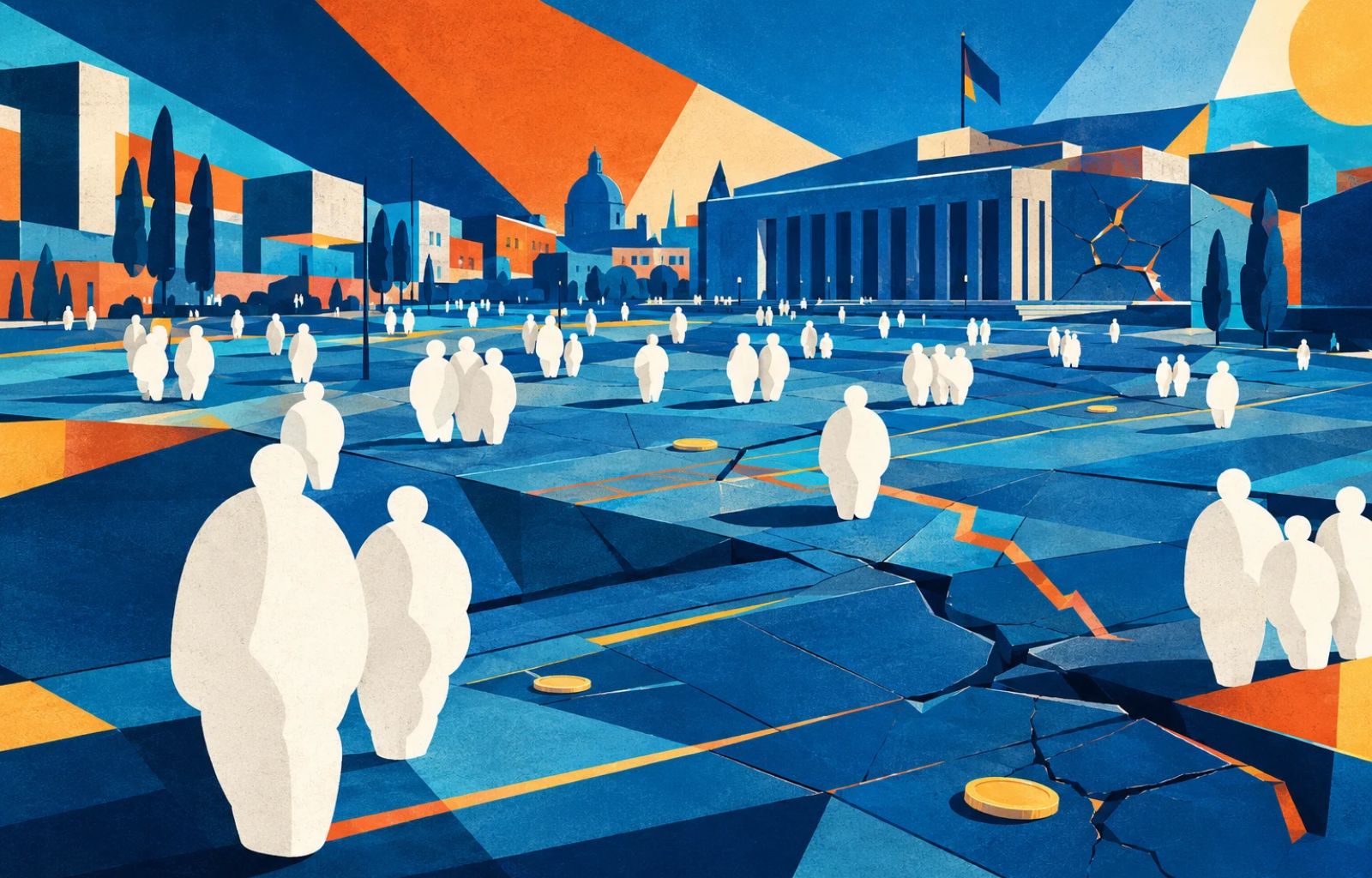
The Icelandic referendumon opening negotiations withthe European Union has painted a picture we have seen many times before: cities look beyond their borders, whilst suburbs and the countryside do so far less. It is not merely a question of education, income or political affiliation. Perhaps it is, first and foremost, a question of one’s day-to-day experience of the world.
In the end, Iceland said no.
Not about joining the European Union, to be honest, but even about the possibility of discussing it again.
But the most interesting figure isn’t the national one: it’s the map.
Because when you watch it, you get the feeling you’ve seen that film before.
In Reykjavík’s two constituencies, the ‘Yes’ vote won by a clear margin: 57.5 per cent in the northern part of the capital, and 54.5 per cent in the southern part.
But as you move away from the city, the political landscape changes along with the geographical one. In the southern constituency, the ‘No’ vote rose to 60.5 per cent; in the north-west to 62.9 per cent; and in the north-east to 61.2 per cent.
The capital looks towards Brussels. Much of rural and coastal Iceland, however, looks the other way.
Of course, there are very practical reasons specific to Iceland. Fishing, first and foremost. The fear of losing autonomy over the management of territorial waters and fishing quotas weighs heavily in a country where the sector accounts for a significant proportion of exports.
Then there is agriculture, national sovereignty, a very strong tradition of independence, and the not unreasonable belief that they already enjoy many of the benefits of European membership through the European Economic Area and the Schengen Area, without having to take on all the obligations of membership.
It’s all true. And yet the voting pattern reveals something that goes beyond Iceland.
It highlights a divide that has been running through almost all Western democracies for years now: the divide between the places where the world unfolds every day and those where the world is experienced mainly through a screen.
Brexit had shown us this with almost textbook clarity.
In 2016, the United Kingdom voted to leave. London did exactly the opposite: nearly 60 per cent of Londoners voted to remain. In some neighbourhoods, the ‘Remain’ vote was well over 70 per cent.
All it took was to move away from the metropolis for the political landscape to change. The England of university towns, major public services, international flows and parts of the metropolitan areas was one thing; many smaller towns, post-industrial areas, suburbs and the countryside were quite another.
It wasn’t just a map of the United Kingdom; it was a map of our relationship with the world.
And it is perhaps here that we need to try to shift the line of reasoning.
Because it is easy to dismiss it all with a reassuring explanation: there are more university graduates in cities, so cities are pro-European; in rural areas there are fewer, so Euroscepticism is on the rise.
There is some truth in this. Studies on European elections do indeed show that education, age, economic circumstances and social composition play a role.
But they also reveal something more interesting: the difference between urban and rural areas does not disappear when many of these variables are taken into account.
In a comparative study covering the 27 EU countries plus the United Kingdom, the propensity to vote for anti-integration parties remains significantly higher in rural areas, even when economic and socio-demographic characteristics are taken into account.
Perhaps, then, educational qualifications only tell part of the story. The other part could be far more tangible: it is experience.
Anyone living in London, Paris, Milan, Madrid, Amsterdam, Berlin, Barcelona or Copenhagen doesn’t need anyone to explain to them in abstract terms what it means to live in a European city: they see it, they hear it spoken, they work alongside it.
He gets on a train and crosses the border. He catches a flight in the morning and is back by evening. He has French colleagues, German clients, Romanian neighbours, Spanish students, Polish waiters, Greek doctors, Estonian programmers and Dutch suppliers.
He buys something online and it arrives from a warehouse a thousand kilometres away.
He works for a company that sells in twenty countries.
His son is off on an Erasmus exchange. A tourist asks him for directions on his way to work. An international conference fills the hotels in the neighbourhood. A low-cost flight transforms Brussels, Lisbon or Berlin from dots on a map into places you can reach in two or three hours.
Europe, there, isn’t a blue flag flying outside a government building: it’s the Tuesday morning traffic.
And this inevitably changes the way it is perceived.
That doesn’t mean you love her.
Major European cities can be fiercely critical of Brussels. They may take issue with its bureaucracy, economic policies, immigration, environmental regulations, the euro and its crisis management. Being exposed to Europe does not automatically mean becoming a Europhile.
However, it means something different: it is harder to imagine it as something completely separate from oneself, because one encounters it every day.
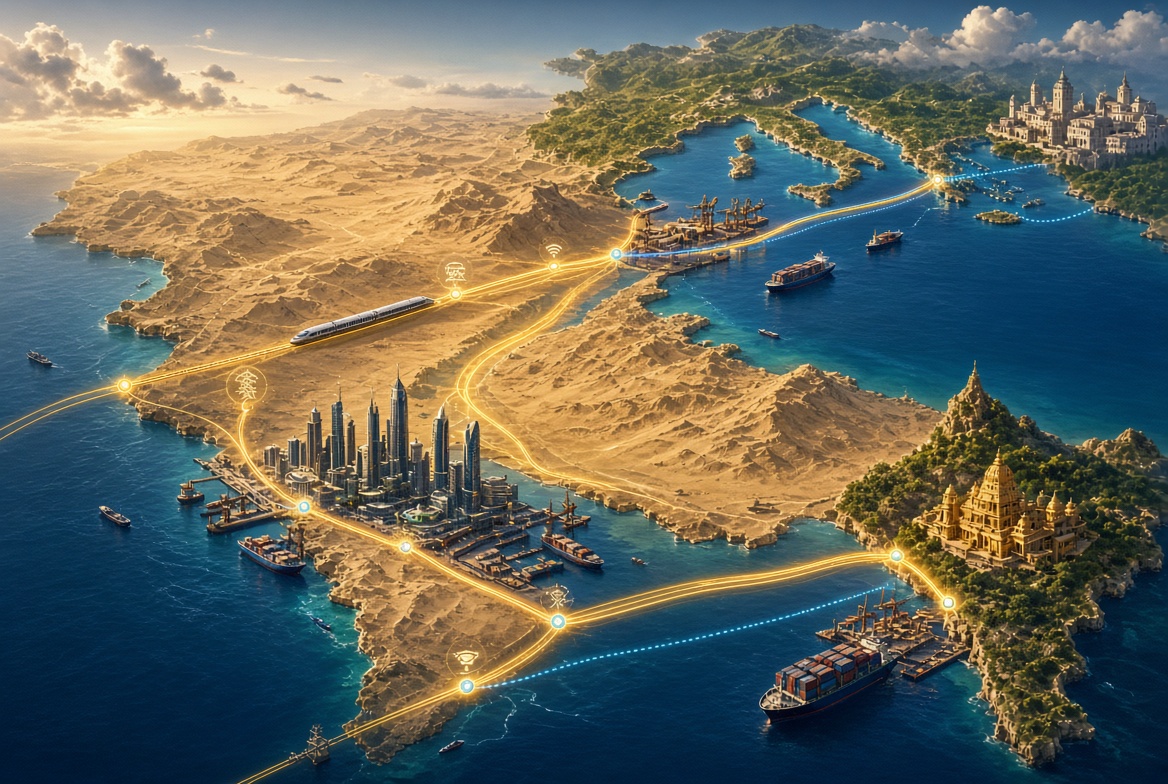
Perhaps this is why airports, ports, universities, international railway stations, financial districts and major industrial centres constitute an interesting political landscape.
Not because an airport churns out pro-Europeans the way a factory churns out cars — that would be nonsense — but because those places are gateways. And living near a gateway means constantly seeing people coming and going.
A major port doesn’t just handle containers. It handles languages, people, capital, goods, ideas and customs.
An international airport isn’t just a runway with aeroplanes on it. It’s a huge, daily reminder that your neighbourhood doesn’t end where the ring road begins.
A university town does more than just award degrees. It brings people’s life stories together.
And perhaps it is precisely this word — ‘mix’ — that explains part of the rift.
Modern cities are machines for cultural fusion.
Not necessarily happy, not necessarily peaceful, not necessarily simple, but inevitable.
Every day, they force those who live there to come to terms with something they were not already familiar with.
A different accent. A different cuisine. A different way of dressing. A different religion. A different custom. A profession that has only just been invented. A technology that didn’t exist yesterday. A person who comes from a place whose capital city one might not even be able to name.
The provinces and the countryside are not the opposite of all this. To claim otherwise would be a caricature, as well as being untrue.
Even the countryside is shaped by migration, international trade, tourism and technology. And cities can give rise to tightly-knit communities, fears, segregation and identities that are hostile to outsiders.
But the intensity of the exposure changes, the frequency changes, and the possibility of escaping changes.
In the big city, the world comes crashing down on you even if you haven’t invited it in. And after a while, it’s hard to keep thinking that it can simply be neatly pushed back out the door.
Perhaps this is what we see on the European electoral maps.
Not simply progressives versus conservatives. Not simply graduates versus non-graduates. Not the rich versus the poor.
But people who experience the present in different ways.
On the one hand, regions where interdependence is part of everyday life. On the other, regions where globalisation is far more often perceived in terms of its consequences than its opportunities.
And that’s a huge difference.
Because if you live in an international city, globalisation can take the form of the colleague who’s come from Madrid, the multinational company that pays your salary, the flight to Amsterdam, or the Erasmus student renting the room next door.
If you live in an industrial area that has lost its factory, globalisation may take the form of that factory being relocated elsewhere.
If you live in an Icelandic fishing village, Europe may not be represented by a French lad sitting at the next table, but by the possibility that someone in Brussels might decide something about fishing quotas.
It is still the same Europe, but it is not experienced in the same way.
And so it becomes easier to understand Reykjavík.
For a professional based in the Icelandic capital, the European Union can be a network into which to delve more deeply: the market, mobility, the currency, universities, international protection, opportunities.
For a fisherman from a small coastal town, it may be exactly the opposite: someone from afar who might become more deeply involved in the management of his local fishery.
One sees a door opening; the other fears a door through which someone might enter.
From their own point of view, both can be perfectly rational.
And this is where the discussion becomes more interesting than the usual dichotomy between enlightened cosmopolitans and fearful provincials.
Because it would be far too simplistic — and probably very arrogant — to conclude that those who live in big cities ‘understand the world’ whilst those who live elsewhere do not.
The point might, in fact, be that they live in different worlds and vote accordingly.
Urban areas reap the greatest number of visible benefits from openness, but also bear many of its costs. Economic and geographical peripheries may receive fewer tangible benefits and feel more keenly that decisions are being taken elsewhere.
Brussels, then, is not just far away in terms of kilometres. It can also feel far away.
And it is probably this gap that Europe continues to underestimate.
The EU has spent decades explaining what it does: perhaps it should be asking itself far more about where it is experienced.
Because a European directive, a borderless market or freedom of movement do not mean the same thing to someone who crosses a border four times a month as they do to someone who has not crossed one for twenty years.
And there is no moral judgement involved here. It is a huge political issue.
Liberal democracies are, in fact, at risk of becoming increasingly divided, not only along lines of income or ideology, but also according to their degree of exposure to the wider world.
It is a rift that extends beyond the European Union.
We see this reflected in the US election results, in the divide between major cities and rural areas, in the tensions between capital cities and the provinces, in the conflicts over immigration, in the mistrust of global trade, and in the hostility towards supranational institutions. It is even evident in the differing perceptions of technological innovation, ecological transition and social change.
At a certain point, therefore, the question ceases to be: why does a section of Iceland not want to join the EU?
And she becomes someone else.
How much of the wider world features in the daily lives of voters?
It is a less convenient question, because it does not allow us to easily divide citizens into the intelligent and the ignorant, the open-minded and the narrow-minded, the good and the bad.
Instead, it forces us to look at geography, infrastructure, transport, opportunities, social networks and personal histories.
Above all, it forces us to recognise that cosmopolitanism does not stem solely from an idea, but often arises from a habit.
It is much easier to believe in free movement when free movement has the face of someone you know.
It is easier to see interdependence as something natural when your work depends on it.
It is easier to think of oneself as European when Europe does not begin at the border but on one’s own doorstep.
Similarly, it is easier to long for protection from the world when all one sees are its threats.
Perhaps that is why the Icelandic referendum tells us something that goes beyond Iceland itself.
He tells us that Europe continues to face a problem in its outlying areas, not necessarily because there is less culture, less intelligence or less capacity for understanding there, but because, all too often, people there experience less of Europe.
And a political community that is known chiefly through regulations, restrictions, news programmes and national controversies is inevitably at a disadvantage compared with a community that is experienced through people, travel, work and relationships.
From Reykjavík to London, the maps keep suggesting this to us.
Cities, with all their contradictions, seem to have learnt one thing above all else: the small national shell may be reassuring, but it is now full of holes.
The world finds its way in anyway. It comes in through a commodity, an app, an energy price, a distant war, a virus, a worker, a ship, a fibre-optic cable, a decision taken on the other side of the planet.
You can either love this reality or hate it.
One can either try to control it or promise to reject it.
But it is impossible to abolish it.
And this is perhaps the real watershed that can be glimpsed behind the Icelandic vote.
Not between those who love Europe and those who hate it. Nor between smart cities and backward rural areas.
But between those who have already embraced the idea that no place is really far away any more as part of their daily lives, and those who may still feel that geographical distance also means a distance from the problem.
After all, perhaps those who do not experience Europe for themselves do not like it.
But if we take a broader view, we could say something even more radical.
Perhaps it is the world that is most frightening precisely where it is least present.