Transnistria: the silent threat deciding the balance of Eastern Europe

A Soviet ghost still ruling the present
At first glance, Transnistria might look like a dusty remnant of the Soviet era: a narrow strip of land between Moldova and Ukraine, with a few Lenin statues, police with red coats of arms and agrey economy of semi-abandoned industries.
Yet, that 400-kilometre-long territory has a geopolitical weight that far exceeds its size. Transnistria is not an anachronism: it is a living, if immobile, border; a frozen conflict that continues to heat up European dynamics; a piece of the world that Moscow has been using as strategic leverage for thirty years.
Since 1992 , the region has functioned as an independent republic: it has a president, a parliament, a security service that is the direct successor of the local KGB, a regular army and its own currency. Despite this, no country in the world recognises it, not even Russia itself.
And yet, the Kremlin controls it politically, economically and militarily.
It is only an apparent contradiction: Transnistria lives because it serves Moscow, and serves precisely because it is neither fully integrated nor fully autonomous.
In the post-Soviet world, it is function that determines existence: and Transnistria’s function is to be a silent vanguard of Russia in the heart of Eastern Europe.

A never-ending war that survives in routine
To understand the present of Transnistria, one must remember 1992.
When Moldova, newly independent from theUSSR, began a process of Romanisation – language, symbols, identity; the Russian-speaking elites of Dnestr rose up. Post-Soviet Russia, though in the midst of an internal crisis, intervened militarily on their side, imposing a ceasefire that froze the conflict.
That freeze lasts to this day.
Transnistria is the archetype of post-Soviet ‘frozen conflicts’: no peace, no war, just a suspension in which the Kremlin can move at will.
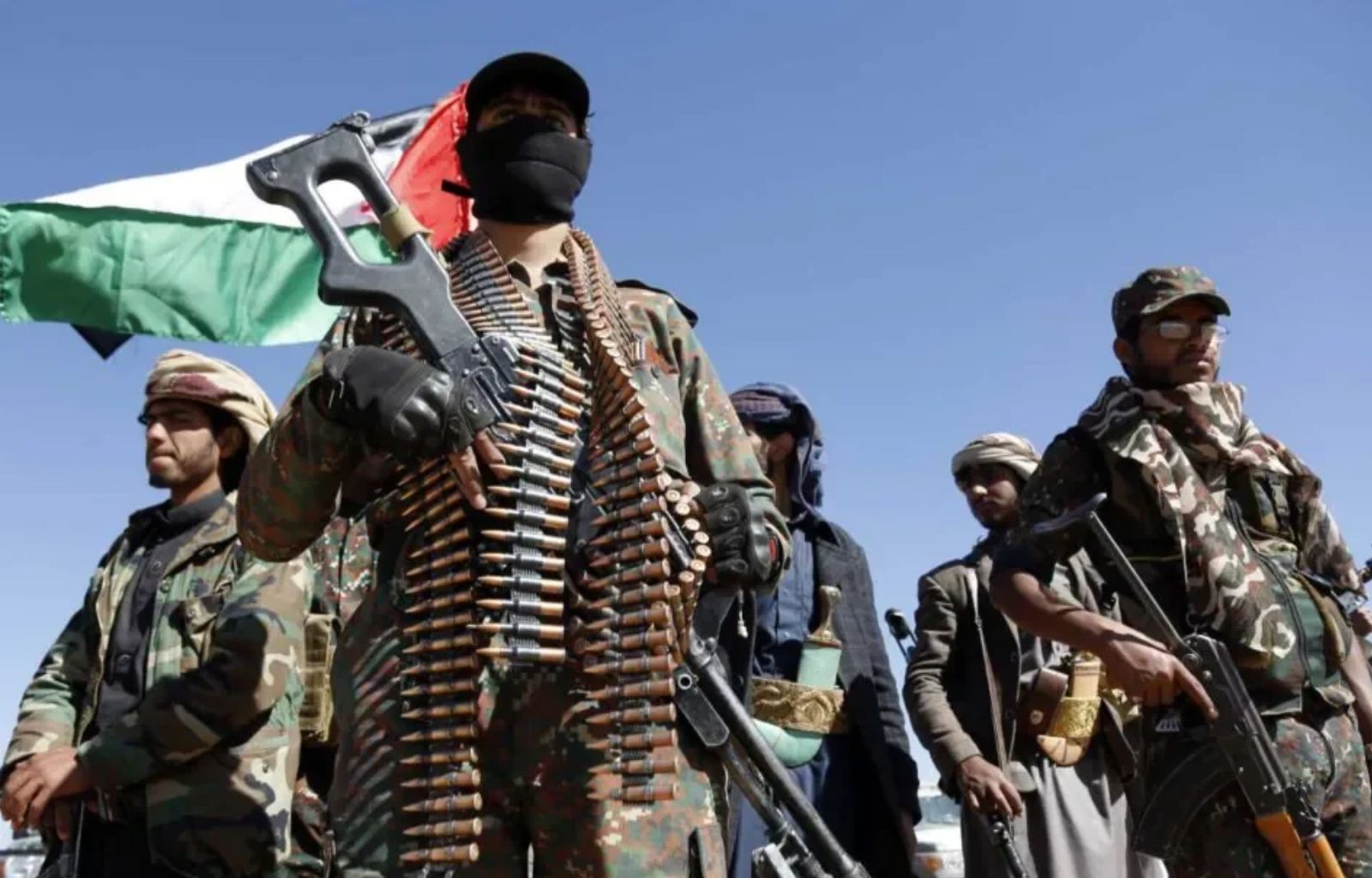
By garrisoning the territory with some 1,500 soldiers, presented as ‘peacekeepers’, Russia ensures that the region does not fall under the control of Chisinau. At the same time, it prevents any final political solution.
A contradiction? No: exactly what Moscow wants.
As long as the conflict remains unresolved, Moldova remains vulnerable and dependent, Europe remains cautious, and Russia retains a strategic foothold between the Black Sea and the Balkans.
After 2022 nothing is silent any more
For thirty years, Transnistria remained on the sidelines of European attention.
Then came 24 February 2022. The Russian invasion of Ukraine exploded the realisation that all grey areas in Eastern Europe are potential detonators. And Transnistria, while not moving a soldier, has become one of the most ambiguous pieces of the conflict.
At the beginning of the war, between March and April 2022, the worst scenario appeared possible:
if Russia had advanced rapidly to Odessa, it could have rejoined Transnistria, creating a single corridor under Russian control from the Donbass to the border with Romania.
Europe would have witnessed the re-emergence of a gigantic Russian belt of influence directly facing the Black Sea and only a few dozen kilometres from a NATO country.
Moldova, between Europeanisation and fragility
While Transnistria remained stuck in a suspended era, Moldova accelerated its European course.
Theelection of Maia Sandu marked a decisive political turning point: the fight against corruption, judicial reforms, rapprochement with Brussels and a clear Western choice.
But no one can ignore that Moldova remains the most fragile country in Eastern Europe:
- without an adequate army
- without full control of their territory
- without energy autonomy
- with an economy vulnerable to external shocks
- with pro-Russian political and media infiltration
Every step towards the EU generates counter-pushes.
Russia uses Transnistria as a guarantee: a piece of Moldova that cannot be approached by the West without serious risks of destabilisation.
And Chisinau knows it:
no European integration will be complete as long as the territory remains divided.
Cobasna: the powder keg of Europe that no one controls
In the heart of Transnistria is a place that looks like something out of a Cold War textbook: the Cobasna Depot.
Built by the USSR as a strategic artillery reserve, today it is probably the largest and most dangerous ammunition depot in the whole of Eastern Europe.
Estimates speak of 18,000-20,000 tonnes of ammunition:
bullets, rockets, mines, high explosives.
Many date back to the 1970s and 1980s, some even to the 1960s. Most are deteriorated, chemically unstable, highly dangerous.
The site is one of the most sensitive on the continent for several reasons:
- has not been inspected by international bodies since 2004
- is neither certified nor monitored
- some ammunition is chemically unstable
- any accidental detonation would be catastrophic
For years there has been talk of its dismantling underOSCE supervision.
Russia always found a pretext to block it.
Why?
Because Cobasna is not an arsenal: it is a political instrument.
- justifies the Russian military presence in Transnistria
- prevents Moldova from joining NATO
- forces Kiev to guard a vulnerable border
- offers Moscow a permanent pressure point

Cobasna is not a tactical threat: it is a strategic threat.
Ukraine and the front that might open up
For Kiev, Transnistria is a front that never opens, but which obliges it to keep men, vehicles, artillery and patrols along a potentially unstable line.
In war, especially a war of attrition, the mere fact of having to defend a ‘dormant’ border is already a loss.
In 2022 , Ukraine feared a coordinated attack from the north and south:
- from Belarus to the north
- from Crimea and Donbass to the east
- from Transnistria to the west
Only Ukrainian resistance prevented the stranglehold from closing. But the risk remains on the table.
If Russia were to seek a diversion, destabilising Transnistria could be a perfect hybrid option: it takes little to create chaos in an area where a few sparks are enough to reignite tensions.
Romania and the Role of NATO
Transnistria is only a handful of kilometres away from the Romanian border.
And Romania, unlike Moldova, is a NATO country, even though the latter is getting closer.
Any escalation in Transnistria would immediately reflect on Bucharest, forcing the Atlantic Alliance to redefine its posture in the Black Sea quadrant.
The US has already increased its military presence in Romania.
NATO considers the south-eastern flank as one of the Alliance’s most vulnerable points.
And Transnistria falls exactly within that vulnerability.
This is why, even if little is said about it in Western Europe, the region is considered a flashpoint of latent instability in NATO briefings.
A lesson for Europe: voids are paid for
Transnistria demonstrates a simple but often ignored truth:
Europe cannot build stability by leaving power vacuums at its doorstep.
Frozen conflicts are not peaceful: they are simply convenient for those who use them.
They are zones where law does not enter, diplomacy does not work and security is not guaranteed.
They are flexible tools in the hands of revisionist actors.
And Russia, which has been working to break the cohesion of the European space for decades, has shown that it knows how to use them well.
The EU, on the contrary, did not know what to do with Transnistria for years.
It considered it a minor nuisance, a peripheral problem, a tolerable anomaly.
The war in Ukraine has erased this illusion.