Seven new Catholic saints are showing us history from another point of view

Ever since the book of Revelation, the saints have been described as ‘an immense crowd that no one could count, coming from all nations, tribes, peoples and languages’.
But rarely has this concept been expressed in such a plastic way as last Sunday, when Pope Leo proclaimed seven people saints, six of whom lived in Asia or Latin America.
It is pointless to look for political overtones in this choice. The path to proclaiming someone blessed and then a saint can take decades, and, for those canonized last Sunday, the first step had been taken sometimes by Francis, sometimes by John Paul II, in one case even by Paul VI.
Despite all the media speculation and social chatter, there is always much more continuity than discontinuity in the Catholic community.
One basic fact, however, remains: reading the lives of each of these saints means plonging oneself in the past from an eccentric point of view, almost never recorded in books nor shown in documentaries.
It means looking at distant countries (or even, as in the case of Saint Bartolo Longo, at our own countries) from a unique angle, which can challenge some old prejudices.
The first Papuan martyr
Take Peter To Rot, the first saint from Papua New Guinea. He belonged to the second generation of Catholics after the arrival of the missionaries, which had taken place in his parents’ time.
He was just a catechist in his thirties when the archipelago, after having been a British colony for a few decades, was occupied by the Japanese.
For a few years Peter worked to organise secret prayers and to visit the needy, since the Western priests had been eliminated instantly. In 1944, however, the invaders decided to re-impose polygamy in the archipelago.
Only converts to Catholicism put up serious resistance, and among them the most tenacious was Peter, who was arrested and later murdered in prison. His burial site immediately became a place of spontaneous pilgrimage.
In that (for us) remote country, in short, women’s rights were only defended with commitment by those who had adhered to Catholicism. Those, on the other hand, who had stopped being polygamists only to obey English laws unwillingly, had resumed being enthusiast polygamists as soon as the Japanese had repealed them.
The Peter To Rot affair, therefore, not only shines a spotlight on Japanese war crimes, which were no less serious than German ones (even if we tend to downplay them to preserve a Eurocentric monopoly at least on guilt). It also sheds light on the ability of the Catholic faith to inspire certain values in a more authentic and lasting way than westernising laws dropped from above.
This is shown in Papua New Guinea still today, by the church’s efforts to protect women accused of witchcraft, who number in the thousands every year.
The local authorities waited until 2013 to even remove the mitigating factor of ‘witch-killing’ from the penal code.
These are events that are happening now, not in the Stone Age, and perhaps the cult of the new Papuan saint can help culturally to stop them.
Magic Naples?
When it comes to superstitions, however, even ‘developed countries’ have their skeletons in the cupboard.
Bartolo Longo, another of the seven new saints proclaimed by Leo, reminds us of this fact.
Before becoming the beloved curator of the shrine of Our Lady of Pompeii (and of the network of social services that surrounded it), Longo was a law student in Naples, where he became involved in an occultist sect with demonological traits.
At the end of the 19th century, in fact, even if now we remove it from our collective memory, occultism was not an exception but a ubiquitous fashion among the European elite. The dark side of scientific and industrial progress was the search for paranormal experiences through astrology, spiritualism and astral travel.
Thus, if Peter To Rot had to struggle against irrational beliefs conceived by primitive tribes, Bartolo Longo had to struggle against irrational beliefs conceived by nations with the telegraph and the steamship.
Admittedly, the former impacted on the day-to-day laws and customs of New Guinea, while the latter remained a secret passion for the European ruling classes. But having ruling classes so vulnerable to irrationality, in the long run, still came at a cost (just look at the initial breeding ground of Nazi ideas).
If more occultists and spiritualists had converted to Our Lady of Pompeii like Bartolo Longo, perhaps certain tragedies would not have happened.
The Armenian Genocide, this unknown
But the new saint who questions us most about ourselves is perhaps Ignatius Maloyan, the Armenian archbishop of the city of Mardin (now in Lebanon). He was slaughtered along with 420 other Christians, many belonging to other churches, in one of the ‘death marches’ of the 1915 genocide.
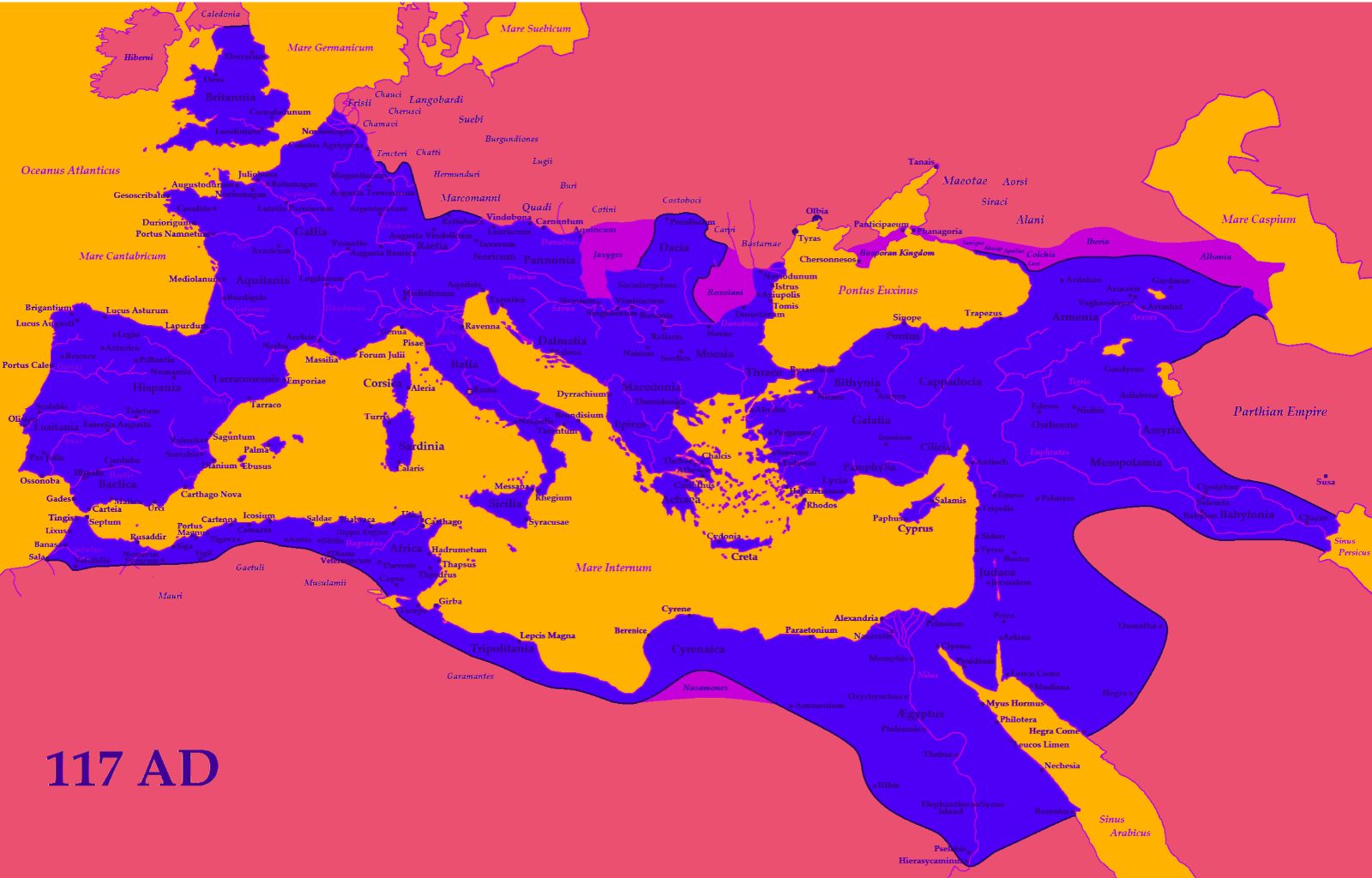
Armenians were the first Christian people: they played a leading role in the Eastern Roman Empire, in the age of the Crusades and then in the Venetian Republic. They have always been intertwined with European history.
They were also, sadly, the first people to face total extermination for their language and religion (to the indifference of Germany, allied with the Young Turks, which was decisive in convincing them to proceed).
And so, as we read of Maloyan’s courageous last gestures, which were the same as any European priest of his age would have made, we must ask ourselves: since when did any feeling of brotherhood towards a people so similar to ours break down ?
What made them become foreign to us?
When did our identity become so narrow? When did our senses become impoverished and start to make us recognise ‘the smell of home’ in so few places in the world?
The Catholic Church, with all its faults which are many, still has this merit: it continually puts before our eyes examples of men and women who, in countries that seem far away, have lived and fought for values similar to those we cherish, more than us and better than us.
Someone called it ‘the UN that works’.
They were joking, but not too much.