The Republicans have lost their compass. And Americans have punished them
Texas has not turned Democratic. Neither has Kansas nor South Carolina. Yet, on the night of 3 November, the Republicans lost Senate seats in all three states, helping to hand the Democrats control of both Houses of Congress. A defeat on a scale that would have been hard to imagine just a few months ago, and one that inevitably sparks a debate about the future of the Grand Old Party.
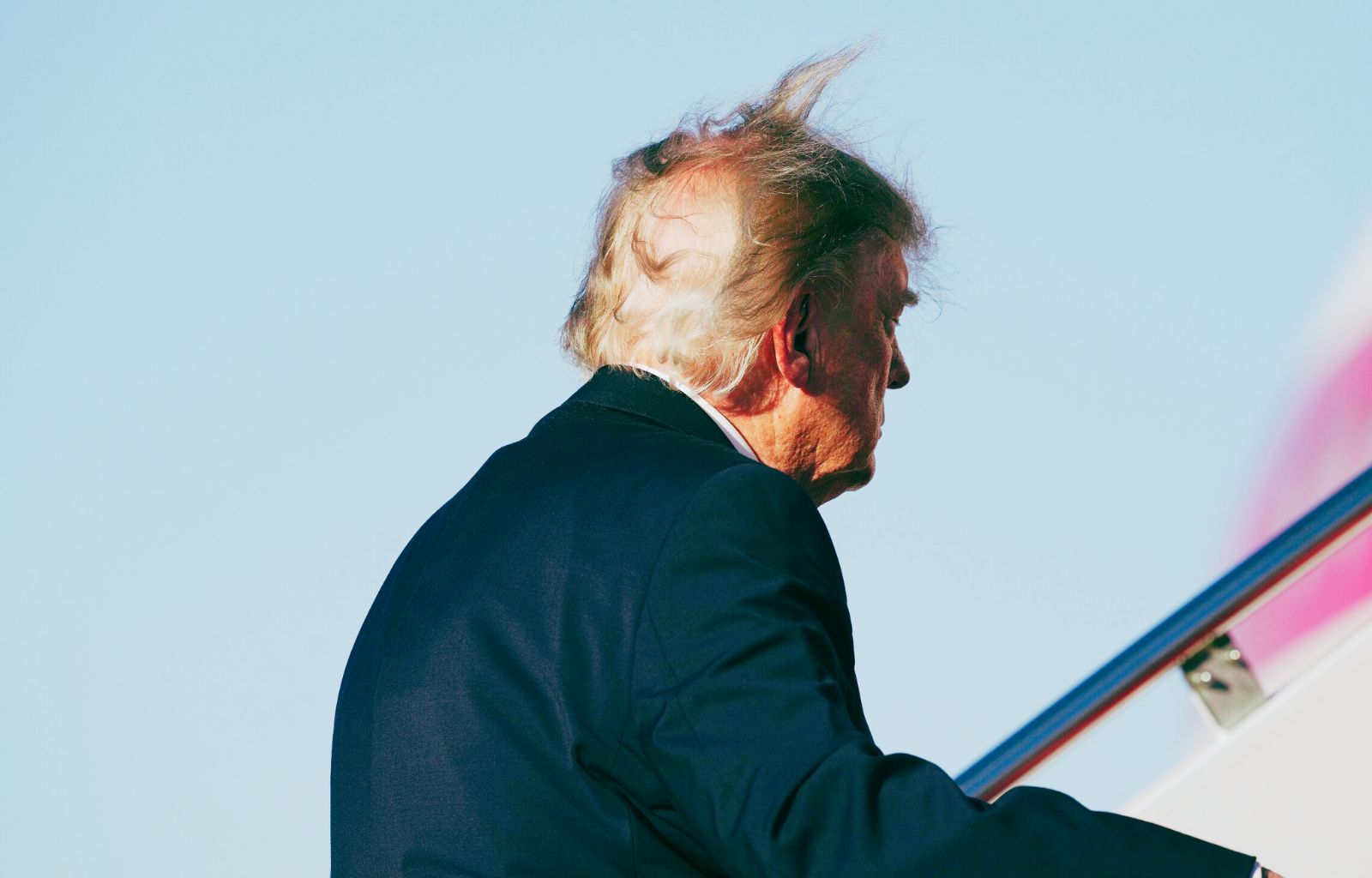
Donald Trump attributed the result to the calibre of the candidates and his own absence from the ballot paper. It is a convenient explanation, but an insufficient one. The Republicans lost even in places where they had invested enormous resources, where the President had personally selected the candidates, and where the conservative electoral advantage had seemed firmly established for decades.
Of course, mid-term elections are often difficult for the president’s party. And the Democrats have benefited from widespread dissatisfaction with the cost of living, the war in Iran and the controversies that have marked Trump’s second term. It would, however, be a mistake to interpret the result solely as a referendum on the president. The mid-term elections have highlighted an identity crisis that has been plaguing American conservatism for at least a decade.
The Republican Party, which had made economic freedom, individual responsibility and Western leadership its main political causes, has gradually given way to a movement that is increasingly protectionist, nationalist and hostile to compromise. The problem is not that the GOP has become too conservative. It is that it has abandoned many of the principles that had defined American conservatism.
Nikki Haley had warned the party
On election night, as the results confirmed the scale of the Republican defeat, Nikki Haley offered one of the most insightful analyses of the vote.
Former Governor of South Carolina and US Ambassador to the United Nations during the first Trump administration, Haley had been the President’s main challenger in the 2024 Republican primaries, remaining in the race until Super Tuesday and garnering the support of a section of the conservative, moderate and independent electorate who did not identify with Trumpism.
Speaking on NBC, Haley clearly identified what the Republican Party has lost sight of: ‘When we stay close to our policies, we win’. When the Republicans remain true to their policies, they win.
He then listed what he considers to be the fundamental causes of American conservatism: economic freedom, lower taxes, limited government, job opportunities for families and national security.
‘Those are the things we win on,’ he pointed out. These are the issues on which the Republicans build their victories.
Then came the most significant part of his analysis: ‘When Americans feel unheard, we lose’. When Americans do not feel listened to, we lose.
Haley concluded by criticising the Republicans for failing to follow that programme, particularly with regard to fiscal responsibility and public spending.
This is not a change of heart that came about after the defeat. Last February, in an interview with Bret Baier on Fox News, Haley had already warned that, without a tangible improvement in households’ economic circumstances, the Republicans would risk heavy losses in the mid-term elections.
A rising stock market, he explained, is not enough to reassure millions of Americans struggling with high rents, expensive mortgages and prices that are still hard to afford. He also denounced the virtual disappearance of fiscal conservatism from the GOP’s agenda. The party that for generations had promised to curb federal spending and public debt seemed to have stopped even discussing the issue.
Her analysis takes on particular significance today. In 2024, Haley had challenged Trump by proposing a different kind of conservatism, based on responsible governance, economic discipline and a strong international role for the United States. Two years on, the issue she had raised is no longer merely a matter of internal party rivalry. It has become the central theme of her electoral defeat.

Prosperity is not built on tariffs
John Curtis, a Republican senator from Utah, has reached the same conclusions. In his speech on 4 November, entitled ‘It’s Time for Republicans to Return to Our Roots’, he condemns the gradual abandonment of the principles of limited government, free trade, international leadership and fiscal discipline that had characterised the GOP.
His call is all the more significant because it comes from a conservative who does not deny the reasons behind the rise of populism. Curtis acknowledges that millions of Americans had gravitated towards the Republicans because they felt neglected by Washington. But he also points out that winning power was meant to enable the implementation of policies capable of improving their living conditions, not to turn electoral victory into an end in itself.
The contrast with Ronald Reagan is striking.
In November 1988, the 40th President of the United States delivered one of his most powerful speeches against protectionism. He recalled that the Founding Fathers had already denounced British trade restrictions and that, in 1776, Adam Smith had published *The Wealth of Nations*. Reagan warned against demagogues ready to unleash trade wars against friendly nations, damaging the American economy whilst waving the national flag.
That speech could well apply to today’s Republican Party.
Reagan was not naive. He was well aware of the distortions in international trade and had also introduced sector-specific protectionist measures. But he regarded free trade as the rule and restrictions as an exception that had to be justified. American prosperity, he argued, depended on competition, innovation and open markets.
Today, tariffs are often presented as a mark of patriotism. In reality, they are taxes on imports paid by American importers, the costs of which may be passed on to businesses and consumers. They can serve a specific purpose in combating unfair trade practices or dangerous strategic dependencies. Making them the cornerstone of economic policy is quite another matter.
Economic conservatism should place its faith in Americans’ ability to compete, not in the need to systematically shield them from competition.
And he should remember, as Haley did, that fiscal responsibility is not just a slogan to be dusted off when the Democrats are in power, but a principle that must also apply when Republicans are in the White House.
Putin is not an ally of America
The crisis within the Republican Party is even more evident in foreign policy.
For Reagan, the Soviet Union posed a threat to Western freedom, which had to be contained through a combination of military strength, diplomatic resolve and unity amongst democracies. For George H. W. Bush, who saw out the end of the Cold War, the United States’ task was to consolidate an international order in which territorial aggression could not become an acceptable instrument of great-power politics.
Today, a significant section of the Republican Party seems to have lost sight of that fundamental distinction between allies and opponents.
In recent weeks, the Trump administration has eased the economic pressure on Moscow by relaxing restrictions on Russian diesel, whilst criticism of the Ukrainian government has intensified. These decisions have also sparked objections amongst Republican MPs, who are concerned that a strategy aimed at securing concessions from Kyiv rather than from the Kremlin could end up rewarding the aggressor.
It is perfectly legitimate to debate the costs of military aid to Ukraine, to call on Europeans to play a greater part, or to seek a negotiated solution. But a peace that legitimises territorial gains achieved by force risks sparking new wars, rather than preventing them.
Nikki Haley had already made this point during her 2024 presidential campaign. The United States, she explained, can and must demand that NATO allies shoulder greater financial responsibility. But it cannot do so by encouraging Putin to threaten them. The distinction between asking Europeans to contribute more to their own defence and calling into question the US security guarantee is far from trivial.
Curtis was even more explicit. In his editorial, he criticises an administration which, instead of practising Reagan’s ‘peace through strength’, has, in his view, ended up siding with Putin against a strategic ally.
The credibility of US deterrence also depends on the certainty that Moscow cannot achieve through diplomatic pressure what it has failed to achieve on the ground.
China is not holding back by falling out with its allies
The contradiction is just as evident in relations with Beijing.
China poses a real strategic challenge to the United States: from technological competition to supply chain security, from military expansion in the Indo-Pacific to the pressure being exerted on Taiwan. A serious American response requires investment in research, technological superiority, industrial capacity and a system of alliances robust enough to deter any aggressive moves.
The Trump administration’s trade policy, on the other hand, has been marked by numerous inconsistencies. Washington has alternated between imposing restrictions and easing restrictions on Chinese companies and exports of advanced semiconductors, without always making it clear whether the priority was strategic security or reaching a trade agreement with Beijing.
The problem is not merely economic. Japan, South Korea, Australia and the Philippines form an essential part of the US security architecture in the Pacific. Undermining the confidence of these countries through indiscriminate trade pressure or mixed signals regarding the US military presence risks compromising the ability to contain Chinese expansion.
In August, the decision to scale back military exercises with South Korea – presented as a gesture of goodwill towards Kim Jong Un – had raised fresh concerns amongst regional partners. At a time when Beijing is expanding its military capabilities, any doubts about the continuity of the US commitment take on strategic significance.
Not every disagreement with an ally is a mistake, and not every negotiation with an adversary is a concession. But a strategy that exacerbates tensions with friendly democracies whilst underestimating the extent of cooperation between authoritarian powers deserves, at the very least, a rethink.
Strategic competition with China cannot be won through a permanent trade war. It is won by strengthening the US economy and making the system of alliances more cohesive – something Beijing is unable to replicate.
Treating friends as opponents
The Greenland affair is perhaps the most striking example of the deterioration in transatlantic relations.
In early 2026, Washington had threatened to impose new tariffs on several European countries that opposed US claims over the autonomous territory belonging to the Kingdom of Denmark. At the NATO summit in Ankara in July, Trump once again claimed control over the territory and harshly criticised Spain for failing to support the war against Iran.
The Arctic is undoubtedly a strategic region, particularly in light of Russian and Chinese activity. The United States has legitimate security interests in the region, and European allies must invest more in their own defence. But NATO exists precisely to coordinate these interests, not to turn differences between member states into territorial and trade disputes.
George H. W. Bush had a different view of leadership. In 1990, following Iraq’s invasion of Kuwait, he built a broad international coalition and secured a United Nations mandate to liberate the country. He did not simply seek to demonstrate that Washington possessed the necessary military strength. He considered it essential to give the intervention international legitimacy and to involve allies.
On the economic front, too, Bush helped to advance North American integration through the negotiation and signing of NAFTA, which was subsequently ratified during Clinton’s presidency.
Reagan and Bush were not pacifist presidents, nor did they believe that the United States should sacrifice its own interests to please the Europeans. They knew, however, that a stable alliance multiplies national power. And that the United States exerts greater influence when other countries have confidence in its commitments.
NATO is not a charity funded by Washington. It is an investment in American security. The European bases enable US military projection, cooperation between intelligence services strengthens common defence, and Western unity raises the cost of any aggression by Russia and China.
Reagan spoke of peace through strength. But that strength was not limited to the Pentagon’s budget. It encompassed diplomatic credibility, economic superiority and the ability to lead the free world.

The America of Locke, Montesquieu and Madison
Behind the transformation of the Republican Party lies an issue that predates Reagan, Bush and even the founding of the GOP. It concerns the very idea of America.
The American Revolution had its roots in John Locke’s liberalism, in the concept of natural rights and in the belief that political power should derive from the consent of the governed. The Declaration of Independence of 1776 translated those principles into the affirmation of the inalienable rights to life, liberty and the pursuit of happiness.
The Constitution of 1787, on the other hand, was built on an awareness of the risks arising from the concentration of power. Madison, Hamilton and the other key figures at the Constitutional Convention were familiar with the work of Montesquieu and the importance of the separation of powers. The American system of checks and balances arose from the conviction that even a democratically legitimised government must be subject to precise limits.
That tradition does not amount to the absence of the state, nor has it prevented America from experiencing profound contradictions, starting with slavery. But it has placed individual freedom and the limitation of power at the heart of political legitimacy.
Republican conservatism has long claimed this legacy. This makes it particularly difficult to reconcile it with a political approach that measures loyalty to the country on the basis of personal closeness to a president, regards independent institutions as a hindrance, and fuels hostility towards minorities.
Limited government should apply even when the Conservatives are in power. Individual rights should be upheld even when they concern people who do not share one’s own way of life. Economic freedom should entail a genuine scepticism towards political interference in business decisions.
A Republican Party that wishes to invoke the Founding Fathers cannot simply quote them in speeches. It must accept the political and institutional consequences of their ideas.
Back to basics – not simply back to the past
This is not about rebuilding the Republican Party of the 1980s. Economic changes, competition from China, the crisis facing certain industrial communities and new security threats call for responses that differ from those of forty years ago.
Populism has tapped into genuine problems. Globalisation has brought overall benefits without distributing them evenly; some regions of the United States have suffered a profound industrial decline; immigration and border security raise questions that cannot be dismissed as mere prejudice. The growing mistrust of Washington did not come out of nowhere.
The question is how to address these concerns. Widespread protectionism is no substitute for a credible industrial policy. Discrimination does not make a society safer. Anti-establishment rhetoric loses credibility when it is used by those who have controlled the country’s main institutions for years. And isolationism does not eliminate international threats: it may simply make them harder to tackle.
The Republican Party needs a vision that once again links economic freedom, social opportunity, fiscal discipline and national security. A vision capable of defending our borders without fuelling ethnic hostility, safeguarding competition without closing off markets, holding allies to account without undermining their trust, and standing up to authoritarian powers without confusing diplomacy with acquiescence.
Nikki Haley’s statements and John Curtis’s remarks show that this debate has already begun within the GOP. And it is not a debate between conservatives and progressives. It is a debate between different conceptions of American conservatism.
The results of 3 November do not, in themselves, prove that voters have rejected protectionism or share a Reaganite vision of foreign policy. The cost of living, the war in Iran, public opinion of Trump and the choice of candidates all had a direct and demonstrable impact. But it is reasonable to ask whether the party’s abandonment of traditional Republican priorities has contributed to making it less capable of offering convincing answers on precisely these issues.
Curtis concludes his speech by calling on the Republicans to take a long, hard look at themselves, rather than blaming the media, the polls or the voters for their defeat. It’s a good place to start.
For decades, the GOP has maintained that prosperity stems from individual initiative, that the state must be subject to limits, and that the security of the United States also depends on the strength of the free world. These are principles that have endured through very different eras, from the Cold War to the globalisation of the 1990s.
The Republican Party may choose to regard these events as a closed chapter in its history. Or it may return to making them the cornerstone of its political platform. The defeat in 2026 has at least one merit: it makes it impossible to put off this decision any longer.