People don’t want just their fears to be told, but a world to be built

Crowds are not just seeking power. They are seeking a story.
They are looking for someone to give a name to their fear, a shape to their anger, a face to their anguish.
Even before demanding a programme, a reform or a procedure, they often demand to be understood. They want to know why the world they knew seems to be crumbling, who has stolen their future, who has betrayed the community, and who should be held responsible for the loss.
It is here, in this deep and restless place, that mass politics is born: not simply in the people’s participation in public life, but in their transformation into a crowd in need of a narrative.
The Italians who built Moscow
This dynamic did not begin with social media, nor with contemporary populism. Its roots go back much further.
Even before the advent of modern politics, the great imperial and religious authorities had realised that power does not thrive solely on force, borders, armies, laws and taxes. It also thrives on narrative.
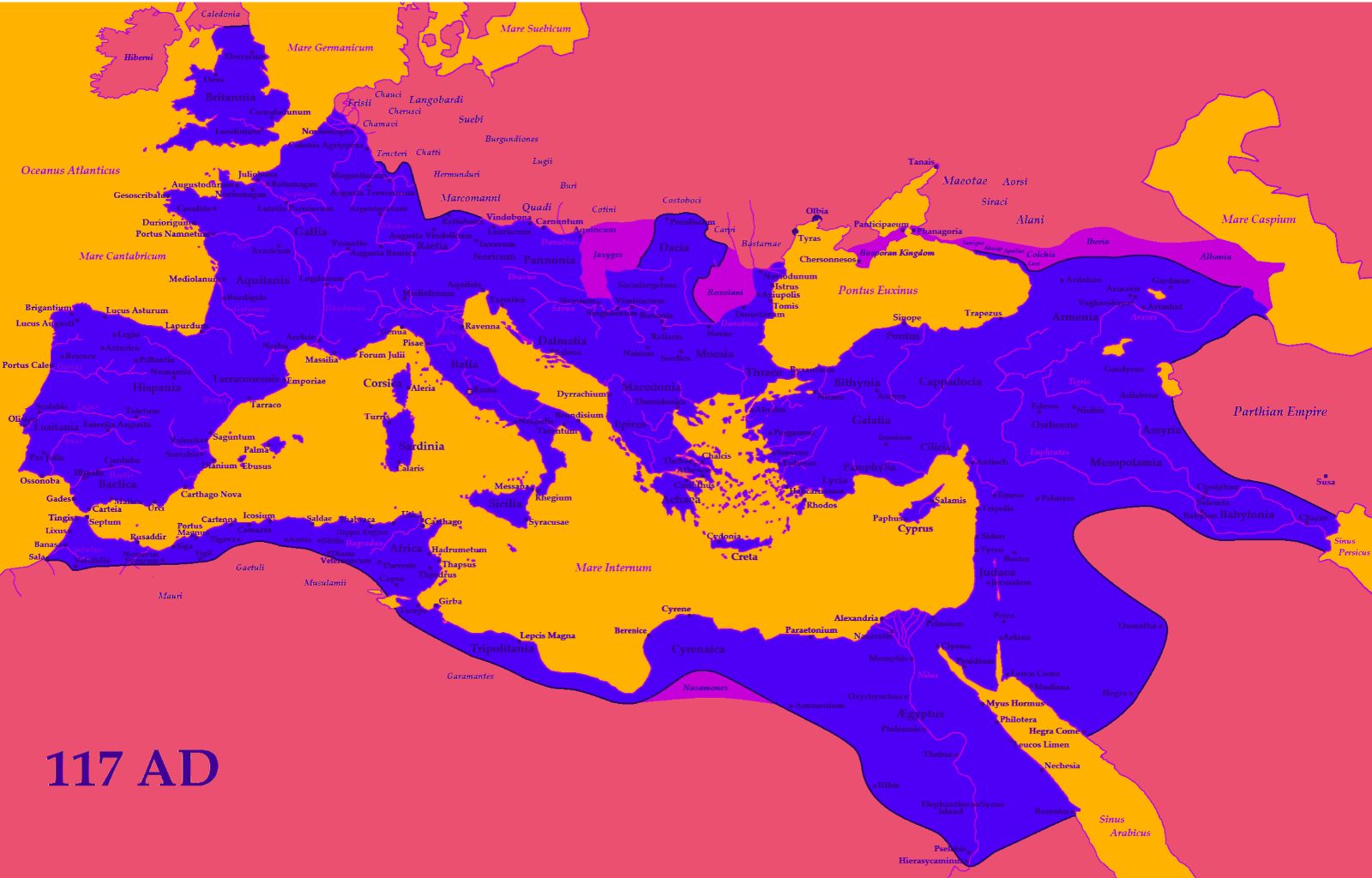
A power that knows how to tell its own story appears less contingent, less fragile, less human: it becomes destiny. It is in this light that the doctrine of Moscow as the Third Rome, one of the great political-religious myths of European and Russian history, must be reinterpreted.
After Rome and Constantinople, Moscow presents itself as the ultimate heir to the true faith, the final centre of Christian history, and a bulwark against decadence and chaos. “Two Romes have fallen, the third stands, and there shall be no fourth”: this phrase, attributed to the monk Philopius, is not merely a religious saying. It is a narrative device.
It does not merely describe an existing power; it invests it with a mission. It does not merely organise a territory; it bestows upon it a destiny.
The West has often underestimated this narrative capacity of the Moscow establishment. It has viewed Russia as a military, diplomatic, territorial and energy problem. It has seen Tsarism, then the Soviet Union, and then the Russian Federation primarily through the lens of power.
But Moscow has not been merely a centre of power. It has also been a formidable workshop of symbolic legitimisation. Its authority has learnt to present itself as a mission, an exception, a sacrifice, a siege, a salvation. Over this long span, the past never remains the past: it becomes a reservoir of available images, an archive of grandeur, a repository of wounds, a promise of redemption.
The Italian presence in the construction of modern Moscow, from Aristotele Fioravanti onwards , also demonstrates just how much European history has been more intertwined than we sometimes care to admit. The Italian architect called to Moscow brought with him not only technique, stone, proportion and building expertise. He participated, perhaps without being able to foresee the historical consequences, in the material and symbolic construction of a centre that would come to see itself as the heir to Roman and Byzantine universality.
The West, even when it collaborated, did not always understand what narrative it was helping to construct.
From Gustave Le Bon to the Imperial Forums
Much later, Fascism came to understand the same mechanism. Mussolini did not reclaim Rome merely as an archaeological backdrop. Fascist Romanity was a form of mass indoctrination. The ruins, the streets, the demolitions, the architecture, the marble, the parades, the fasces, the imperial language were all meant to tell Italians that they were not merely citizens of a modern state, but heirs to a destiny.
Here too, the idea of a Third Rome was at work: no longer Moscow as the heir to Constantinople, but fascist, imperial, revolutionary, totalitarian Rome.
The past was transformed into a political promise. History became emotional fuel. The citizen was not merely expected to obey: he was to feel part of a resurrection.
When Gustave Le Bon published *The Psychology of Crowds* in 1895, he did not invent this mechanism. He described it within the context of modernity.
His book is full of limitations, generalisations and the prejudices of his time. Yet it struck a raw nerve in contemporary politics: the transformation of the modern populace into a suggestible mass.
Le Bon understood that the crowd is not primarily moved by rational arguments, does not follow the logic of political programmes, and does not calmly evaluate reforms, budgets or constitutional balances. The crowd thrives on images, repeated words, contagious emotions, simple formulas, charismatic figures, and symbols capable of bringing order to chaos.
There is no need to turn Le Bon into an all-knowing prophet, nor to automatically attribute every tragedy of the twentieth century to him. It is significant, however, that his book was read carefully by politicians who realised very early on one essential thing: in the age of the masses, it is not enough to command; one must tell a story.
Mussolini certainly grasped its power. Other totalitarian and authoritarian leaders operated within the same framework, even when it was not a matter of direct dependence on a book, but of a broader resonance with the spirit of the age.
The decisive question is not whether every dictator had Le Bon on their bedside table. The question is to understand why that analysis became so useful to those who wished to guide the masses not through truth, but through suggestion.
The new demand of the masses: to feel that their stories are being told
This is where the issue that still concerns us today arises.
We often say that contemporary societies demand greater participation. This is true, but only partly.
In times of crisis, people become agitated for concrete reasons: social injustices, impoverishment, precariousness, humiliation, fear of social decline, mistrust of elites perceived as distant, technocratic, moralistic or indifferent.
At the outset, there is almost always a real sense of unease. But when participation seems impossible, when institutions appear too distant, when the complexity of the world becomes unbearable, then another need arises: no longer to participate in any real sense, but to be part of a narrative.
Not to decide, but to feel that one is being told a story.
Not to govern one’s own destiny, but to recognise oneself in a story that finally makes it comprehensible.
In this sense, the masses are not merely a collection of individuals manipulated from outside. They are also a repository of fears.
Fear of personal death, fear of social death, fear of the end of one’s own world, fear of the nation’s disappearance, fear of religious or cultural dissolution, fear of the future, fear of no longer mattering.
These fears often remain unnamed. They are widespread, obscure, contradictory. They can be paralysing. The charismatic political leader or mass ideologue steps in precisely at this point: they do not eliminate the fear, but give it form. They do not cure it, but provide it with a target.
False prophets
This is why the scapegoat remains a central figure in modern politics.
It is not an archaic relic. It is a constant temptation. René Girard has shown how communities in crisis tend to vent their violence on a designated victim, transforming internal disorder into an accusation against someone.
Mass politics often draws on this mechanism: the migrant, the Jew, the traitor, the cosmopolitan, the globalist, the West, the enemy within, the corrupt elite, the other.
When fear remains vague, it generates anxiety. When it is focused on an enemy, it becomes political energy. The leader does not say to the masses: ‘Your fear is complex; let us try to understand it.’ He says: ‘Here is who has betrayed you.’
At that moment, the crowd breathes a sigh of relief. It finally has an explanation, even if it is false. It finally has a culprit, even if they are innocent.
This mechanism is a distortion of the prophetic word.
The biblical prophet interprets the present, reveals its hidden truth, denounces injustice, and calls the people to repentance. The prophet does not console the crowd, does not flatter it, does not invent an enemy for it to vent its anger upon. He judges it in order to save it.
The mass ideologue perversely imitates the prophet: he too interprets the present, he too announces catastrophe and salvation, he too speaks of the people, destiny, downfall, rebirth. But he turns everything on its head. The prophet says: ‘Repent’. The ideologue says: “Destroy them”.
The prophet opens up a space for responsibility. The ideologue confines fear within the confines of hatred.
Putin and Trump: twins who are not alike
Putinism must also be understood within this long history of Russian political discourse. It did not arise out of nowhere and cannot be reduced to a mere geopolitical calculation.
Of course, there are strategic interests, regime security, control of public opinion, the redefinition of the post-Soviet space, and real and perceived tensions with the West.
But there is also a grand narrative construct. Post-Soviet Russia has endured trauma, impoverishment, the loss of imperial status, disorientation, nostalgia and a sense of humiliation.
Putin’s regime has taken these wounds and reorganised them into a narrative of siege and rebirth: the West presented as decadent or hostile, Russia described as a besieged civilisation, the historic mission, the defence of traditional values, imperial continuity, the need to restore a lost order.
Here, distorted and secularised, echoes the notion of Moscow as the Third Rome.
Russia is presented as the last bastion against global disorder, as the guardian of a truth superior to Western liberal democracy.
Of course, one must not confuse Russia’s great culture—its spiritual, literary, philosophical and humanistic traditions—with the narrative strategies of political power. It is precisely those who truly love Russia who know that it is far broader than its authoritarian periods and official rhetoric.
But it is undeniable that, in recent years, certain profound images from Russian history have been mobilised to imbue the present with a sense of destiny, of threat, of mission, of inevitability.
The dramatic events in Ukraine must also be understood, not only in their political and international context, but within this battle of narratives.
Ukraine is not merely a matter of borders, treaties, military balances or spheres of influence. It is also the arena where different ways of recounting the history of the post-Soviet space, of national identity, of imperial memory, and of the relationship between sovereignty, culture, language and belonging come into conflict.
The problem arises when an overly all-encompassing historical narrative tends to leave no room for the plurality of memories, identities and concrete political choices. The fear of loss — loss of greatness, of continuity, of influence, of the symbolic world — can then become a force that rigidifies the present rather than understanding it.
Trump comes later, in a different context—within a Western democracy—but exhibits a similar dynamic. “Make America Great Again” is not merely an election slogan. It is a complete narrative: lost greatness, a betrayed people, corrupt elites, internal enemies, and imminent restoration.
Its effectiveness depends not only on concrete policy, but on its ability to offer millions of people an emotional place within a story. “You are not the dregs of globalisation, ” says that narrative, “you are the real people. You are not confused, you have been deceived. You are not alone, you have a leader. You do not need to understand the complexities, you need to recognise the enemy.”
Of course, Putin and Trump are not the same thing. It would be wrong to confuse a well-established authoritarian system with a political phenomenon that has emerged within democratic institutions still equipped with checks and balances.
But the comparison serves to highlight a common point: the politics of the mob does not thrive solely on manifestos. It thrives on narratives of identity, on organised grievances, on fears transformed into a sense of belonging. In both cases, albeit to very different degrees and with very different consequences, the masses are invited to identify not with a shared responsibility, but with a narrative of betrayal and reparation.
The algorithm fanning the flames of hatred
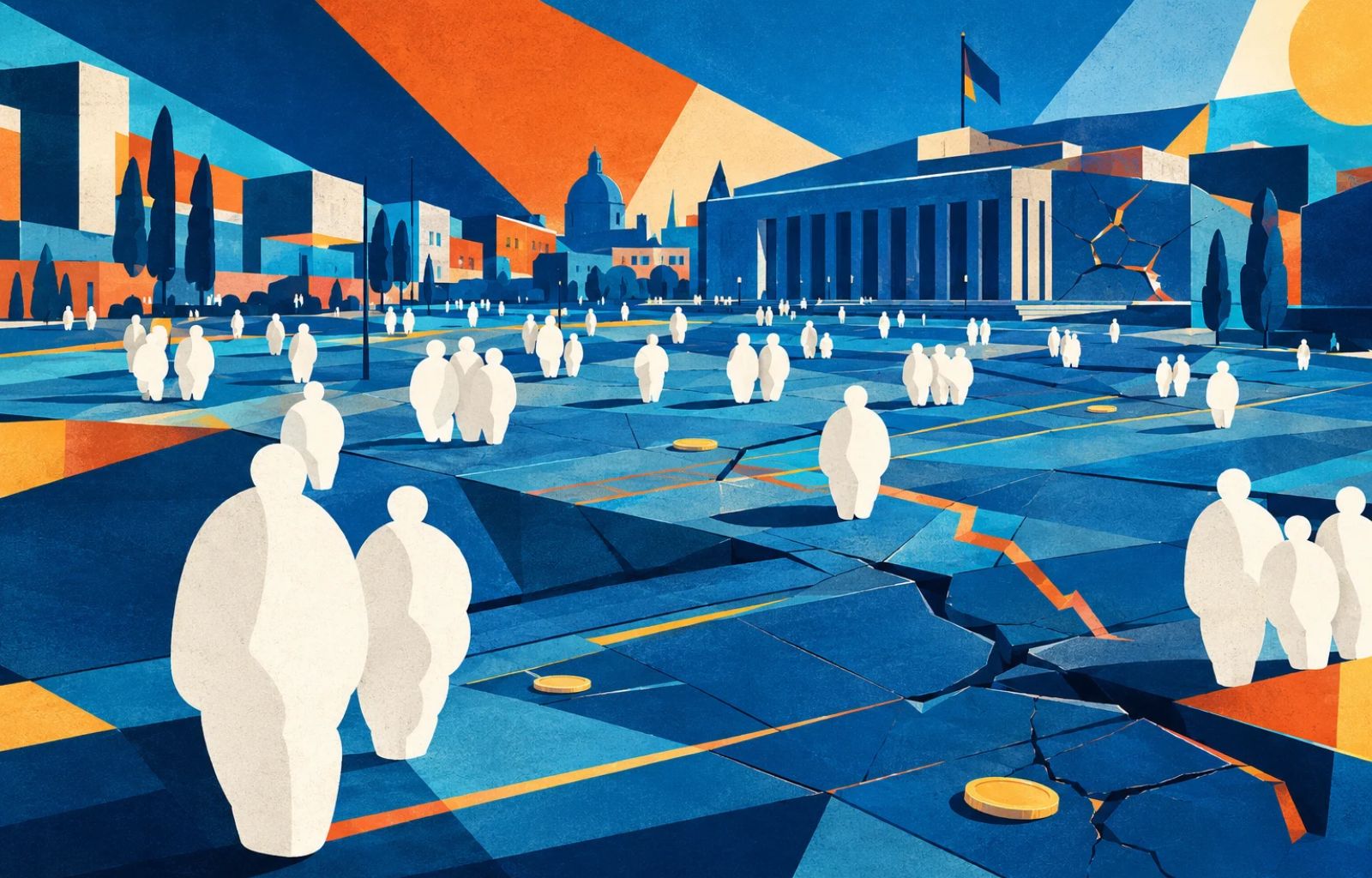
The digital world has made all this faster, more fragmented, and more part of everyday life. In the twentieth century, the crowd needed the town square, the rally, the parade, the radio, the party newspaper, the newsreel. Today, the crowd inhabits the screen. It does not always gather in the same place, but it lives within the same emotional current.
The algorithm does not invent hatred on its own, but it selects it, rewards it, amplifies it, and makes it repeatable. Every day offers new objects of indignation, new apparent evidence, new enemies, new micro-narratives of persecution. The digital crowd does not need to march in unison in a square to feel like a mass. It is enough for them to react together, hate together, share together, and feel part of the same resentment.
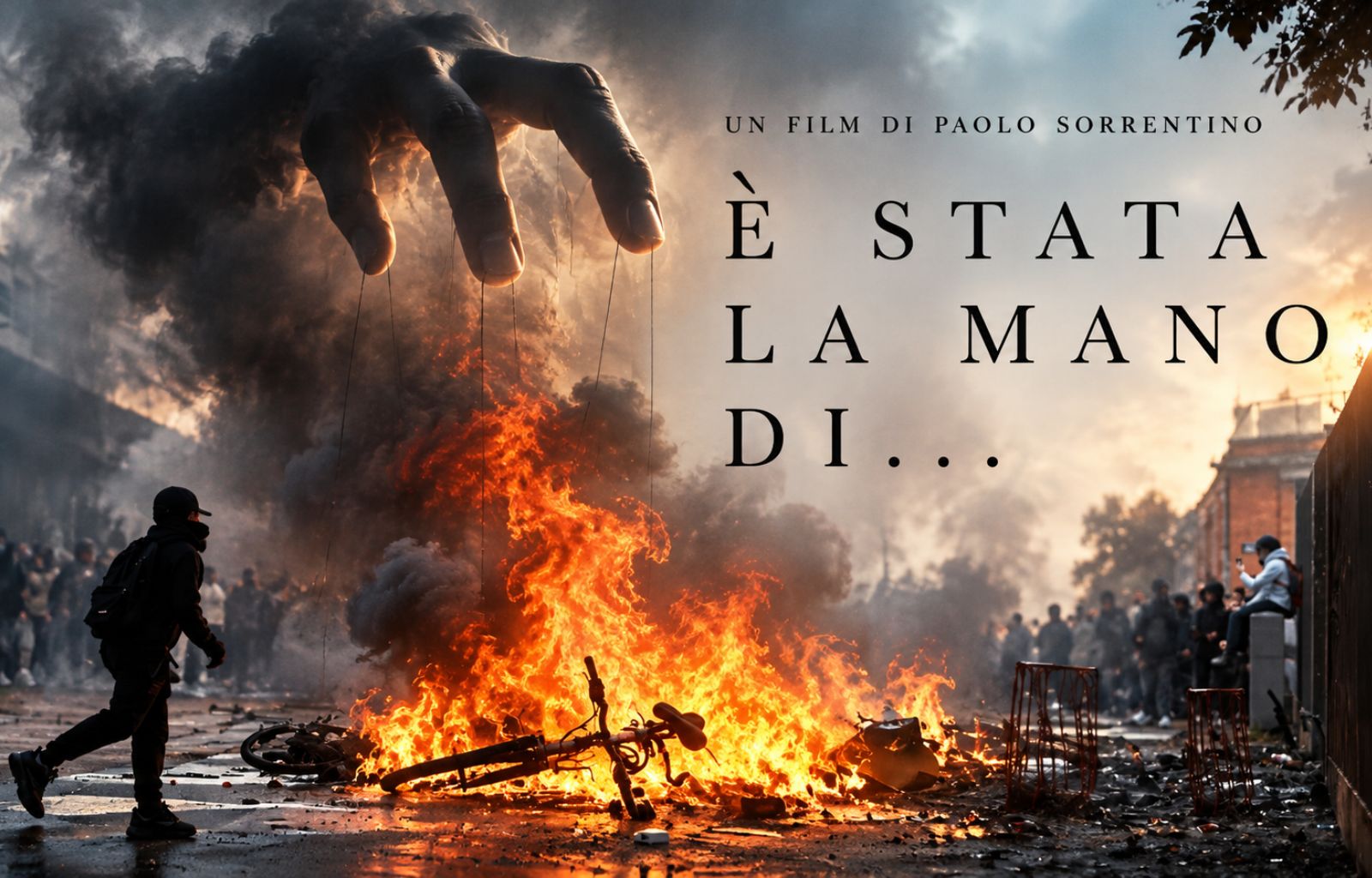
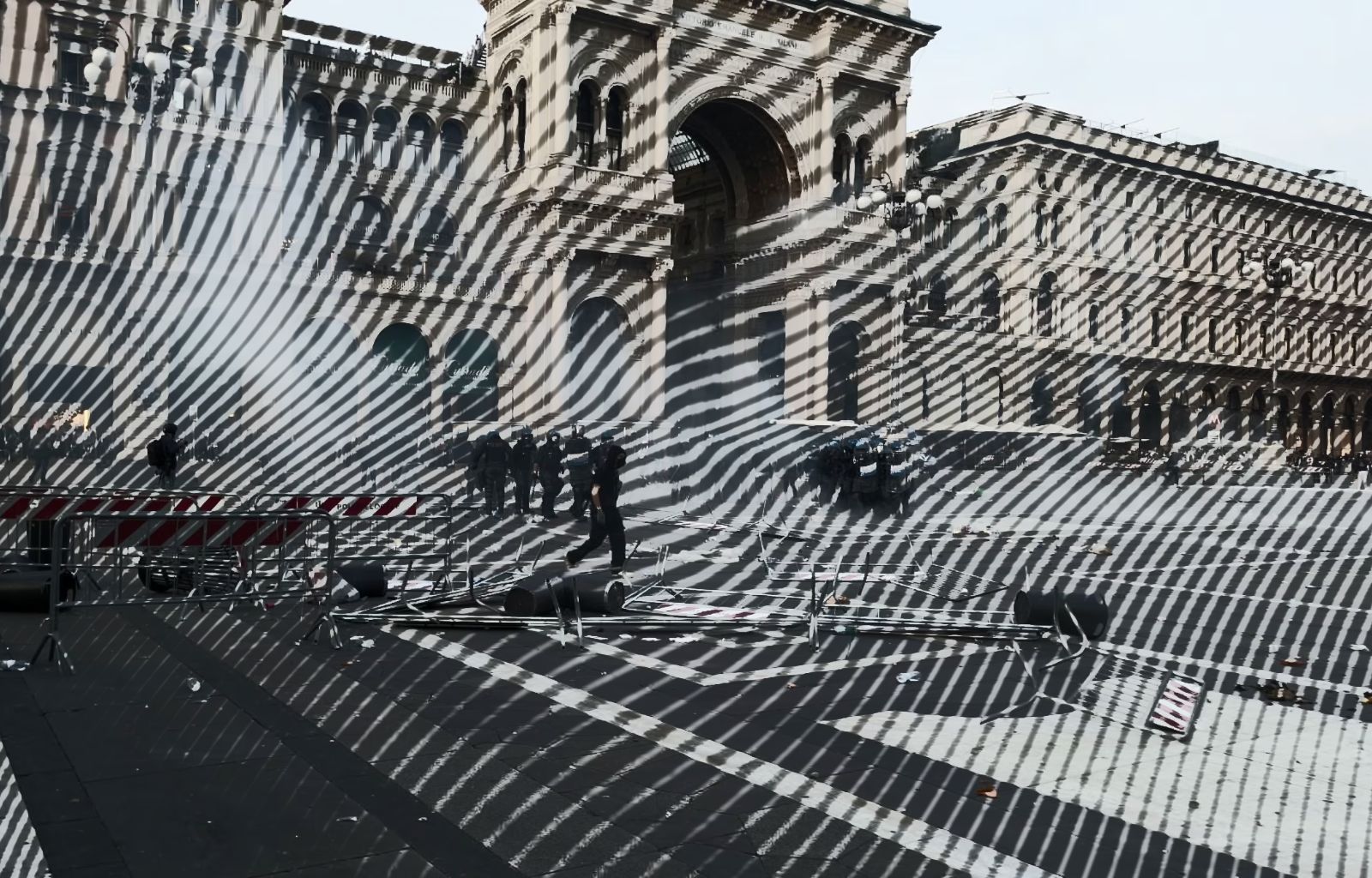
This digital fragmentation is often met, as a reaction, with an intermittent return to the public square. On the one hand, the individual sits alone in front of their screen, trapped in a personalised stream of emotions, indignation, fears and reassurances. On the other, when those emotions spill out into the public sphere, they do not always translate into orderly political participation: they often take the form of venting, aggression, collective anger, and sometimes even violence.
Thus, participation is both simulated and consumed: first as an individual reaction in front of the screen, then as an emotional outburst in the public square. But in both cases, there is a risk of missing what matters most: the enduring desire to contribute to the building of communal life.
This false sublimation of participation ultimately erases the very human need it is meant to safeguard.
The public square, like the internet, can be a place of freedom, protest and civic consciousness. But when it becomes merely a theatre of indignation, it does not restore the people’s capacity for action; it offers them only a stage on which to vent their powerlessness.
Citizens are not trained in responsibility, but in emotional intensity. They are not asked to understand, propose, deliberate or build; they are asked to react.
And a society founded on constant reaction does not foster participation: it breeds weariness, radicalisation and a new dependence on those who are better at orchestrating collective emotions.
In this context, rhetoric about young people must also be treated with great caution. Of course, a democracy must support young people, listen to them, and offer them jobs, housing, education, a future, and genuine opportunities to take on responsibility.
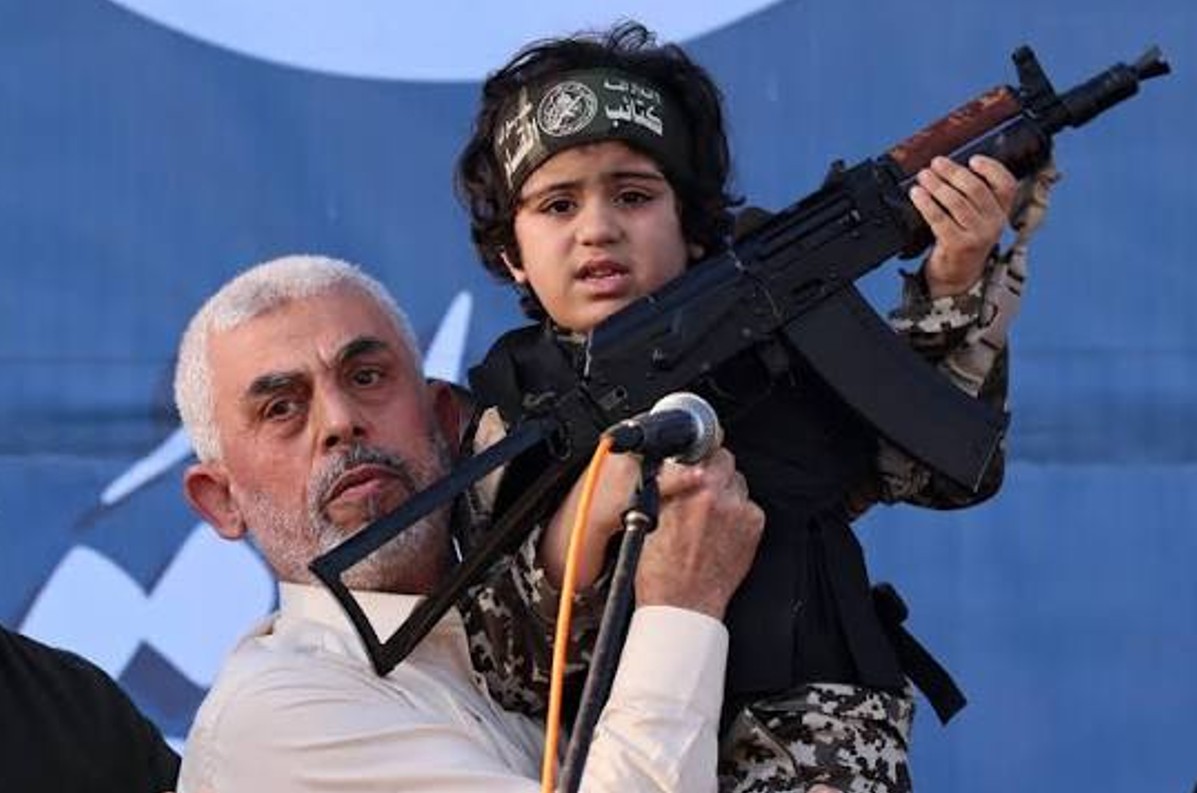
But when the discourse on young people becomes merely an attempt to play on their emotions, it risks turning into yet another tool for manipulating the masses.
Young people, precisely because they are more exposed to the force of passions, expectations, fears and promises, can become the symbolic focal point through which the whole of society is emotionally mobilised. It is not enough to say ‘young people’ to mean the future. We must ask ourselves whether we are making them protagonists or whether we are using them as a sensitive surface onto which to project our collective anxieties.
The new mission of the Liberals and the People’s Party
This explains why it is not enough to counter the politics of fear simply by promoting rational thinking.
Of course, we need critical thinking, education, reliable information, responsible journalism and historical awareness. But it is not enough to tell people: ‘Do not be afraid’. Fear does not disappear simply because someone deems it irrational. We must acknowledge it without bowing down to it. We must listen to it without turning it into an idol. We must give it a truer, more human, fairer form.
This is where the task of a new, popular liberal dream begins.
It is not enough to construct alternative narratives, perhaps more civilised, more European, more democratic. Of course, democracy too needs words, symbols, memory and storytelling. A political community cannot survive without a certain self-image.
But if the response to narratives of fear were merely another narrative, we would remain trapped in the same pattern. The masses would continue to wait for someone to interpret their fears, their anger, their wounds and their need for protection from on high.
In fact, today we cannot simply say: ‘We must get the people involved.’ That would be too simplistic.
The problem is more serious: a section of the public has even lost the desire to participate. They have grown accustomed to feeling like spectators, victims, an audience, a fanbase, an intermittent emotional community. They often crave narrative more than responsibility, need symbolic belonging more than concrete commitment, and desire to identify with a shared anger more than to patiently build a shared way of life. For this reason, the political task is not merely to open channels of participation, but to reawaken the very desire to participate.
When it is genuine, participation does not arise solely from frustration. It also arises from a love of life. It arises from the desire not to be mere spectators of our own time, not to surrender our freedom to a leader, an algorithm, or a mythology of resentment. Those who truly participate are not merely looking for an enemy to blame. They are looking for a world to build. They do not merely ask for protection from the death of the past. They ask for space for what can still be born.
Europe’s resources
Europe still possesses vast resources for this task, provided it stops being ashamed of them or turning them into mere rhetoric. Roman law, Greek philosophy, Christian humanism, the Enlightenment, constitutionalism, the social tradition, the dignity of the person, the memory of Europe’s civil wars, reconciliation between historical enemies, the idea that force must be limited by law: all this is not a museum. It is a possible interpretation of reality. Not a Third Rome to be set against other Third Romes. Not an imperial myth dressed up in fine manners. But a vision of freedom as a limit, of the person as an end in themselves, of peace as a difficult endeavour, of justice as a never-ending task.
Liberal democracy cannot survive by merely defending the status quo. It must once again become a promise, without turning into a totalitarian myth. It must be able to address people’s fears without exploiting them. It must acknowledge social pain without handing it over to the professionals of scapegoating. It must acknowledge that death exists: personal death, the death of historical forms, the death of certainties, the death of illusions of omnipotence. But precisely for this reason, it must also speak of life: of possible joy, of concrete hope, of shared freedom, of human dignity, of participation as a form of love for what may yet come to be.
It is not enough simply to portray the people more accurately. We must reawaken in them a love for community life.