El Salvador according to Bukele: the laboratory of power in the heart of Central America

A very active president on social media
A figure followed, loved and supported on every platform. From X to TikTok, from Instagram to Facebook, Nayib Bukele is everywhere, and not by accident. His communication is studied, direct, visual, often provocative. Short videos, symbolic images, concise data: Bukele has built up a direct relationship with his audience, deliberately skipping traditional media, which the latter now considers obsolete and unfollowed.
For the Salvadoran president, social media are the real information, while television and the press belong to a world he considers outdated, sometimes hostile. It is not surprising, then, that he chooses YouTube as a privileged space to tell his story, indulging content creators and youtubers with millions of followers. A few years ago with Luisito Comunica, more recently with the Spanish streamer TheGrefg, who recounted with surprise that he had been invited directly by the president during a trip to San Salvador.
These kinds of interviews and tours in the presidential office are not improvised: they are part of a precise strategy. Bukele shows himself to be accessible, informal, close to young people, but always in control of the message. He is a president who speaks the language of the net, and who has turned politics into a continuous narrative.

Security as a pillar of consensus
Among the recurring themes, one dominates over all: security. Bukele has built much of his consensus on the frontal fight against the pandillas, the gangs that for decades have made El Salvador one of the most violent and unlivable countries in the world.
The symbol of this policy can be seen in CECOT, the Centro de Confinamiento del Terrorismo: a gigantic maximum security prison, designed to house tens of thousands of members of criminal organisations such as the ‘Mara Salvatrucha’ and ‘Barrio 18’. The CECOT is not, however, to be understood as a simple prison facility, but more as a political message: the state has returned strong to exercise its monopoly of force.
Bukele openly claims themassive incarceration of pandilleros(gangs), presenting it as a necessary choice. And the numbers, from the government’s point of view, speak for themselves: homicides plummeted, neighbourhoods ‘liberated’, a perception of security radically changed. El Salvador is now described, in official communications, as one of the safest countries in the western hemisphere. There are also numerous Instagram pages, including institutional pages, highlighting the beauty of the country, seen as safe in all its neighbourhoods, prompting tourism.
There is no shortage of shadows. Human rights organisations denounce arbitrary arrests, detentions without trial, abuses and extreme prison conditions. This is the price, according to many critics, of a securitarian policy that sacrifices the rule of law on the altar of order. Bukele does not deny the harshness of the measures, but justifies them as a response to a historical emergency that previous governments had failed to address.
“Porque lo público es más importante que lo privado” (The public is more important than the private)
Another central idea in the ‘Bukelian’ narrative is that of the centrality of the citizen. ‘Lo público es más importante que lo privado’, the president often repeats, referring to an extensive programme of public works and state investments. The citizen, therefore, comes before everything else.
Renovated markets such as the central San Miguelito market, new bridges, schools, hospitals, digitisation of health services: Bukele presents these projects as concrete results of a vision that focuses on people’s daily lives, rather than the bureaucratic balances of the state. Here too, the narrative is as essential as the work itself, but in what sense?
Every inauguration becomes content, every construction site a visual proof of government action. It all turns into a continuous and massive sponsorship of his work in the country.
Bitcoin, technology and the narrative of the future
Bukele also linked El Salvador’s name to what can be described as a global bet: Bitcoin. The first country in the world to adopt it as legal tender, El Salvador has become an economic laboratory observed with curiosity and scepticism.
He regularly shares positive data, strategic purchases, and growth prospects, presenting Bitcoin as a tool for financial emancipation and investment attraction. Even when markets fluctuate, Bukele maintains an optimistic, almost identitarian communication.
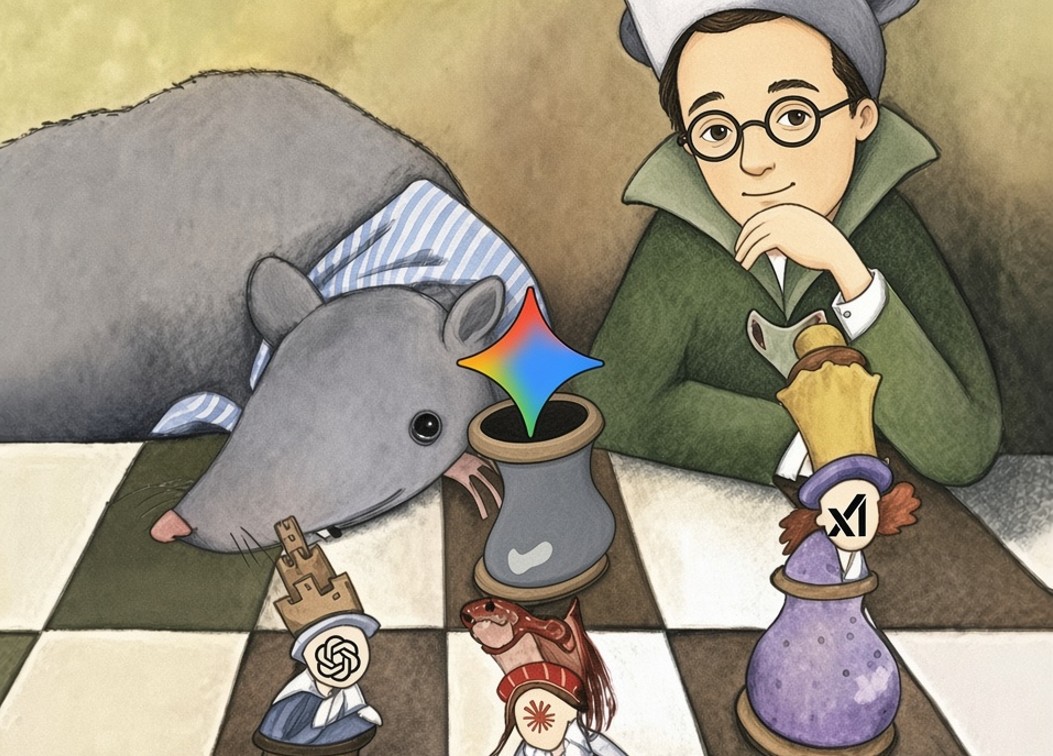
The agreement with Elon Musk and xAI, which will bring the chatbot Grok into public schools, fits into this same logic. A choice that reinforces El Salvador’s image as a technologically avant-garde country, but one that raises questions about the quality, neutrality and educational impact of controversial tools. Once again, progress and controversy proceed together.
Order, discipline and identity
Bukele speaks and can speak to everyone, young and old. The recent regulations on dress and haircuts in schools should be read in this key: they are not a mere regulation, but an attempt to rebuild an idea of discipline, respect and belonging. For the president, order is not repression, but a condition for freedom.
This approach reinforces his profile as a leader of order, a figure that many Salvadorans see as finally able to impose rules and values after decades of chaos and great instability. Popular consensus remains very high, fuelled by international statistics that Bukele likes to share, often openly incensing himself as one of the world’s most popular presidents.
Power, continuity and ambition
In recent months, Bukele has openly declared that he is willing to stay in power longer, even for another decade. A possibility made concrete by constitutional reforms that have removed presidential term limits. For supporters, it is the natural continuation of a successful political project; for pundits, opposition and journalists, a dangerous slide towards authoritarianism.
Bukele rejects the label of dictator, although he often plays ironically on this statement – famous is his self-description as ‘dictador más cool del mundo’ (the coolest dictator in the world), claiming, finally, that it is the people who will decide, and that his power derives from consensus, not force.
El Salvador as a regional model
The ‘Bukele model’ does not remain confined within national borders. Regional security agreements, such as the one with Costa Rica, show how the Salvadoran experience is being observed and, to some extent, emulated. One only has to think of the strong influence the Salvadoran president had in the presidential elections in Chile and Honduras.
The relationship with Donald Trump is also part of this dynamic: cooperation on security, detention of foreign deportees in the CECOT, mutual esteem between two leaders who share a hard-line view of law and order.
Today’s El Salvador, from a fragile and marginal country, has become a visible, discussed, even influential player in the global debate on security, technology and sovereignty.
A country transformed but under observation
How, then, is El Salvador of Bukele doing? The answer, in fact, depends on where you look at things. For many citizens, the change is tangible: less fear, more order, a present state. For others, the price paid in terms of rights, pluralism and separation of powers is too high.
Bukele governs as he communicates: he does so with decisiveness and spectacularity. El Salvador is today an open-air political laboratory, where security, consensus and technology are intertwined in an unprecedented way. It remains to be seen whether this model will hold up in the long run, and above all whether it will be able to transform immediate consensus into solid institutions, capable of surviving beyond the figure of its leader.