All roads pass through Hormuz. The hidden risks of a long conflict

We are walking towards a disaster of biblical proportions in the spectral (and probably coordinated) silence of the media and public opinion.
We don’t say that, those who govern us say that.
‘For work I read things that don’t make me sleep’. Guido Crosetto
‘The proportions of the disaster may be similar to those of Covid’. Friedrich Merz
‘Don’t travel to avoid fuel shortages’. European Union.
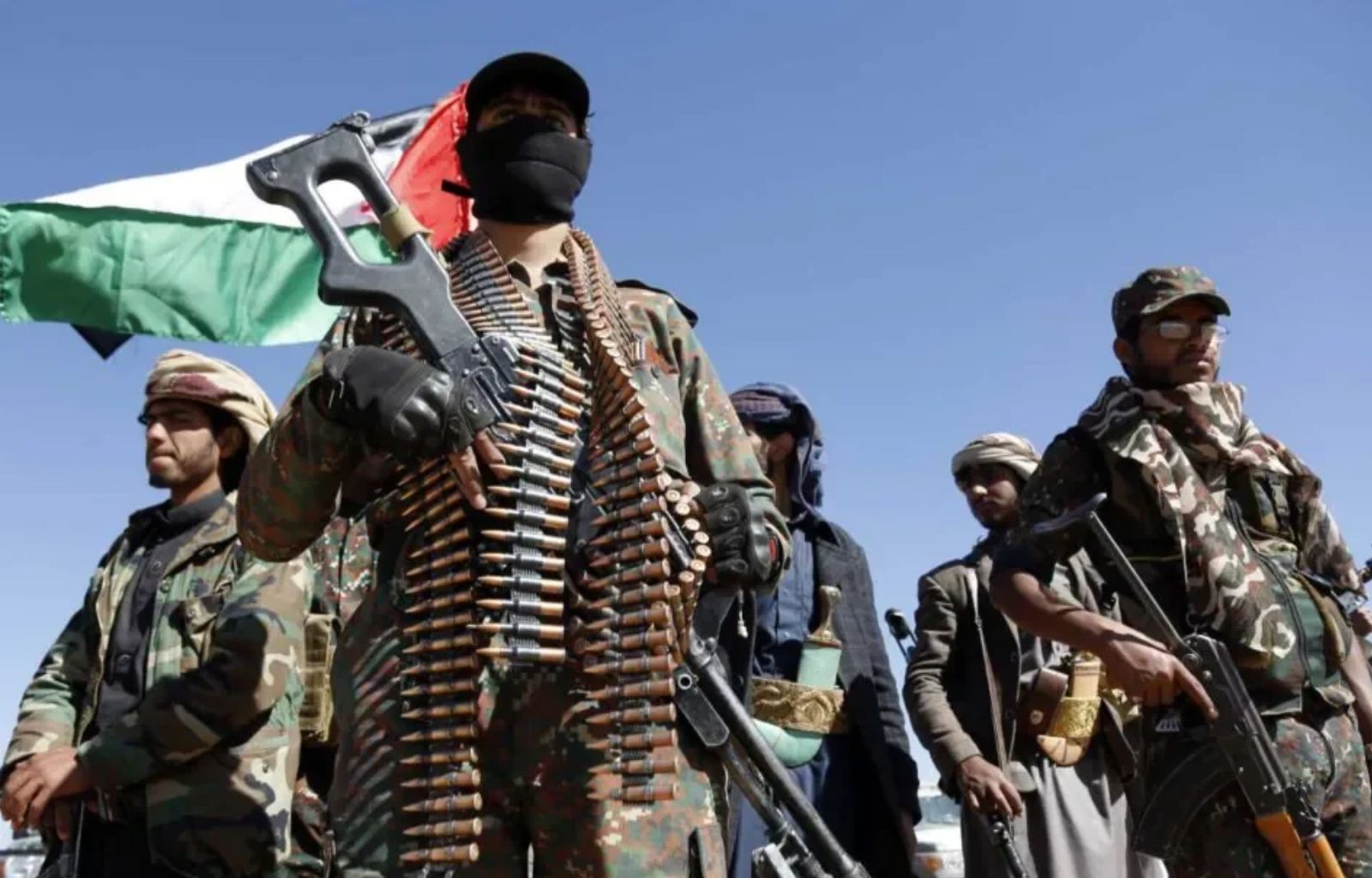
What is happening in Hormuz, in the Gulf, in Iran and potentially in the Strait of Bab-el-Mandeb by the Houthis (gateway to the Mediterranean from the East) risks becoming a cataclysmic situation. We are being made to look elsewhere for fear of a ‘race to the counters’ with withdrawals, gasoline and jerry cans, trolleys overflowing with canned goods, family doctors taken by storm. But the worry is real.
And it’s not because of a full tank of petrol. At least not just for that. If you have the patience to read to the end, you will understand why.
Public opinion is focusing precisely on petrol, which has risen along with the price of oil. The impact of the price of black gold on our economy has diminished considerably over time, apart from the obvious psychological impact on people. But there are two aspects of enormous relevance here:
- the potential for a product failure, not just a cost issue;
- the disruption of logistics on the east-west axis;
- the impact on a number of darker but equally terrifying supply chains in the chemical and petrochemical sector. And this is the focal point on which we want to shine the light.
However, let’s start with the first aspect: there is a shortage of petrol at many petrol stations in Australia, in Thailand there are calls to reduce the use of air conditioners, in the Philippines the working week is now four days, in Vietnam remote working is encouraged. And the EU advises against travel. What if there really is a shortage of petrol? A fifth of the world’s oil passes through the Strait of Hormuz. Saudi Arabia is remedying this with a pipeline across the desert, built just for this eventuality. But this is not enough.
Europe buys less oil from the Gulf than many eastern countries, starting with China. But the domino effect of a supply bottleneck would not leave us unscathed. As during the 2022 crisis, an oil or gas tanker in the middle of the sea may decide overnight to head where it is paid more. So pay or perish. Or perish by paying, in extreme cases.
Let us then avoid talking about the effect on the logistics transport chains, with their inflationary cascade effect on every product that has to be moved.
On the second point, attacks from Yemen in the Bab-el-Mandeb strait would be even more destabilising for Europe. Over 12% of the world’s oil and 13% of world trade passes through there. From there we receive goods of all kinds from Chinese and South-East Asian supply chains. Potentially a catastrophe and a particular focus of attention for Italy, which commands the Aspides mission to escort ships in the strait from Houthi attacks. A risk, perhaps even more politically than militarily.
What if the worst risk is famine?
But the central point, as mentioned, is the third: the chemical and petrochemical supply chains. And on three of these we dwell (although there are even more).
Approximately 50% of the world’s tradedurea – the nitrogen fertiliser that supports almost half of global food production – comes from the Gulf and transits the Strait of Hormuz. Qatar’s QAFCO alone produces 5.6 million tonnes a year, or 14% of the world’s supply: it has been offline since 18 March following the attacks on Ras Laffan. Add to this the Russian decree restricting nitrogen exports and the Chinese ban on phosphates until August 2026: the three largest sources of nitrogen on the planet are simultaneously blocked.
The spring sowing windows in the northern hemisphere are closing. Italian farmers now have only 15% of the fertiliser they need; the price of urea has risen from EUR 55 to EUR 75 per quintal in less than a month. A global drop in harvests of 5-10% is now considered certain, with concentration in countries with smaller reserves, where a 20% shortage does not mean less profit, but hunger. Unlike oil, for fertilisers there are no strategic reserves in the G7 countries, nor alternative pipelines: even in the best case scenario, if the strait reopened immediately, restarting production and logistics would take weeks – weeks that farmers do not have. Kaja Kallas was explicit: “If we don’t have fertiliser this year, we will have a famine next year.”
In 2025 , Qatar produced about 63 million cubic metres of helium – a third of the 190 million cubic metres extracted globally according to the US Geological Survey. Helium is a by-product of LNG: when QatarEnergy stopped Ras Laffan on 4 March invoking force majeure, it simultaneously stopped gas, fertiliser and helium. Some 200 cryogenic containers are currently blocked in the Middle East.
The affected supply chain is more strategic than it appears. Helium is indispensable for semiconductor production and has no viable substitutes: without it, advanced chips cannot be produced. It is used in the cooling of silicon wafers during EUV lithography, in CVD processes and in testing the airtightness of circuits. Fitch Ratings estimates that South Korea imports about 64.7% of its helium from Qatar, while Taiwan depends on it for 60-70%. Together the two countries are worth about 36% of global semiconductor capacity, hosting key facilities of TSMC, Samsung and SK Hynix.
The spot price of helium has already risen by about 50 per cent
If the supply disruption persists, the market will be short about 5.2 million cubic metres per month. The impact is not limited to tech: helium is also crucial for superconducting magnets in MRI scans, and the costs of medical examinations are set to rise accordingly. According to Fitch, about 14% of Qatari export capacity will be out of play for three to five years – regardless of when Hormuz reopens. Industry giant Airgas has declared Force Majeure and will reduce helium deliveries to its customers by 50%. A disaster.
The most critical point in the entire pharmaceutical chain is in Mumbai, Chennai and Hyderabad: the Indian industrial districts that produce between 40 and 47% of the generic drugs consumed in the US and supply much of the developing world. India imports $4.35 billion worth of active ingredients annually, 74% of it from China. But the critical precursors that Chinese and Indian industries need to synthesise those active ingredients – methanol and ethylene glycol – depend heavily on the Strait of Hormuz. A paracetamol tablet , an antibiotic, an anti-diabetic or a cancer drug all stem from a chain of transformations that starts with the Gulf’s hydrocarbons.
Approximately 70% of the medicines dispensed in Europe are generics, and the production of their inputs has progressively moved outside the EU
Current stocks cover an average of two to three months – a margin designed for limited disruptions, not for a structural crisis. According to supply chain operators, a conflict beyond five weeks would make the risk of widespread shortages high, with priority impact on low-cost equivalents, particularly those priced below EUR 5 per pack. Pharmaceutical airfreight costs have already increased by 400% in 48 hours, with manufacturers such as Dr. Reddy’s sounding the alarm about impending stock shortages. The structural dependency was known before Covid, denounced again with the war in Ukraine: Hormuz makes it hard to get around this time.
Now, if at the end of this article you already have your car keys in hand, put them down
Neither you nor the community need panic. Everyone’s hope is that a compromise will be found or that governments are preparing, starting with some nice Sunday walks like in our parents’ stories. Awareness, however, is necessary.