28,707 names pose a question about Gaza. The asymmetry of the Righteous

Markowa is a village in Poland. On the night of 23-24 March 1944, a German gendarmerie patrol arrived in the village. A tip-off, probably from a Polish policeman in the service of the Germans, had indicated a farm on the edge of the village.
Eight Jews lived in the attic of Józef and Wiktoria Ulma for more than a year: the six members of the Szall family together with two sisters, Golda and Layka Goldman. They helped with the work on the farm, came down at night, went up to the attic only in case of danger. The Germans came in, found them, killed them. Then they killed Józef. Then Wiktoria, seven months pregnant with their seventh child. Then, one by one, the six children. The eldest had just started primary school.
The order authorising that execution had been signed on 15 October 1941 by Governor General Hans Frank: death penalty for any Jew found outside the ghetto without authorisation, and identical punishment for anyone who knowingly provided him with a hiding place. It applied, in practice, also to the family members of those in hiding.
In Markowa, after the Ulma massacre, neighbours continued to hide Jews. At least 21 survived the war in that village
Between 1939 and 1945, in a Europe where hiding was tantamount to a death sentence (often of the rescuer’s entire family) at least 28,707 people, from 51 countries, chose to do it anyway. They are the Righteous Among the Nations recognised by Yad Vashem, the Israeli National Holocaust Remembrance Board.
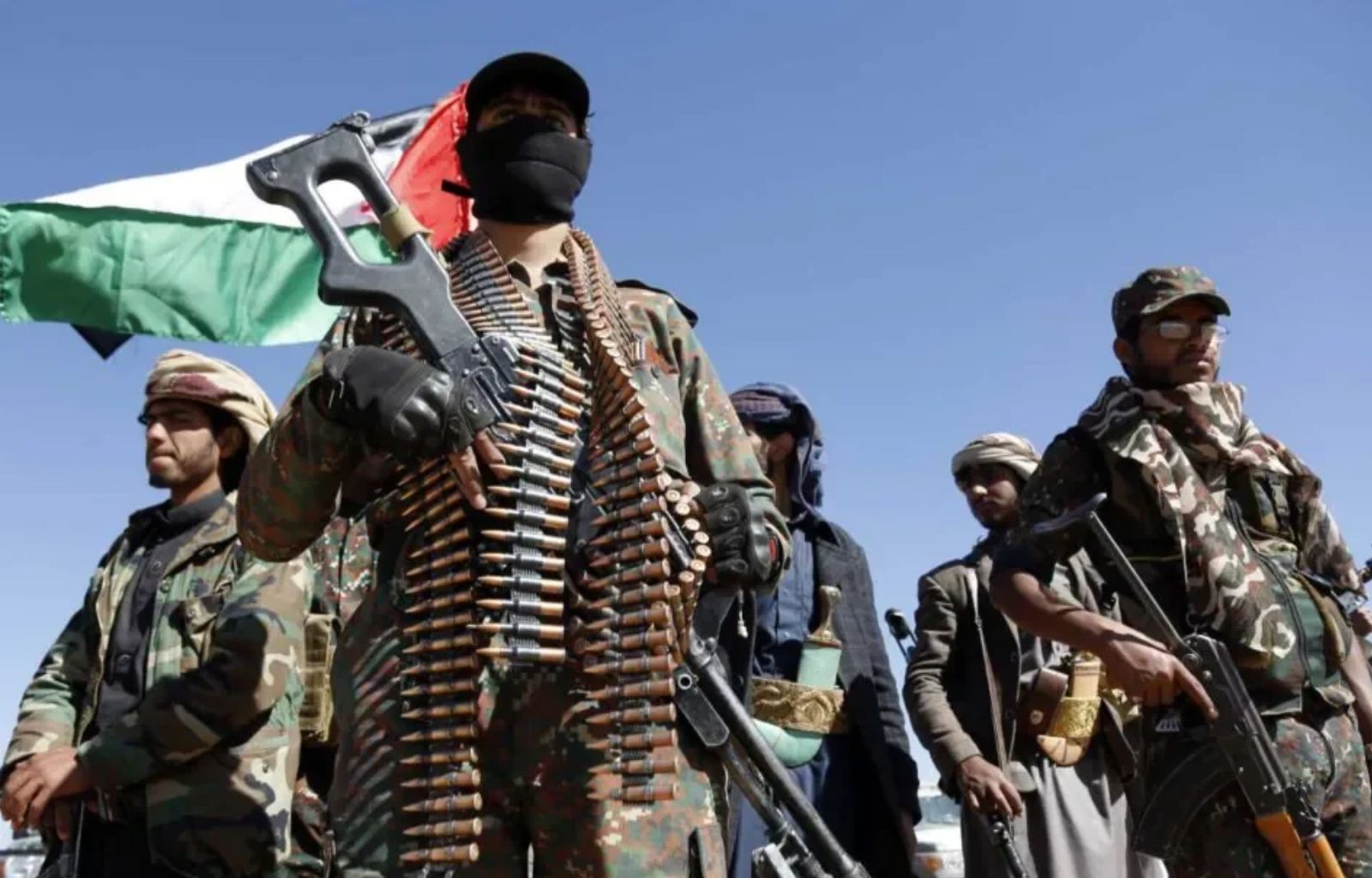
Between October 2023 and January 2026, in a Gaza Strip where collaborating with Israel is punished with death by Hamas, Israel offered five million dollars, a way out, and anonymity to anyone who provided information on the hostages.
Publicly documented result: zero. No one did.
Faced with a lethal deterrent in both cases, why so many exceptions in one case and none in the other?
Under the death penalty
Yad Vashem has been running the Righteous Among the Nations programme since 1963. Recognition is based on three stringent criteria: the act must have been carried out by a non-Jew; it must have involved a real personal risk for the rescuer; it must be supported by documented testimony, usually from the rescued or their relatives. As mentioned, 28,707 individuals in 51 countries are recognised as Righteous.
The legal framework in which they acted was exceptionally serious. The Hans Frank decree in 1941, applicable to the Generalgouvernement – the occupied Polish territory – established the death penalty for any Jew found outside the ghetto without authorisation, and the same penalty for anyone who knowingly provided him with a hiding place. German jurisprudence and SS practice extended the penalty in many cases to the relatives of the rescuer. Similar provisions were in force in the occupied territories of the Soviet Union and in the Balkans.
In November 2024, during a visit to the Netzarim corridor, Israeli Prime Minister Binyamin Netanyahu publicly announced an offer of five million dollars for each hostage handed over, along with safe conducts for the rescuer and his family to leave the Gaza Strip. To facilitate anonymous reports, the IDF launched the Arabic-language site Machtoffin, with WhatsApp channels, Telegram and hotlines.

Twenty-eight thousand seven hundred and seven
Those 28,707 Righteous Among the Nations include 7,318 people from Poland, 6,137 from the Netherlands, 4,303 from France, 2,713 from Ukraine and – remarkably – 666 from Hitler’s Germany. And these are not all the actual rescues (which were certainly higher) but only the cases supported by formalised testimonies at Yad Vashem.
The 666 Germans even included many soldiers serving in the Wehrmacht, including high-ranking ones. Anton Schmid, a sergeant in Vilnius, escaped some 300 Jews from the ghetto to Belarus. He was discovered, tried by a German court martial and shot on 13 April 1942.
Albert Battel, Oberleutnant and member of the Nazi party since 1933, blocked SS access to the ghetto in Przemyśl (Poland) with an armed squad on 26 July 1942 and placed about a hundred Jewish families under the protection of the Wehrmacht; the SS investigation into his case went as far as Martin Bormann and Heinrich Himmler. His superior, Max Liedtke, military commander of the square, was also recognised as Righteous.
Karl Plagge, a Wehrmacht officer and party member, saved around 1,200 Jews from the Vilnius ghetto by keeping them as workers in his military workshop.
As far as hostages are concerned, the figures are just as public. On 7 October 2023, Hamas and other armed groups abducted 251 people from Israeli territory. Two Israeli civilians and two bodies of soldiers killed in the 2014 conflict were already being held in Gaza.
170 of them returned alive: 162 were released by Hamas in agreement, and eight were freed in IDF operations. A total of 85 bodies have been repatriated, the last one recovered from a cemetery in northern Gaza, after the exhumation of Palestinian bodies and identification through dental analysis.
No recovery operation is publicly attributed to information provided by a Gaza civilian in return for the reward offered.
Gold in the opposite direction
The point that turns the whole picture upside down is incredible: in Europe, during the Shoah, the economic flow was in the opposite direction. Recent historiography (Christian Gerlach, Jan Grabowski, Gunnar Paulsson) has documented that a significant part of the rescues of Jews took place against payment: Jews bought their own survival, in exchange for a hiding place, a false document, silence. There are documented cases of rescuers who, having run out of money, denounced or killed the people they had sheltered. In Slovakia, the Working Group of Gisi Fleischmann and Rabbi Weissmandel tried to bribe Dieter Wisliceny, Eichmann’s deputy, to stop the deportations. Schindler paid the SS to give his prisoners water.
A pattern already seen in the Armenian genocide of 1915-16. Testimonies collected by American consuls in Anatolia (Jackson, Leslie reports, and Holocaust Encyclopedia summaries) document Armenians who, on marches to Deir ez-Zor, paid the Ottoman gendarmes for water, to avoid the rape of their daughters, so as not to be killed at the roadside. In many cases, they paid and were killed anyway.
In Gaza, the direction of the flow is completely reversed. It is the Israelis who offer five million dollars, a way out for the family, anonymity, in exchange for a single life.
Documented public result: zero lives saved.
The conditions of confrontation
Every situation obviously has differences and almost nothing can be compared in toto: a comparison becomes legitimate by precisely narrowing down the observed variables.
Coercion.
In both contexts, helping the ‘enemy’ carried the death penalty. The Frank Edict of 1941 was enforced with exemplary executions: the Polish Institute of National Remembrance has documented 333 separate incidents of repression, with 654 people affected. In Gaza, ‘collaboration with hostile entities’ has a legal basis in the 1979 PLO Revolutionary Penal Code and is punishable by death: between September and October 2025, during the ceasefire transition, Hamas publicly executed at least 33 people on this charge. Yahya Sinwar, a former Hamas leader, was nicknamed ‘the butcher of Khan Younis’: a name he earned by torturing and killing dissidents and alleged collaborators. The difference is one of capillarity (the Nazi machine was more extensive and more systematic), not of legal nature.
Incentive.
Here the asymmetry is total, but in the opposite direction to what one would expect. In Europe, those rescuing Jews often received money from Jews: the rescue, in addition to the risk, had a cost for those being rescued, not for those being saved. In Gaza, on the other hand, five million dollars is offered for each hostage, safe conduct for the family, anonymity, specially created websites and encrypted channels. A sum that represents a total life change for the beneficiary and his family. The incentive works in favour of the rescuer to an extent unprecedented in history. Yet, publicly documented lives saved remain zero.
Ideological, social, religious capital.
The most difficult variable to measure. Yad Vashem documents that the European Righteous came from very different backgrounds: Polish Catholics, Dutch Calvinists, Ukrainian Orthodox, atheists, communists, peasants, professors, German army officers. There is no single ideological denominator. There is, however, one constant: in all these fabrics there was a channel – religious, political, professional, familial – through which an individual could consider the act of rescue legitimate, even against his own state and community. A network, even a minority network, of moral legitimacy.
The Gaza figure, in this scheme, poses a question that cannot be closed, but neither can it be avoided: what ideological, social or religious fabric, in two years of war, out of two million people, has not produced a single individual for whom the gesture of rescuing a hostage was conceivable, was legitimate? Not even with an explicit and substantial monetary reward?
Criticism under scrutiny
Immediate objections to this comparison arise, and it is worth analysing them.
“Hamas would have killed anyone who spoke out.”
True. It did and continues to do so. But the Nazi deterrent was identical if not worse – extended to the children, the neighbours, the entire village. Yet more than 28,707 people acted anyway. The deterrent alone does not explain the zero.
“They were Israeli soldiers, not defenceless civilians.”
224 of the 251 hostages were civilians. Among them were 16 children under the age of ten and nine over 80. Cooperation did not come.
“Someone may have talked, but Israel keeps the sources secret to protect them.”
A plausible hypothesis, no doubt. The body of Oron Shaul, a soldier who fell in 2014, was also recovered thanks to an ‘informant’ – a generic term that can mean a Gaza civilian, but also an Israeli intelligence asset, a formerly recruited collaborator, a former detainee or other operational sources not assimilated to the ‘Righteous’. But public reconstructions of hostage rescue operations attribute the successes to electronic intelligence, aerial surveillance, and interrogations of captured Hamas operatives. Never, even anonymously, to civilian tips. If they exist, no trace of them has emerged so far in the accessible reconstructions.
“Comparison is impractical: different contexts, different peoples, different wars.”
The most methodologically serious objection. It would be legitimate if the comparison concerned the events as a whole: the Shoah was a project of total extermination of a people, conducted by industrial means by a modern state; Gaza is a theatre of contemporary asymmetrical warfare. The political structures, degree of territorial control, nature of violence and historical context are not overlapping.
The comparison proposed here, however, does not concern the totality of the two events. It isolates only one variable: the behaviour of civilian individuals faced with three simultaneous conditions – mortal risk, concrete possibility of rescuing the enemy, incentive to do so.
On this circumscribed level, the comparison does not claim historical equivalence: it seeks functional comparability.
The memory of the Righteous exists precisely because human behaviour under duress can be observed, distinguished and evaluated.
After the silence
A testimony by Eitan Yahalomi (12 years old at the time of the abduction on 7 October) reported by his aunt Devora Cohen that during the transfer from Israel to the Strip, the child was beaten by Gaza residents who saw him pass by. Forced to watch the 7 October videos and kept in solitary confinement for the first 16 days. None of the residents who saw him pass by helped him. No one indicated where he was being held. And many hostages reported testimonies like this to Gaza residents.
The documented zero in Gaza does not demonstrate collective guilt: two million people are not a single moral subject. It does not prove inherent inhumanity: no people, in any historical phase, are inhuman by essence. It proves nothing, individually, about any of the two million inhabitants of the Strip.
However, there remains another possibility, which the data suggest without closing it: that there are cultural, religious, political contexts in which a certain gesture becomes unthinkable.
Not only punished, not only risky: unthinkable. That is, not represented as a legitimate option by any channel available to the individual. We need to understand what conditions produce, or stifle, the very possibility of the moral exception.
Occupied Europe produced tens of thousands of them.
In Gaza, so far, we see no public trace of it.
And it is a silence that deserves to be questioned.
Józef and Wiktoria Ulma knew what they were risking. And they chose anyway.
Their neighbours, having seen them die with seven children and eight Jews in hiding, chose anyway.
In Gaza, two million people. And if anyone has chosen, history does not yet know.