The Holodomor: the long road to international recognition
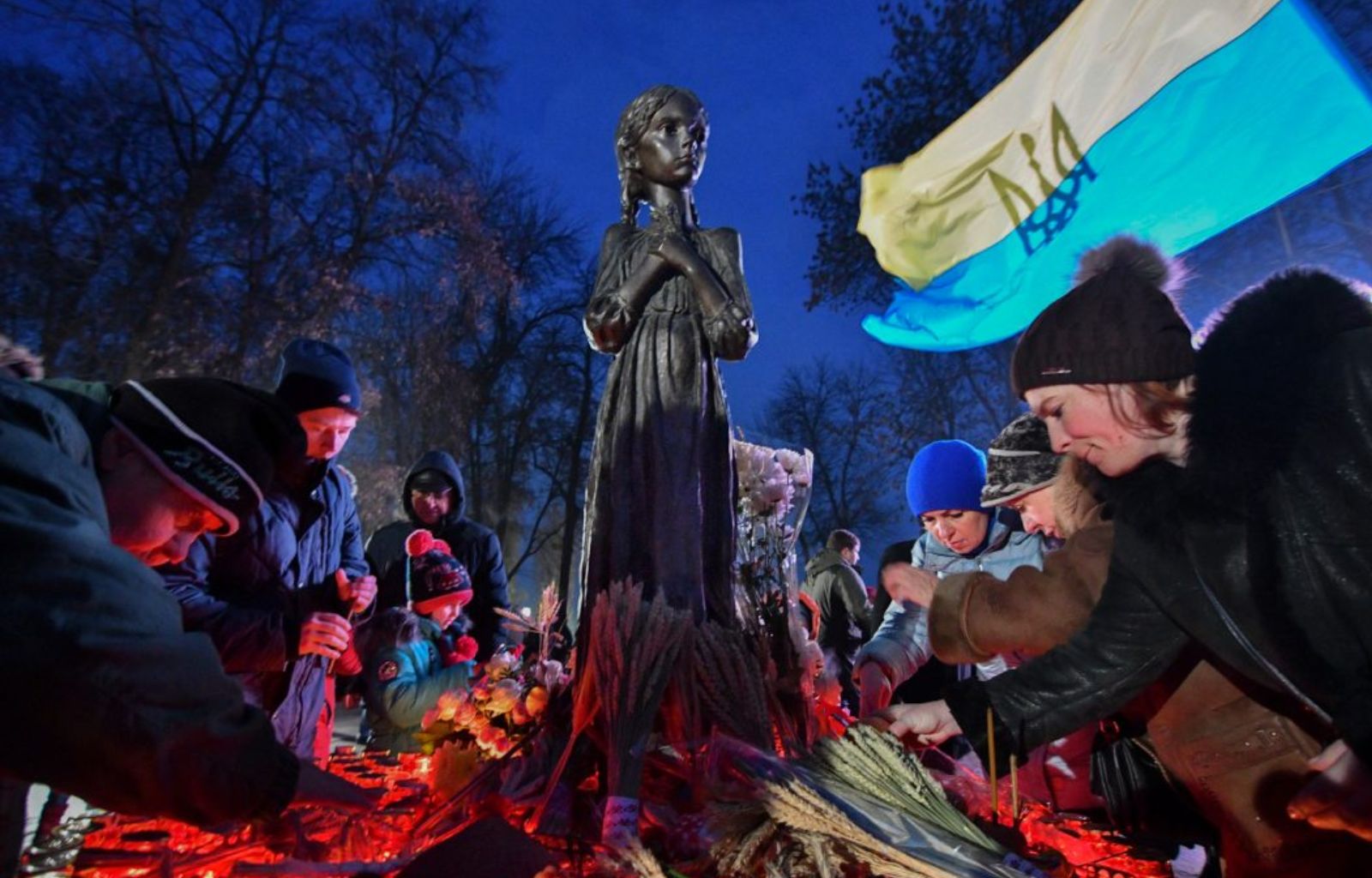
Ukrainian law, European resolutions and votes in the Italian Parliament: how the recognition of the Soviet genocide perpetrated against the Ukrainian people through starvation came about.
The international remembrance of the Holodomor has been established through a long process of legislation, declarations and parliamentary resolutions. At its heart lies the famine that claimed the lives of four million people in Ukraine in 1932–1933, caused by the despicable Stalinist regime. In December 2022, the European Parliament recognised it as genocide against the Ukrainian people, calling on countries and international organisations that had not yet done so to adopt the same position. Let us retrace the stages of this struggle together, but first, a brief recap.
What was the Holodomor?
The Holodomor was a famine caused by Stalin’s agricultural policies and deliberately exacerbated by the repression that ravaged Ukraine in 1932–1933. The forced collectivisation of the countryside had disrupted agriculture; this was followed by requisitions of grain and foodstuffs which deprived the population of the means of survival. The Soviet repressive apparatus imposed confiscations, persecuted peasants who resisted collectivisation and prevented people from travelling in search of food, condemning entire communities to starvation and tearing apart the rural fabric.
Ukrainian law and the declaration to the United Nations
A key milestone was the passing, on 28 November 2006, of Ukrainian Law No. 376-V. The first article states that “the Holodomor of 1932–1933 was a genocide of the Ukrainian people”.
Earlier, in 2003, on the occasion of the 70th anniversary of the tragedy, the memory of the Holodomor was also acknowledged at the United Nations. Ukraine’s Permanent Mission to the UN circulated a joint statement from numerous national delegations. However, this was not a resolution adopted by the General Assembly: the circulation of the text as a UN document did not amount to recognition of the genocide by the organisation.
The European transition
On 23 October 2008, the European Parliament recognised the Holodomor as an ‘artificial famine’ and a ‘horrific crime against the Ukrainian people and against humanity’. However, the resolution did not expressly classify it as genocide.
On 15 December 2022, the European Parliament took that step, recognising the Holodomor ‘as genocide against the Ukrainian people’. The resolution accompanied this recognition with an appeal to other countries and international organisations, and a call to preserve the memory of the victims.
A further statement was issued on 12 October 2023 by the Parliamentary Assembly of the Council of Europe. In its resolution on a just peace in Ukraine and lasting security in Europe, the Assembly recognised the Holodomor as genocide.
Votes on the Holodomor in the Italian Parliament
In Italy, too, the recognition of the Holodomor as genocide has been passed by Parliament. On 20 February 2023, the Chamber of Deputies’ Foreign Affairs Committee unanimously approved a resolution committing the government ‘to officially recognise the Holodomor as genocide through all appropriate measures ’. On 26 July, the Senate approved a motion of recognition.
The voice of John Paul II
Alongside political statements, remembrance of the victims has also found expression through the voice of the Church. On 23 November 2003, John Paul II addressed a message to Cardinals Lubomyr Husar and Marian Jaworski on the occasion of the seventieth anniversary of the Holodomor. ‘It was an inhuman scheme carried out with cold determination by those in power at that time,’ wrote the Pope.
A legacy to pass on
International recognition of the Holodomor is taking shape through these voices and actions, which vary in nature and scope. The shift from commemoration to the explicit designation of genocide, made by the European Parliament, shows how the language used by the institutions called upon to address that tragedy has also changed over time. This is a highly topical issue.
This condemnation goes hand in hand with the responsibility to pass on knowledge of what happened: recognising the Holodomor means, in this context, ensuring that the memory of the victims is given a lasting place in the public consciousness, beyond commemorations and official statements.