The Left’s obsession with data centres: progressive only when it suits them
There is one thing about the Western left that I have never fully understood. They call themselves progressives, they talk constantly about change, about moving beyond the past, about building a new society, but as soon as progress involves something tangible – an industry, a nuclear power station or, more recently, a data centre – they suddenly become the world’s greatest conservatives.
It almost seems as though progress is only acceptable when it concerns social customs and issues, whilst scientific, technological and economic progress must constantly be called into question, regulated and, if possible, slowed down. And what is even more absurd is that we are not just talking about the Italian left – which has a certain tradition in this regard – but about a phenomenon that is also gaining ground in the United States and across much of Europe.
From Washington to Milan: the new progressive Luddism
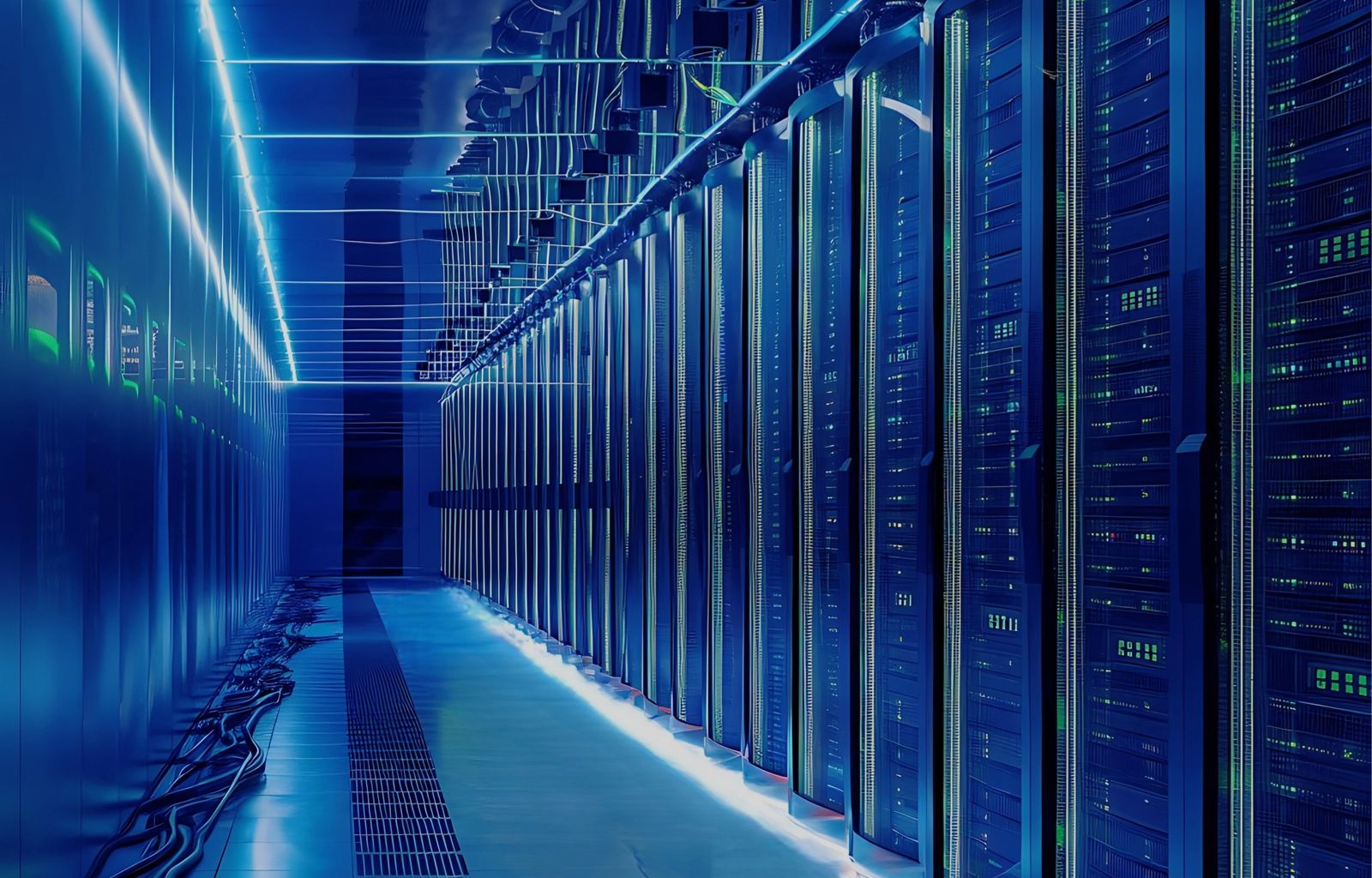
The latest target is data centres, which in recent months have become something of a new public enemy for a certain section of the environmentalist left. In the United States, Bernie Sanders and Alexandria Ocasio-Cortez announced last March a bill to impose a federal moratorium on the construction of new data centres for artificial intelligence, pending the passage of comprehensive legislation on the sector.
You heard that right: in the country that invented the internet, which is home to Silicon Valley and is spearheading the greatest technological revolution of recent decades, two of the leading figures on the American left want to halt the construction of the infrastructure needed to make it work. Sanders argues that artificial intelligence represents a transformation too significant to be left in the hands of tech billionaires, and that we need to pause to allow politicians to regain control of it. To me, however, this seems a rather worrying prospect: halting the development of a technology simply because politicians are not quick enough to understand it.
In the UK, things are not much better. Zack Polanski, leader of the British Greens, has called on the government to put the brakes on new licences for data centres, challenging their classification as critical infrastructure and drawing a distinction between those necessary for public services and those that would simply serve to generate profits for private companies. In Ireland, the Greens have welcomed the refusal to grant planning permission for a new data centre in County Mayo, whilst in Lombardy, the Five Star Movement has gone so far as to speak of a veritable ‘invasion of data centres’ that risks devastating the region.
And so, amongst those who want to stop them, those who want to restrict them and those who seem to regard them as a sort of environmental disaster, we find ourselves debating whether it is appropriate to build the very infrastructure on which a significant part of our future economy will depend.

Progress doesn’t happen by magic
Frankly, the whole thing strikes me as rather ridiculous. Not because data centres are a particularly fascinating technology in themselves – after all, they’re just large buildings full of servers – but because they represent one of the material prerequisites for developing what could be the next great leap forward for human civilisation.
We are talking about artificial intelligence, computing power, medical research, industrial automation – technologies that could radically change the way we live. And yet some in Western politics seem more interested in calculating how much water cooling systems consume than in asking what extraordinary possibilities might open up thanks to greater computing power.
What I find particularly irritating is this persistent notion that technological progress must almost justify its own existence. When a large company announces billions in investment to build new digital infrastructure, instead of discussing how to attract even more investment, we immediately start talking about restrictions, constraints and authorisations.
In Italy, according to the Politecnico di Milano, 83 new data centre projects have been announced for the three-year period 2026–2028, with potential investment totalling over 25 billion euros. In a country that does nothing but complain about the lack of investment, low productivity and the fact that our young people have to go abroad to find better opportunities, a figure like this should at least generate a little enthusiasm. Instead, once again, it seems that our main concern is finding ways to make life difficult for those who want to invest.
And this, in my view, says a great deal about the relationship that part of the West has developed with modernity. We have become so accustomed to the benefits of technology that we have forgotten that everything we use every day requires infrastructure, industry, resources and someone willing to invest money to build them.
We want artificial intelligence to help us study, work and carry out research; we want increasingly advanced hospitals, efficient digital services and competitive businesses; yet it almost seems offensive to point out that none of this works simply because of some fine-sounding declarations of principle on the digital transition. We need computers, servers, electricity, huge amounts of capital and, above all, the freedom to use them.
More energy, not less technology
Incidentally, one of the most common arguments levelled against data centres is precisely their energy consumption, as if consuming energy had become something morally wrong. According to the International Energy Agency, in 2024 data centres accounted for around 1.5 per cent of global electricity consumption, a figure set to rise to just under 3 per cent by 2030.
It seems quite natural to me to think that, if we need more energy to power the technologies of the future, the solution is to produce more of it, not to give up on those technologies. Let’s build nuclear power stations, invest in new energy sources and develop more efficient electricity grids. The idea that a society should limit its technological ambitions because the current energy infrastructure is insufficient strikes me as a rather bleak way of envisaging the future.
As far as I’m concerned, I’d like to live in a society whose aim is to have ever more energy, more technology and more opportunities. I’ve never understood this sort of nostalgia for a world that is less industrialised, less automated and somehow closer to nature, which seems to be prevalent in certain environmentalist circles.
Nature, before we learnt to alter it through science and technology, was not exactly the paradise that some people seem to imagine. It was a world in which people died much younger, illnesses that are now trivial could be fatal, and a huge part of human existence was spent simply trying to survive. We have managed to change all this precisely because we stopped accepting the limitations that had been imposed on us.
To transcend human limitations, not to defend them
And I don’t see why we should stop now. In fact, I believe we are living through one of the most fascinating periods in human history, perhaps comparable in importance to the Industrial Revolution. Artificial intelligence could enable us to accelerate scientific research enormously, develop new treatments, automate a staggering number of jobs and achieve results that we cannot even imagine today.
Personally, I am excited by the idea that technology might one day alter our very biological condition ever more profoundly; that we might one day be able to intervene in the ageing process, enhance our cognitive abilities, or integrate human intelligence with artificial intelligence. I do not know when, nor to what extent, this will be possible, but I find it far more interesting to ask myself these questions than to constantly worry about how to slow down the development of the technologies that might make this possible.
It’s probably a rather extreme view of progress, but I don’t mind it at all. I don’t think there’s anything particularly noble about accepting the limitations of our nature when we have the chance to overcome them, and I find it rather curious that precisely those who constantly advocate the need to free the individual from social conventions are often so unenthusiastic about the possibility of freeing them from certain material and biological limitations as well.
Man did not reach the Moon because someone thought it best to respect the natural limits of his existence, just as we did not invent antibiotics because we regarded diseases as part of the natural balance that needed to be preserved. We did these things because someone decided that what seemed impossible did not necessarily have to remain so.

Capitalism, Big Tech and Europe lagging behind
Amidst all this, there is also an economic issue which, in my view, deserves to be addressed without beating about the bush. A section of the left continues to view large technology firms with suspicion, almost as if the fact that Microsoft, Google, Amazon or other companies are investing billions to develop new infrastructure were, in itself, a bad thing.
Of course, their aim is to make a profit – and thank goodness for that, I might add. It is also thanks to the prospect of a financial return that businesses and investors are willing to fund huge projects, take risks and develop technologies that ultimately benefit millions, if not billions, of people. I cannot understand why we should be ashamed of this mechanism, which has been one of the main drivers of Western economic development.
The paradox becomes even more apparent when it comes to Europe. For years we have been complaining that we do not have our own Silicon Valley, that we are dependent on American platforms, that China is overtaking us in strategic technology sectors, and that the European Union is failing to produce companies capable of competing with the international giants.
These are all valid points, at least in part. But then, when the investment needed to develop greater European technological capacity finally materialises, the debate on how to limit it begins immediately. It is a contradiction that I really struggle to understand, especially as the technological competition between the United States and China is certainly not going to pause whilst we wait for the Europeans to reach an agreement on how many megawatts a data centre can consume.
We cannot claim to be at the forefront of the artificial intelligence revolution if we continue to treat digital infrastructure as an urban planning issue to be managed with the utmost suspicion. Nor can we complain about the dominance of American companies if our response to their ability to invest and innovate consists mainly of drawing up new rules. At times, it seems to me that Europe has developed a particular knack for regulating the progress of others, but far less so for driving its own.
Progressive in their attitudes, conservative about the future
I shall therefore return to the original question, that of progressivism. I believe that a section of the Western left has ended up reducing the meaning of this word almost exclusively to social and cultural issues, forgetting that progress also – and perhaps above all – concerns humanity’s ability to materially improve its own condition.
We can spend hours discussing rights, identity, inclusion and social change, but if we are then unable to build a more productive economy, develop new technologies and increase the real opportunities available to individuals, I wonder how progressive this vision of society actually is.
Let me be clear: I do not regard technological progress as the preserve of the right, nor do I believe that Western conservatism as a whole is particularly enthusiastic about innovation. In fact, personally, I have always found certain right-wing nostalgia for an idealised past – one made up of unchanging traditions and social models that we are somehow supposed to recapture – rather absurd. But precisely for this reason, it strikes me as even more paradoxical that some of the most hostile stances towards the technological revolution come from those who describe themselves as progressives. At least those who declare themselves conservatives have not built their political identity around the need to constantly change the world.
I, on the other hand, want the world to change – and quite a lot, at that. I’d like to see new nuclear power stations, increasingly automated industries, huge data centres, and research laboratories capable of developing technologies that we currently regard as science fiction. I’d like medicine to enable us to live much longer, and for artificial intelligence to become a tool through which we can multiply our capabilities.
And I am not particularly concerned whether all this will require huge private investment, more electricity or the construction of infrastructure that some people today consider too intrusive. I believe that a civilisation which ceases to harbour such ambitions has, in a sense, already begun to resign itself to its own decline.
Perhaps in a hundred years’ time we will look back on our current technological systems as we now look back on the first computers of the 1950s, and perhaps many of the things we imagine today will become reality much sooner than we think. We cannot know. But I do know that I would prefer to live in a society that constantly strives to push its own boundaries – even at the risk of making mistakes – rather than in a society obsessed with the idea of not changing what already exists too much.
That is why I find the battle against data centres so absurd. Not because they are the solution to all the world’s problems, but because they represent exactly the sort of infrastructure that a technologically ambitious civilisation should be happy to build. And if the coming century is truly to be one of artificial intelligence, robotics and perhaps even the overcoming of some of humanity’s biological limitations, I find it hard to imagine anything less progressive than trying to put the brakes on all this before we have even understood its potential.
I don’t want to go back to a more natural, simpler or less technological world. I want exactly the opposite. And if it takes thousands of new data centres to get there, then so be it. I much prefer a future built by entrepreneurs, scientists and engineers who have the ambition to change the world, rather than by politicians who spend their time telling them why they shouldn’t.
The Left may well continue to call itself progressive, of course. But it would be interesting to understand why, when progress actually arrives, its first reaction is so often to ask it to stop.