A stone’s throw from Putin, the Libyan challenge in the heart of the Mediterranean

Woe betide us, Europeans and Italians, if we forget about Libya. What we once called “our backyard” is now a silent battleground, where global ambitions, energy strategies, and proxy wars intersect. While international attention is focused on Ukraine or the Middle East, Europe’s southern front continues to simmer, threatening to turn—once again—into an explosive crisis just a few miles from our shores.
A divided country, a power that knows no peace
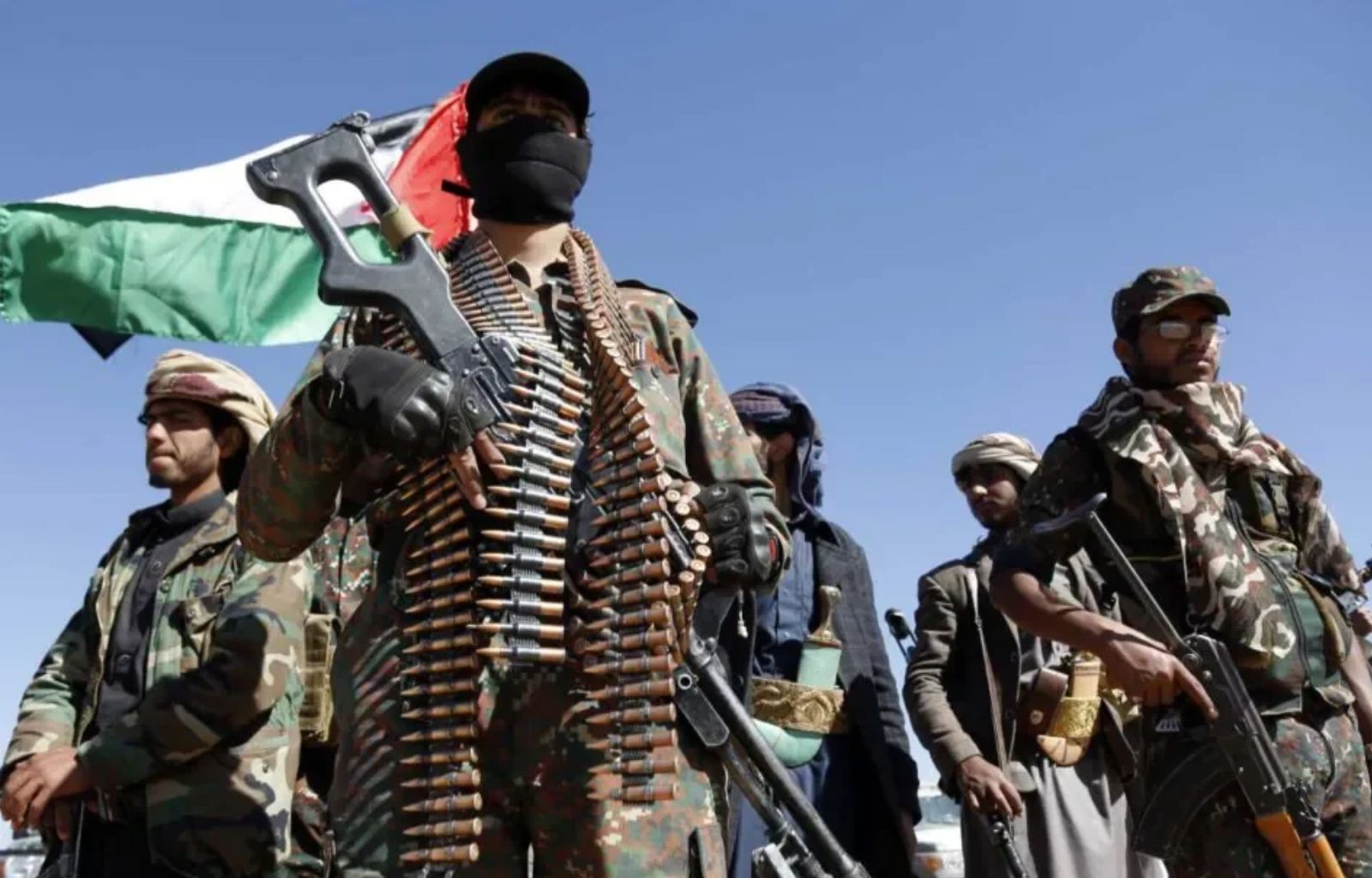
Since the fall of Gaddafi in 2011, Libya has been in a state of chronic fragmentation. Two rival governments, armed militias, trafficking in people and resources, foreign powers competing for control of oil and ports: chaos that is not only internal, but reflects the geopolitical battle for influence in the Mediterranean.
In Tripoli, Prime Minister Abdul Hamid Dbeibah is struggling to keep a government of national unity together, which is increasingly lacking in unity and forced to negotiate its survival with local armed groups. In the east, meanwhile, Khalifa Haftar—a former Gaddafi officer, now lord of Cyrenaica—is building a veritable family empire: his sons Saddam, Khaled, and Belgassem control the country’s military, intelligence services, and economic levers, respectively. It is a dynastic power that rivals Middle Eastern models and is supported by Russia, Egypt, and the United Arab Emirates.
Moscow in the heart of the Maghreb: the southern front of Putin’s war
Over the past two years, Russia’s presence in Libya has become more structured and widespread. The Kremlin forces, once identified with the Wagner company, now operate under the new name “Africa Corps” and guard military bases such as Maaten al-Sarra and al-Jufra, where new radar systems (also capable of spying on us, as explained in this article by L’Europeista) and attack drones have been reported.
Behind the rhetoric of “military cooperation” lies a precise strategy: to open a southern front against NATO, projecting military power from the Sahel to the Mediterranean. Libya thus becomes an integral part of the mosaic that Putin is putting together to challenge the West, along with Niger, Mali, and the Central African Republic. For Moscow, control of North Africa’s energy and migration routes means acquiring direct leverage over Europe: whoever dominates Tripoli and Benghazi can influence the flow of gas, oil, and people to Italy and the European Union.
That is why talking about Libya today means talking about Europe’s security tomorrow.
Between Ankara and Moscow, the dangerous game of alliances
Turkey, for its part, has long understood that Libya’s fate is also the fate of its own influence in the Mediterranean. Ankara intervened militarily in 2019 to save Tripoli from Haftar’s siege, obtaining in return the famous maritime memorandum that expands its energy claims in the Mare Nostrum. But today, the game has become more subtle: Turkish intelligence chief Ibrahim Kalın and Defense Minister Yaşar Güler traveled to Benghazi, meeting with Haftar and his sons. A gesture that until recently would have seemed unthinkable, but which reveals Ankara’s ambition to dialogue with both sides of the country — and to secure a central role in any post-war scenario.
Italy is watching closely, but also with growing concern: an Ankara-Haftar axis would risk further destabilizing the Dbeibah government, which has so far been supported by Turkish protection.
Rome, special observer between diplomacy and energy interests
For Italy, Libya is much more than a security issue. It is a pillar of national energy strategy and the centerpiece of European migration policy. The giant Eni remains the main foreign player in the Libyan oil sector, and the stated goal is to bring production to two million barrels per day by 2028. However, internal political divisions and rampant corruption are hampering any attempt at stable development.
In recent months, Rome has returned to taking decisive action: the meeting in September between Saddam Haftar and Ibrahim Dbeibah, the prime minister’s nephew, organized in the Italian capital and mediated by the United States, was one of the clearest signs of the attempt to bring Italy back to the center of the Libyan dossier. Behind the mediation, the message is clear: without an agreement between Tripoli and Benghazi, Libya will remain a battleground for external powers — and for Russia in particular.
The migrant war and the frontier of European cynicism
On the humanitarian front, the situation remains dire. Militias linked to the two governments continue to manage migration flows as a business, amid violence, kidnappings, and trafficking. Recent reports from NGOs such as Mediterranea Saving Humans and SOS Mediterranée paint a disturbing picture: the Libyan Coast Guard, funded and trained by Europe, not only turns migrants away, but sometimes opens fire on humanitarian ships.
The agreement between Rome, Brussels, and Tripoli, designed to “contain” departures, often translates into a brutal delegation of the European border to armed and corrupt groups. The Libyan route remains one of the deadliest in the world: nearly 20,000 deaths in ten years, while flows continue to fluctuate with the rhythm of local political crises.
Europe’s future passes through Tripoli
The risk of a new conflict remains high, but the real threat is another: inertia. Every day that Europe neglects Libya, Moscow consolidates its positions, Ankara expands its influence, and regional powers play undisturbed on the power vacuum left by the West. For Italy, which is Libya’s closest neighbor and the first potential victim of a new collapse, this distraction would be fatal.
Libya is not a dossier of the past, nor a closed chapter of the post-Gaddafi era. It is the southern front of Putin’s war, the test of European credibility in the Mediterranean, and the place where it will be decided whether Italy will still be a regional power or just a speck.